Heat and technique
How long to preheat a pizza oven
Every maker publishes a number. Every one of those numbers describes the air, not the floor your pizza actually sits on — and that gap is the most common reason a first pizza disappoints.
The short answer
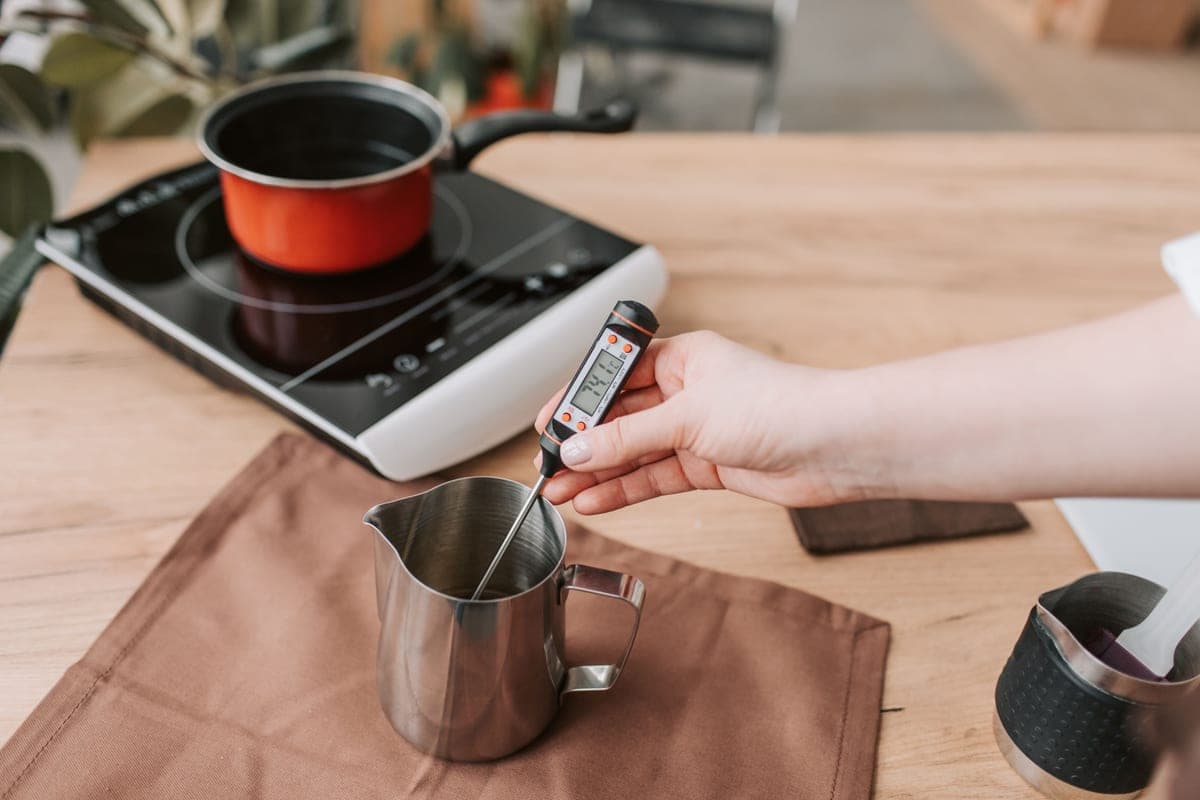
Published times run from about 10 minutes (Bertello Grande, on gas) to 20–30 minutes (Gozney Roccbox). Add roughly 5 to 10 minutes to whatever your maker states, because the published figure is when the *chamber* reaches temperature and a ceramic floor lags behind the air above it. The only reliable signal is an infrared reading off the stone.
The published figures
| Oven | Published preheat | To |
|---|---|---|
| Bertello Grande 16" | Under 15 min (as little as 10) on gas | Over 900 F |
| Ooni Karu 2 Pro | About 15 min | 950 F |
| Solo Stove Pi Prime | About 15 min | 950 F |
| Solo Stove Pi | About 15 min on propane | 850 F |
| Ooni Koda 12 | About 15 min | 950 F |
| Ooni Koda 16 | About 20 min | 950 F |
| Gozney Roccbox | 20 to 30 min on gas | 950 F |
| Gozney Arc / Arc XL / Arc Lite | Not published | 950 F |
| Ooni Koda 2 / Koda 2 Pro / Koda 2 Max | Not published | 950 F |
Preheat times as published by each maker. Blank rows are ovens where no preheat figure is published, which is more common than it should be.
Two things worth noticing. The Roccbox is the slowest here — and that is a direct consequence of the thing that makes it good, because a double-layer stone floor with dense insulation is a lot of mass to bring up. Slow to heat and slow to fade are the same property. And Gozney publishes no preheat time at all for the Arc family, while Ooni publishes none for the current Koda 2 line, so for several of the best ovens on this site there is no figure to quote.
Why you should ignore the number anyway
A pizza cooks by two mechanisms. The base cooks by conduction from the stone it is touching. The top cooks by radiation from the roof, the flame and the hot air.
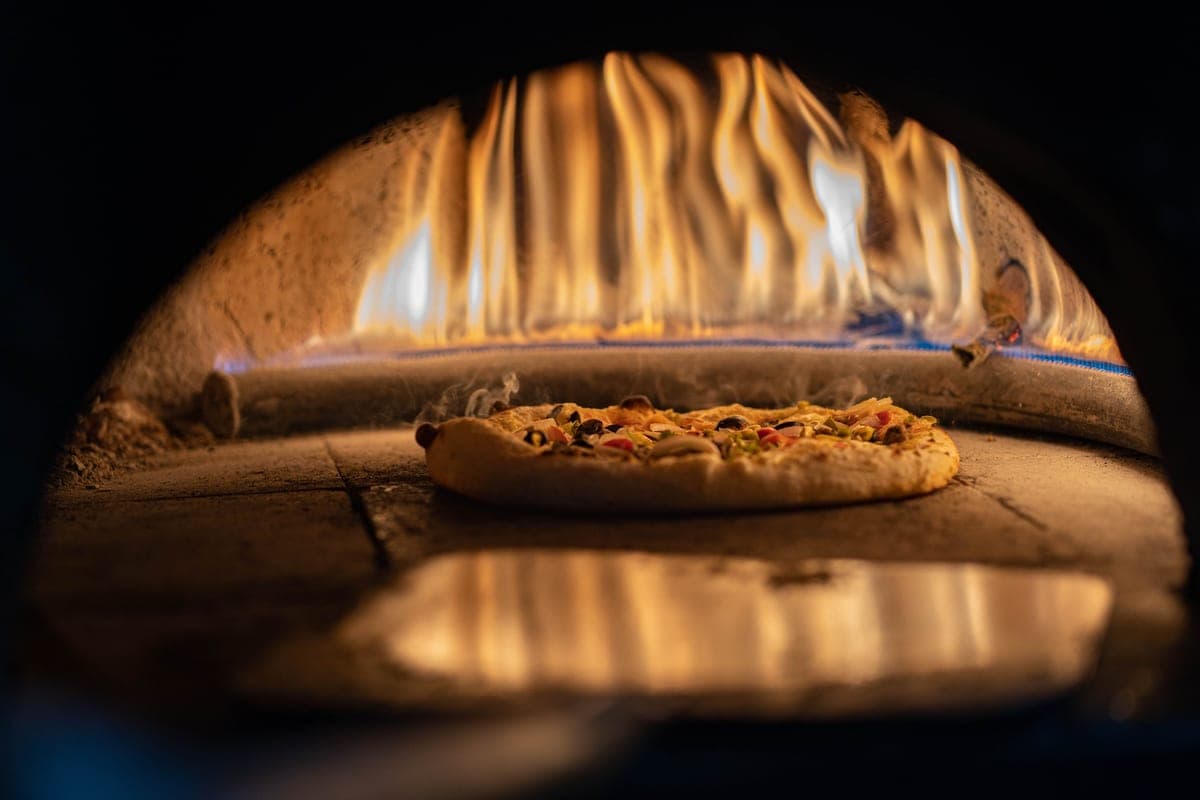
Air heats quickly. A slab of cordierite does not. So during a preheat those two diverge badly — the chamber can be at 950 F while the floor is still 150 to 200 F behind it. When a maker says "ready in 20 minutes", that is the chamber.
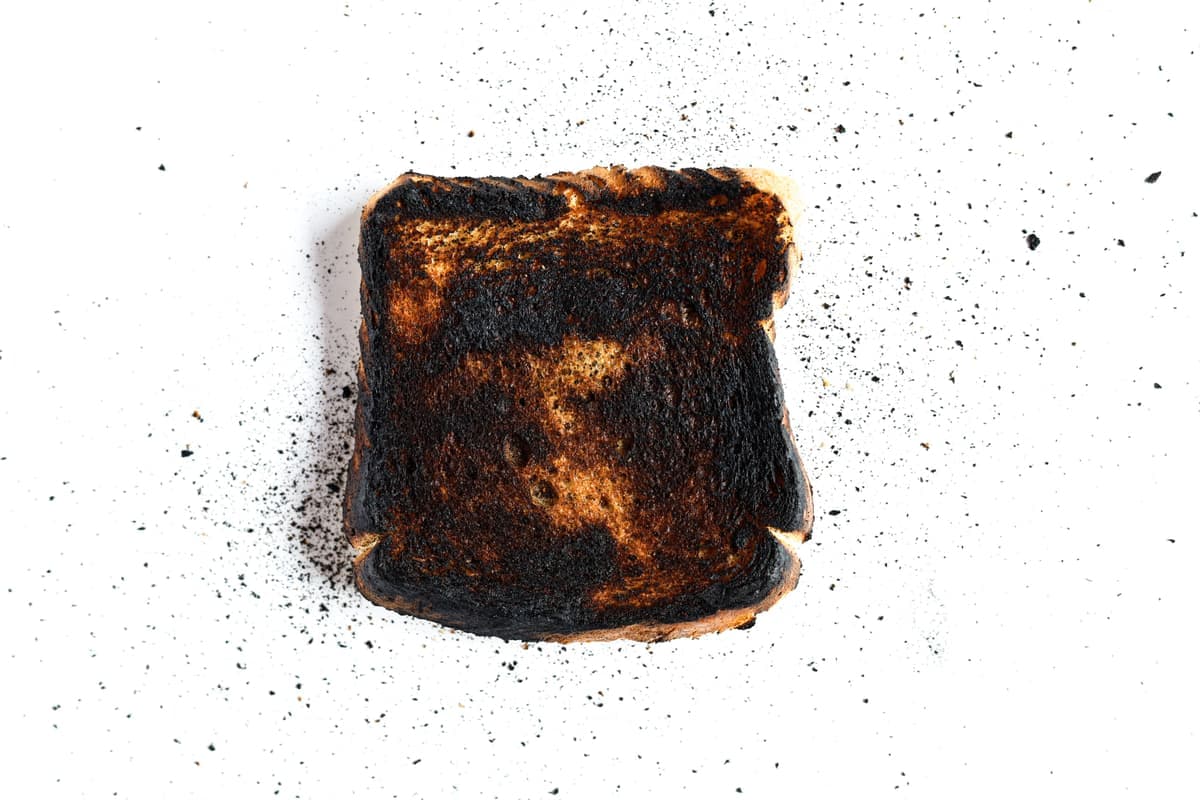
Launch at that moment and you get the classic first-pizza result: a well-browned top over a pale, dry, faintly bready base. Nothing was wrong with the dough. The floor was not ready. It is fault three in why pizza goes wrong.
What thickness does to the wait
Stone thickness across this site runs from 0.4 in to 0.8 in — a factor of two in mass, and therefore roughly a factor of two in how long the floor takes to catch up with the air.
That is the trade nobody mentions when recommending a thick stone. A 0.8 in floor carries three or four consecutive bakes without fading; it also makes you wait longer at the start. A 0.4 in floor is ready sooner and gives up sooner. Neither is better — they suit different evenings, and how to choose a pizza oven frames it as a question about how many pizzas you cook in a row.
Quick picks
Ranked for fit, not for hype. Every figure below is the maker’s own published number, and “n/p” means they do not publish it — which is itself worth knowing. Tap a row for the full write-up, or go straight to the listing.
| # | Oven | Best for | Max pizza | Weight | Price |
|---|---|---|---|---|---|
| 1 |  Etekcity 1080Reads to 1130 F with adjustable emissivity. | Reading a stone that is actually at 900 F | n/p | n/p | $24.99 · Check on Amazon |
| 2 |  Ooni Koda 16Still the most sensible first gas oven anyone buys. | The default first oven | 16" | 40.1 lb | $498.00 · Check on Amazon-23% |
| 3 |  Gozney RoccboxThe original portable stone-floor oven, and still the only 12 in oven with retractable legs, a carry strap, an insula... | The one that travels and still holds heat | 12" | 44 lb | $399.00 · Check on Amazon-20% |
Max pizza and weight are the makers’ published figures, sourced on each write-up below. Neither is a measurement we took, and no column here is a score — we have not cooked on these ovens and will not pretend otherwise.
Top pick · Reading a stone that is actually at 900 F
Etekcity Lasergrip 1080 Infrared Thermometer
Etekcity · Accessory
Reads to 1130 F with adjustable emissivity. The range matters: a thermometer that stops at 750 F cannot tell you anything useful about a pizza oven floor.
Published specification
- Range
- -58 F to 1130 F
- Emissivity
- Adjustable, 0.1 to 1.0
- Distance-to-spot
- 12:1
- Not for
- Measuring people
What it does well
- 1130 F clears a 950 F stone with margin, which is the only spec that matters here
- Adjustable emissivity is what lets it read dark cordierite accurately rather than defaulting to 0.95 and being wrong
- 12:1 means a usable reading from about 14 in — outside the oven mouth, not inside it
What you give up
- Infrared reads a surface, never an air temperature. The number is your stone, not your oven
- A 12:1 cone averages a wide patch at distance, so stand close and read the center
- Cheap infrared units drift; treat it as a repeatable relative reading, not a laboratory value
Buy it if
Every oven without a built-in stone-temperature readout, which is most of them.
Skip it if
Ovens with a digital floor probe already fitted, like the Ooni Connect hub models.
Where these numbers came from
Pick 2 · The default first oven
Ooni Koda 16 Propane Gas Pizza Oven
Ooni · Propane
Still the most sensible first gas oven anyone buys. 16 inches is the size where a 12-inch pizza stops feeling like a tight squeeze, and at 40 lb one person can carry it.
Published specification
- Max temperature
- 950 F (500 C), reached in about 20 minutes
- Stone
- 16 in cordierite, 0.6 in thick
- External size
- 25" L x 23.2" W x 14.7" H
- Weight
- 40.1 lb unboxed
- Fuel
- Propane, or a separate natural-gas version for a gas line
- Warranty
- 1 year standard, 5 years on registration with Ooni
- Gas input
- Ooni does not publish a BTU input rating for the Koda line
What it does well
- The 16 in stone is the real argument for this model over the 12 in ovens — a 12 in pizza sits inside it with room to turn, which is what actually stops a burnt edge
- One-piece body with folding legs: no assembly, and it is the largest oven here a single person carries comfortably
- There is a natural-gas variant, so a household with a gas line can stop buying cylinders entirely — rare in this category
What you give up
- 0.6 in stone stores less heat than the 0.8 in floors on the newer Koda 2 Pro and the Gozney Arc, so back-to-back bakes need a longer recovery pause
- Single burner across the back: no dual-zone control, so everything cooks at one temperature
- No door and no glass, so the heat you lose between launches is heat you re-earn with the flame
Buy it if
Someone buying their first serious outdoor oven who wants 16 in capacity and does not want to think about fuel beyond turning a dial.
Skip it if
Anyone who wants wood flavor, and anyone cooking two different things at once — that is the Koda 2 Pro or the Karu.
Where these numbers came from
Pick 3 · The one that travels and still holds heat
Gozney Roccbox Outdoor Pizza Oven
Gozney · Multi-fuel
The original portable stone-floor oven, and still the only 12 in oven with retractable legs, a carry strap, an insulated skin and a detachable burner you can swap for wood.
Published specification
- Max temperature
- 950 F (500 C), 20 to 30 minutes on gas
- Max pizza
- 12 in, about 60 seconds
- Weight
- 20 kg (about 44 lb)
- Fuel
- Propane or butane as standard; wood burner sold separately
- Floor
- Double-layer stone floor with dense insulation
- Included
- Detachable gas burner and a professional pizza peel
- Warranty
- 1 year standard, 5 years on registration within 60 days
What it does well
- Retractable legs plus a carry strap: it is the only oven in this registry designed from the outset to be picked up and taken somewhere
- The detachable burner is the cleanest gas-to-wood swap in the category — no second oven, no permanent commitment either way
- A peel is in the box, which quietly removes the most common forgotten purchase
- Cannot run on natural gas — Gozney is explicit about this, which is more than several rivals manage
What you give up
- 44 lb is heavy for a 12 in oven; the portability is about form, not mass
- Gozney does not publish external dimensions or stone thickness on the Roccbox page, so two comparable numbers are missing
- The wood burner is an extra purchase, so the multi-fuel headline costs more than the sticker
Buy it if
Someone who wants one oven for the patio and the campsite, and who might want wood later without buying twice.
Skip it if
Anyone who needs pizzas larger than 12 in.
Where these numbers came from
How to actually know it is ready
- Run at least the published time, at full output. Do not turn the flame down to "save gas" — the preheat is the gas that buys the result, and it is a small share of a cylinder anyway (the arithmetic).
- Point an infrared thermometer at the center of the stone, from outside the mouth. Your target depends on style: roughly 800 to 900 F for Neapolitan, 550 to 650 F for New York, 500 to 550 F for pan. Full ranges in how hot should a pizza oven be.
- Read the front and the back too. The spread tells you where the hot spot is and therefore how much turning the pizza will need.
- If the floor is low, wait — do not add flame. More flame heats the air, which you are not measuring and which is not cooking your base. It widens the gap rather than closing it.
The preheat between pizzas
This is the one people forget entirely. Each pizza takes heat out of the floor, so the second and third bakes start from a cooler stone than the first.
On a thin floor that shows up by the second or third pizza as slower browning underneath. The fix is time, not flame: two or three minutes with the burner up while the surface recovers. If you are cooking for a table, that recovery pause is the real throughput limit of the oven — and it is exactly what a thicker stone buys you out of.
How these picks were made
We did not cook on these ovens. Every figure on this page is the maker’s or the listing’s published specification, cited on each write-up so you can check it in one click. The ranking comes from matching those published capabilities to a stated use case — space, pizza size, fuel, and how many pizzas you cook in a row. Where a maker does not publish a number, we say so instead of estimating one.
The full version of that argument, including what we deliberately do not claim, is on our methodology page.
Questions people actually ask
+How long should you preheat a pizza oven?
+Why is my pizza base pale even though the oven is hot?
+Does a thicker pizza stone take longer to preheat?
+How long between pizzas?
+How long does a wood-fired pizza oven take to heat up?
Sources for this page