Peels, stones and tools
How to turn a pizza without wrecking it
The single technique that most improves results in a single-burner oven, and the specific mistake that makes it go wrong.
The short answer
Wait 20 to 30 seconds for the base to set, then rotate roughly a quarter turn every 20 seconds for the rest of the bake. Use a small turning peel and pivot the pizza on the stone — never lift it clear. Lifting breaks the floor contact that is cooking the base, which is the mistake that produces a raw center under a browned top.
Why turning is necessary at all
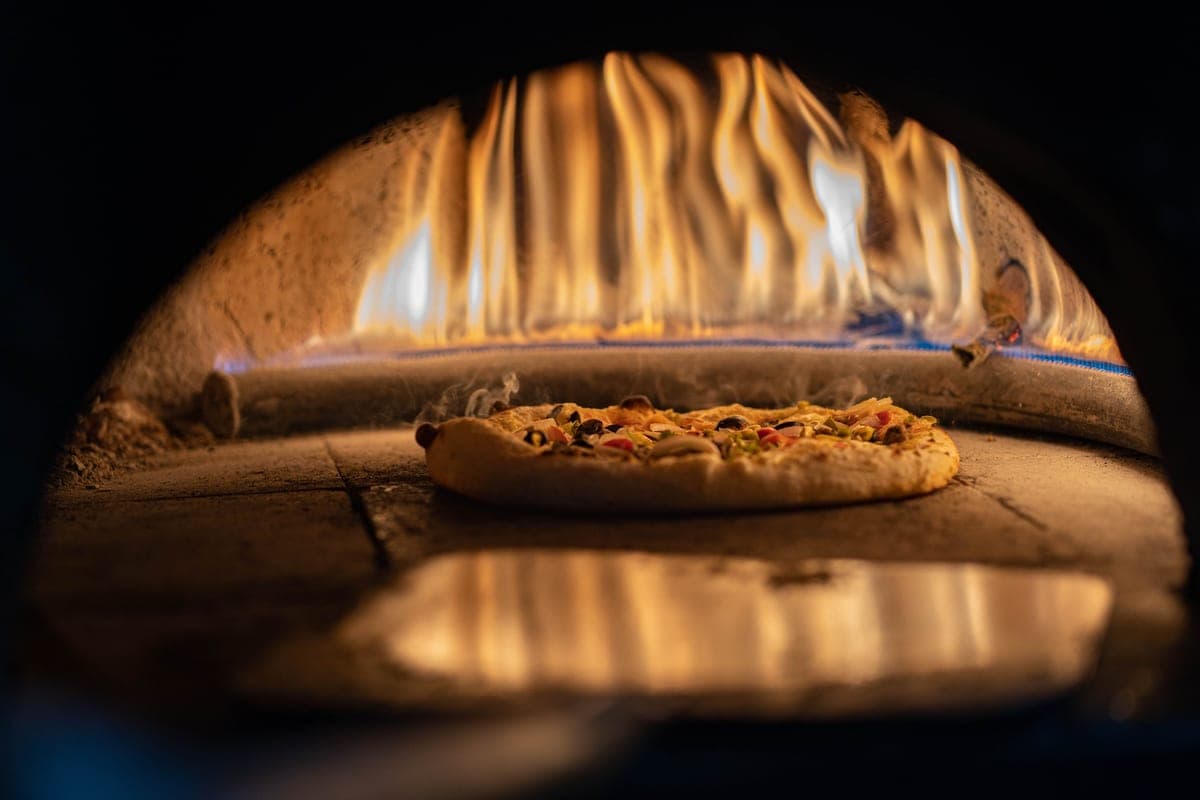
Most ovens on this site have a single burner, at the back or along one side. The edge of the pizza nearest that flame receives far more radiant heat than the far edge — a difference that can be well over 100 F across a 16 in stone.
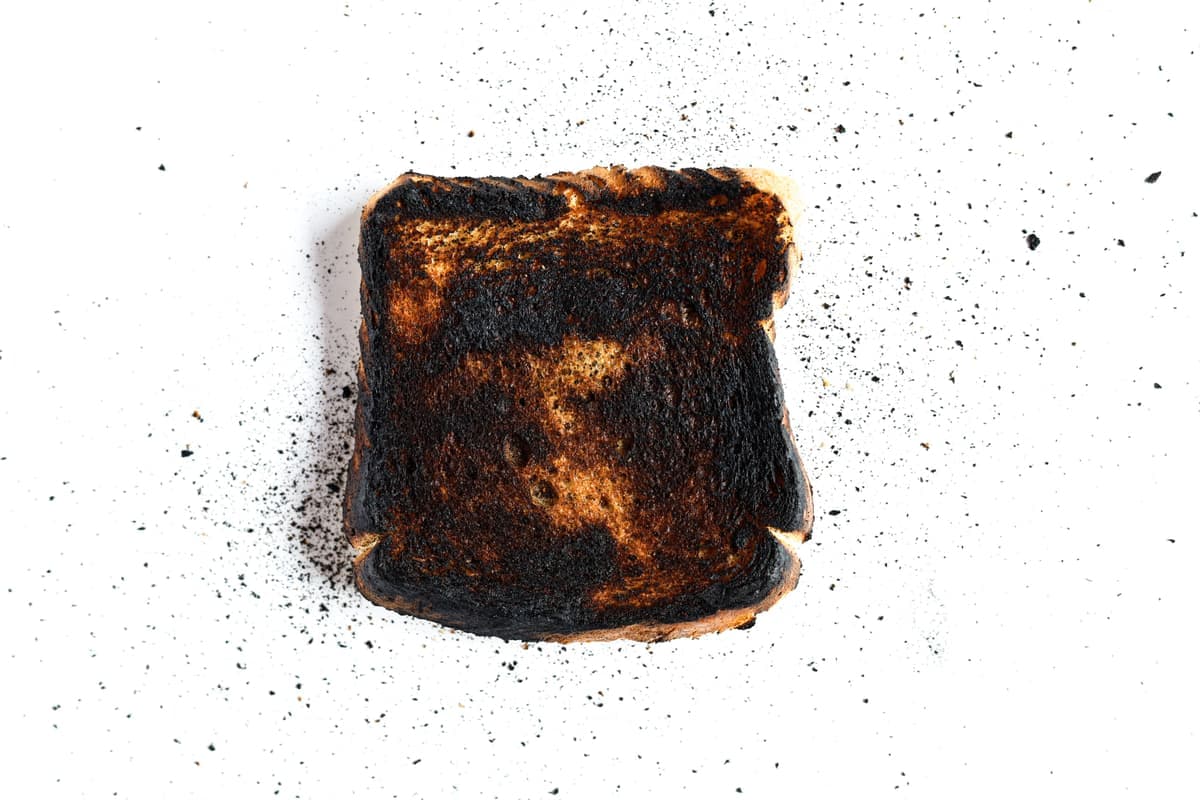
Over a 60-to-90-second bake, that gradient produces a pizza with one blistered, blackening edge and one pale, underdone one. Every photograph of a half-burnt home pizza is this, and it is not a dough problem or a temperature problem. It is a rotation problem.
Dual-zone ovens like the Koda 2 Pro and Koda 2 Max reduce the gradient, and Gozney's lateral flame reduces it too, but no oven here removes it entirely.
The timing
- Launch, then leave it alone for 20 to 30 seconds. The base needs to set before it can be moved. Touch it too early and the dough drags, folds or tears — this is the second most common mistake after not turning at all.
- First quarter turn at about 30 seconds. By now the base has firmed and will slide.
- Continue roughly every 20 seconds. In a 90-second bake that is three or four turns total; in a 60-second bake, two or three.
- Watch the rim rather than the clock. When the near edge starts coloring faster than the rest, that is the signal to turn regardless of timing.
The mechanics
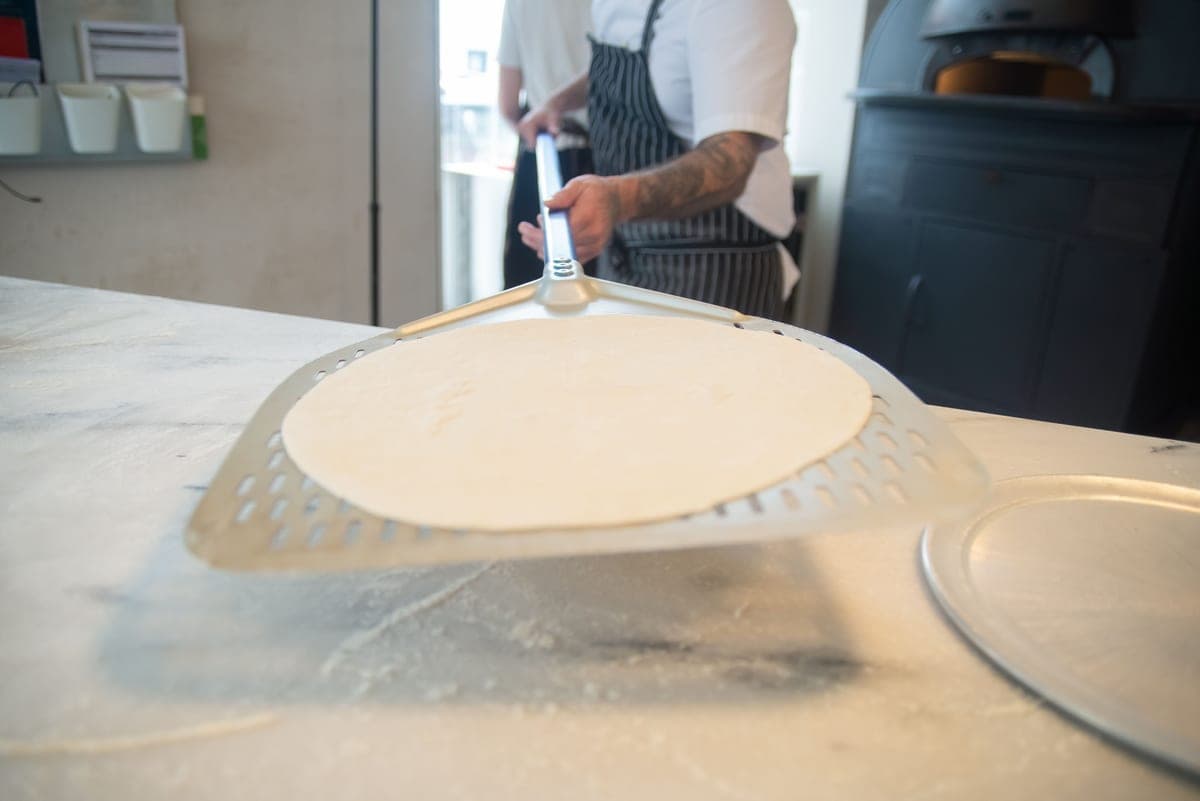
Slide the turning peel under one edge only, an inch or two in. Lift that edge just enough to break friction — a fraction of an inch, not a clear lift — and push sideways so the pizza pivots on its own center.
The far side of the pizza stays on the stone throughout. That is the whole point: floor contact is what cooks the base, and any moment the pizza spends in the air is a moment the base is not cooking while the top continues to.
What goes wrong
Turning too early. The base has not set, the peel drags through soft dough, and you fold the pizza onto itself. Wait for 20 to 30 seconds.
Lifting instead of pivoting. Produces a base that is noticeably less cooked than the top. If your pizzas come out with a pale, slightly doughy center despite a well-colored rim, this is usually why.
Not enough clearance. A 12 in pizza in a 12 in chamber leaves nowhere to insert the peel, which is why the gas roundup argues so hard for buying an oven two inches larger than your pizza.
A flexible turning peel. A thin head that bends under load folds the pizza instead of moving it. This is the one place where build quality genuinely matters in a peel. (If none of this appeals, one oven on this site sidesteps it entirely — the HALO Versa 16 rotates its stone under a motor.)
Quick picks
Ranked for fit, not for hype. Every figure below is the maker’s own published number, and “n/p” means they do not publish it — which is itself worth knowing. Tap a row for the full write-up, or go straight to the listing.
| # | Oven | Best for | Max pizza | Weight | Price |
|---|---|---|---|---|---|
| 1 |  CBO 9 in turning peelA 9 in round head on a detachable long handle. | Turning without dragging | n/p | n/p | $24.95 · Check on Amazon |
| 2 |  Ooni 12" Signature peelThe same perforated aluminum head, sized so it actually passes through a 12 or 13 in oven mouth without scraping the... | 12 in ovens | 12" | n/p | $80.00 · Check on Amazon |
Max pizza and weight are the makers’ published figures, sourced on each write-up below. Neither is a measurement we took, and no column here is a score — we have not cooked on these ovens and will not pretend otherwise.
Top pick · Turning without dragging
Chicago Brick Oven 9-Inch Aluminum Turning Pizza Peel
Chicago Brick Oven · Accessory
A 9 in round head on a detachable long handle. It exists to spin a pizza in place, which is the technique that fixes the one-burnt-edge problem in every small oven.
Published specification
- Head
- 9 in round aluminum
- Handle
- Detachable long handle
- Purpose
- Rotate a pizza in the chamber without lifting it out
What it does well
- In an oven with a single rear or side burner, turning is not optional, and a full-size peel is the wrong tool for it
- The small head slides under one edge and pivots, so the pizza never leaves the stone and the stone never loses contact
- A detachable handle is the difference between a tool you store and a 40 in pole you trip over
- Cheap relative to the problem it solves — see the turning technique
What you give up
- Useless for launching or retrieving — it is a third peel, not a replacement
- 9 in is generous for a 12 in oven; in a tight chamber a 7 or 8 in head is easier to work with
- Aluminum marks over time and will not stay bright, which is cosmetic rather than functional
Buy it if
Anyone with a 12 to 16 in oven and a single burner.
Skip it if
Dual-zone ovens where the heat is already even, and indoor electric ovens.
Where these numbers came from
Pick 2 · 12 in ovens
Ooni 12" Signature Perforated Pizza Peel
Ooni · Accessory
The same perforated aluminum head, sized so it actually passes through a 12 or 13 in oven mouth without scraping the sides.
Published specification
- Head
- 12" anodized perforated aluminum
- Handle
- Long walnut wood
- Fits
- Koda 12, Karu 2, Arc Lite, Roccbox, Pi Prime
What it does well
- Sized to the oven rather than to the pizza, which is the correct way to choose a peel
- Same perforation and anodizing as the 14 in Signature
- Lighter, so it is easier to hold steady at the moment of launch
What you give up
- A 12 in pizza on a 12 in peel leaves no margin for a slightly oversized stretch
- Too small for any 16 in oven
- Still a launching peel, not a building surface
Buy it if
Every 12 in oven on this site.
Skip it if
16 in ovens.
Where these numbers came from
The related fix: launch straight
A pizza launched crooked or too far forward starts the bake in the wrong place and every turn has to correct for it. Aim for the center of the stone, get the peel tip close to the back before you commit, and pull out in one motion. Hesitation at launch is what folds pizzas — see the first burn guide.
Two related pages, if turning is the part you are trying to avoid. Rotating pizza ovens do this job with a motor, and the honest comparison is that a turning peel costs a tiny fraction of the cheapest of them. And whatever you turn with, gloves rated with a duration rather than just a temperature are what keep a forearm out of trouble at the oven mouth.
How these picks were made
We did not cook on these ovens. Every figure on this page is the maker’s or the listing’s published specification, cited on each write-up so you can check it in one click. The ranking comes from matching those published capabilities to a stated use case — space, pizza size, fuel, and how many pizzas you cook in a row. Where a maker does not publish a number, we say so instead of estimating one.
The full version of that argument, including what we deliberately do not claim, is on our methodology page.