Heat and technique
Why one side burns, and four other things that go wrong
Almost every home pizza oven problem is one of five, each with a specific cause and a specific fix. None of them requires buying a better oven.
The short answer
One edge burnt: you are not turning enough, or the chamber is too tight to turn in. Base burnt, top raw: the stone is too hot for the style. Pale everywhere: the stone was not actually at temperature. Stuck to the peel: the pizza sat too long before launch. Raw center under a browned top: you are lifting the pizza off the stone when you turn it.
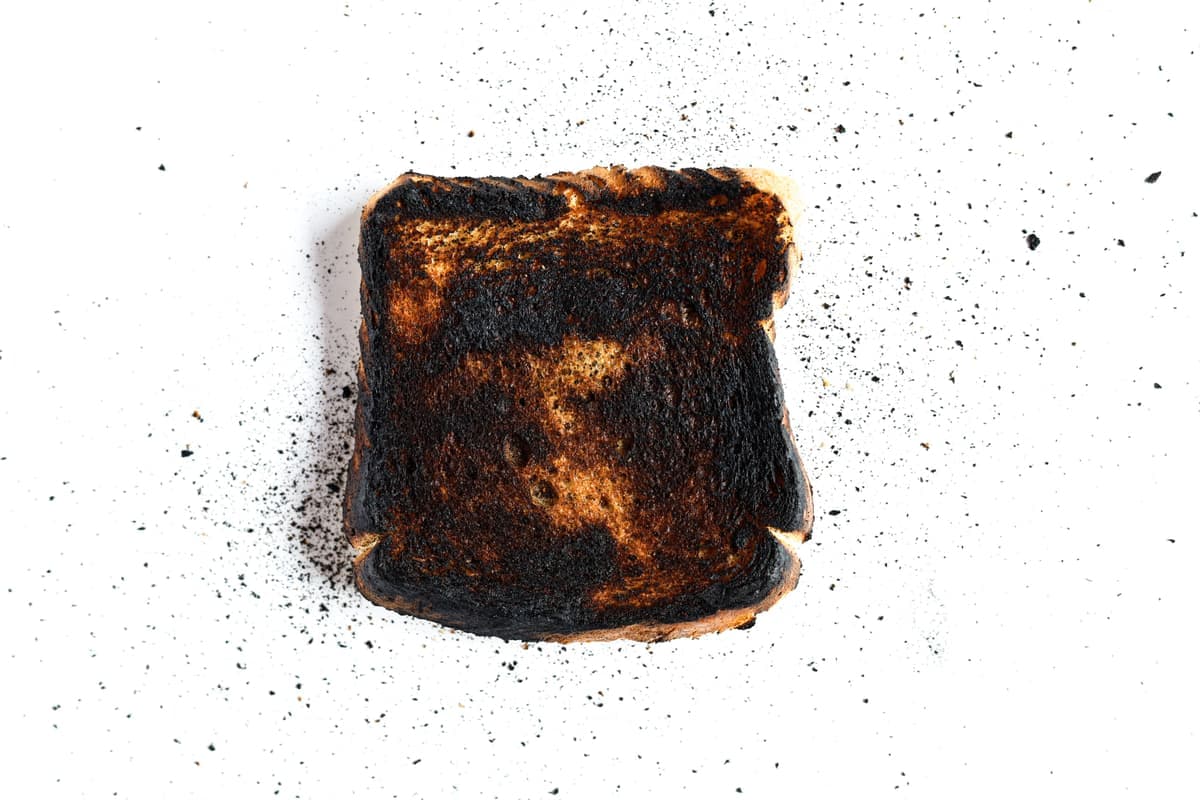
1. One edge blackened, the other pale
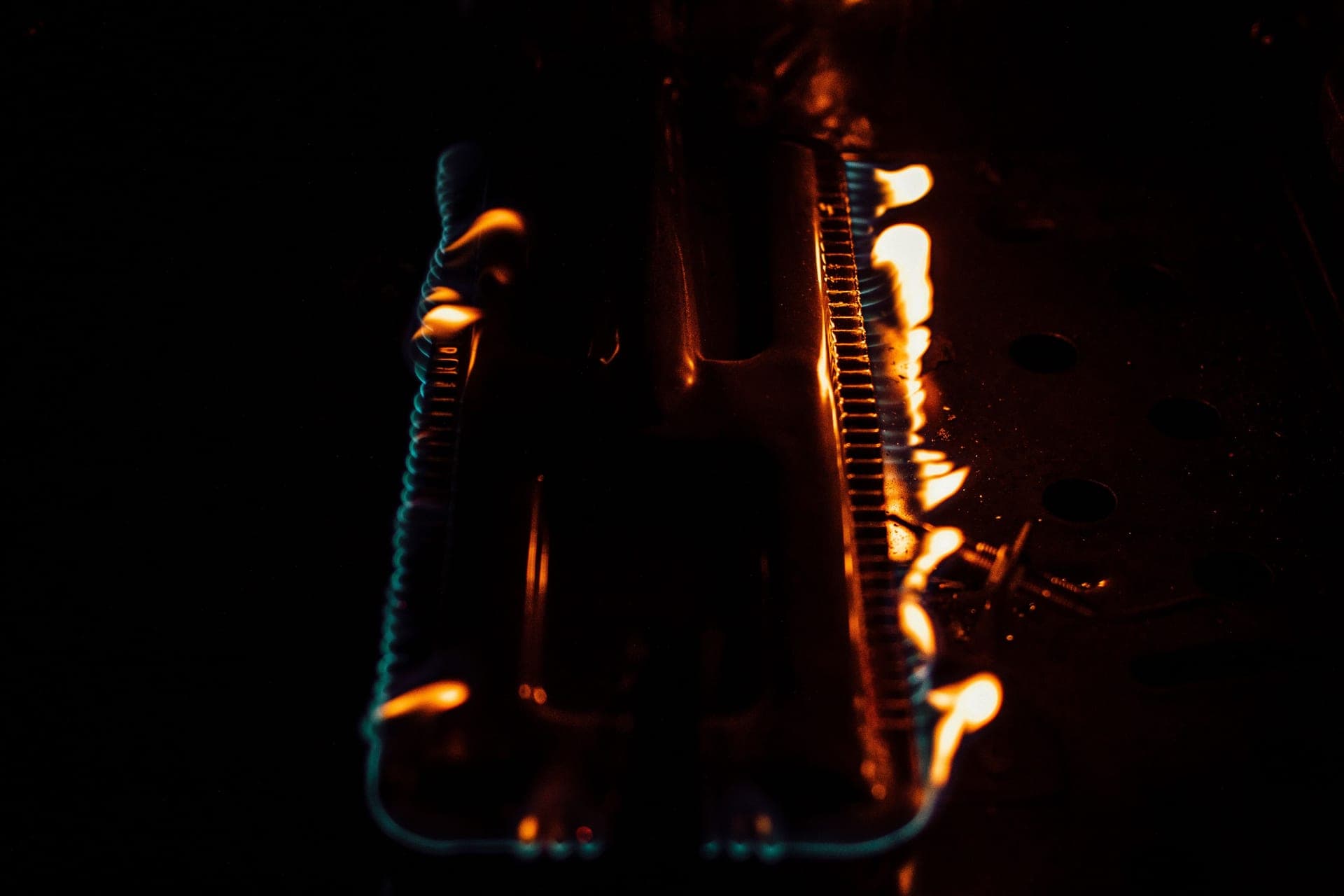
Cause: a single rear or side burner throws far more radiant heat at the near edge than the far one. Across a 16 in stone that gradient can exceed 100 F, and over a 90-second bake it is decisive.
Fix: turn the pizza a quarter rotation roughly every 20 seconds after the first 30. Three or four turns in a 90-second bake. Full mechanics in the turning technique.
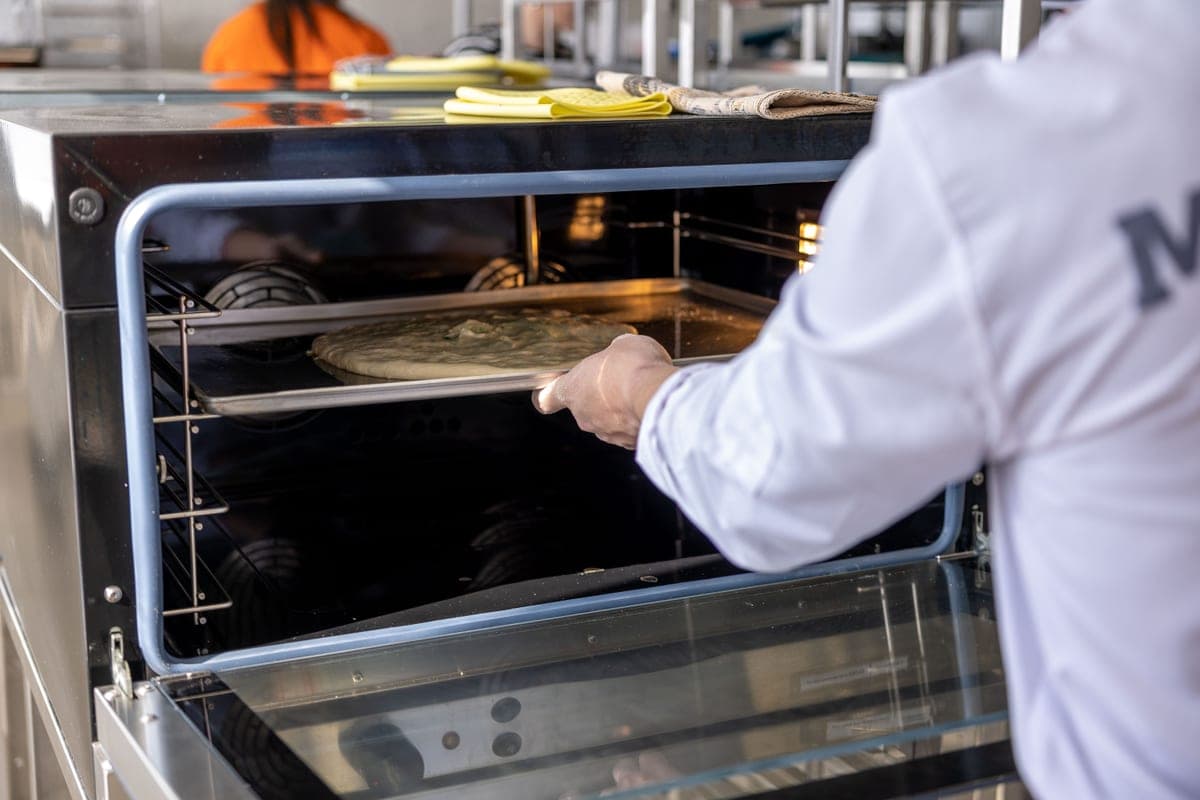
If you cannot turn it: the chamber is too small for the pizza. A 12 in pizza in a 12 in oven leaves nowhere to insert a turning peel. Make smaller pizzas, or accept that your next oven needs two inches more than your pizza — see how to choose.
2. Base burnt, top barely cooked
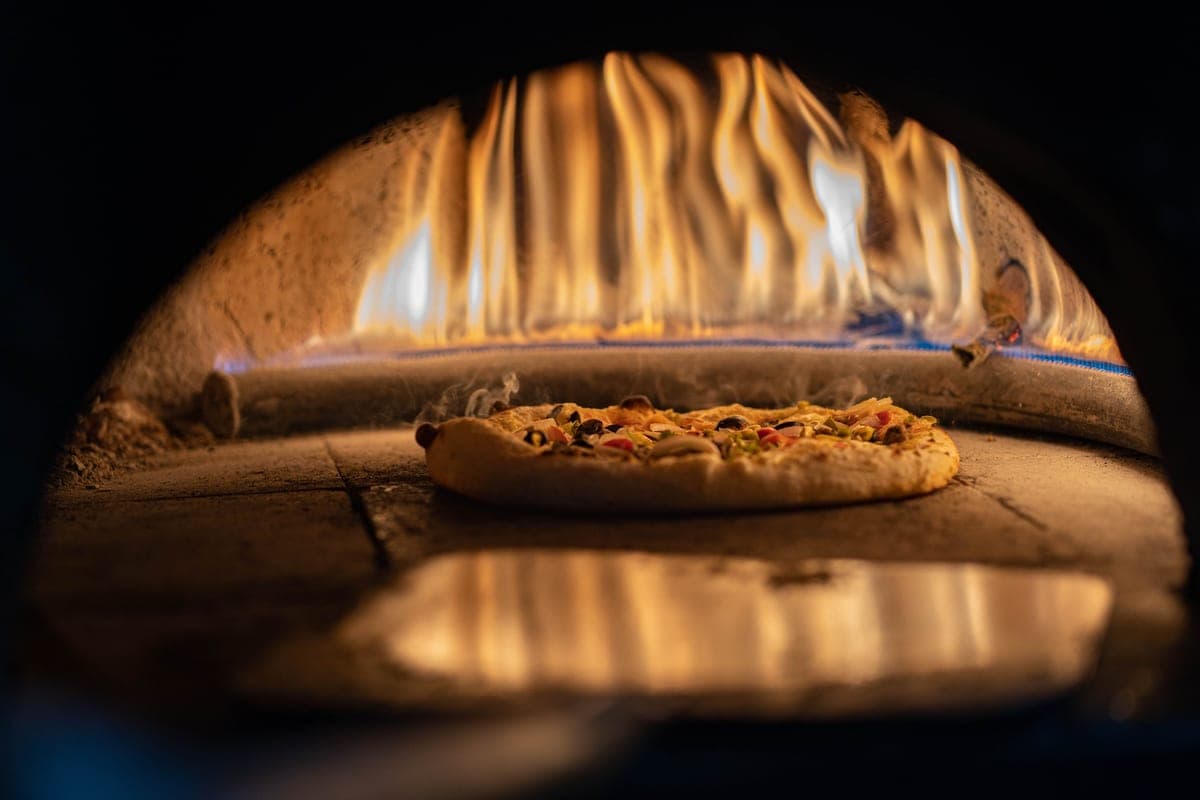
Cause: the stone is too hot for the style you are making. This is the classic result of running a 950 F oven with a New York-style dough that wants 550 to 650 F.
Fix: cool the floor, not the flame. Turn the burner down and give it several minutes for the stone surface to drop, or wait longer between pizzas. Adding time to the bake does not help — the base is already burning.
The other cause: a baking steel in a pizza oven. Steel conducts far faster than cordierite and will scorch a base at 900 F. Steel belongs in a domestic oven — see stones and steels.
3. Pale, dry and bready all over
Cause: the stone was not at temperature when you launched, almost always because the oven's dial said ready while the floor was still 150 to 200 F behind. Air heats fast; a ceramic slab does not.
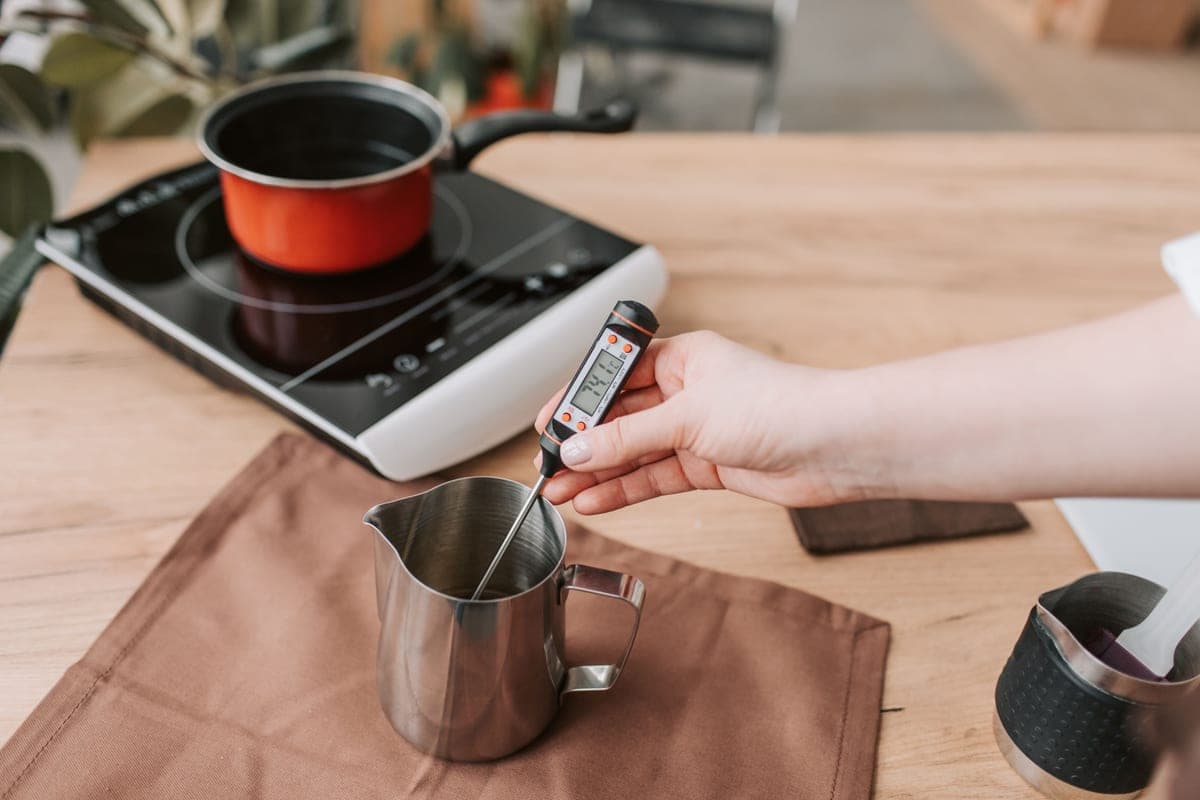
Fix: measure the floor with an infrared thermometer instead of trusting the dial, and preheat longer than the maker's stated time. This single change fixes more first-pizza disappointments than anything else — see how hot should a pizza oven be.
Quick picks
Ranked for fit, not for hype. Every figure below is the maker’s own published number, and “n/p” means they do not publish it — which is itself worth knowing. Tap a row for the full write-up, or go straight to the listing.
| # | Oven | Best for | Max pizza | Weight | Price |
|---|---|---|---|---|---|
| 1 |  CBO 9 in turning peelA 9 in round head on a detachable long handle. | Turning without dragging | n/p | n/p | $24.95 · Check on Amazon |
| 2 |  Etekcity 1080Reads to 1130 F with adjustable emissivity. | Reading a stone that is actually at 900 F | n/p | n/p | $24.99 · Check on Amazon |
Max pizza and weight are the makers’ published figures, sourced on each write-up below. Neither is a measurement we took, and no column here is a score — we have not cooked on these ovens and will not pretend otherwise.
Top pick · Turning without dragging
Chicago Brick Oven 9-Inch Aluminum Turning Pizza Peel
Chicago Brick Oven · Accessory
A 9 in round head on a detachable long handle. It exists to spin a pizza in place, which is the technique that fixes the one-burnt-edge problem in every small oven.
Published specification
- Head
- 9 in round aluminum
- Handle
- Detachable long handle
- Purpose
- Rotate a pizza in the chamber without lifting it out
What it does well
- In an oven with a single rear or side burner, turning is not optional, and a full-size peel is the wrong tool for it
- The small head slides under one edge and pivots, so the pizza never leaves the stone and the stone never loses contact
- A detachable handle is the difference between a tool you store and a 40 in pole you trip over
- Cheap relative to the problem it solves — see the turning technique
What you give up
- Useless for launching or retrieving — it is a third peel, not a replacement
- 9 in is generous for a 12 in oven; in a tight chamber a 7 or 8 in head is easier to work with
- Aluminum marks over time and will not stay bright, which is cosmetic rather than functional
Buy it if
Anyone with a 12 to 16 in oven and a single burner.
Skip it if
Dual-zone ovens where the heat is already even, and indoor electric ovens.
Where these numbers came from
Pick 2 · Reading a stone that is actually at 900 F
Etekcity Lasergrip 1080 Infrared Thermometer
Etekcity · Accessory
Reads to 1130 F with adjustable emissivity. The range matters: a thermometer that stops at 750 F cannot tell you anything useful about a pizza oven floor.
Published specification
- Range
- -58 F to 1130 F
- Emissivity
- Adjustable, 0.1 to 1.0
- Distance-to-spot
- 12:1
- Not for
- Measuring people
What it does well
- 1130 F clears a 950 F stone with margin, which is the only spec that matters here
- Adjustable emissivity is what lets it read dark cordierite accurately rather than defaulting to 0.95 and being wrong
- 12:1 means a usable reading from about 14 in — outside the oven mouth, not inside it
What you give up
- Infrared reads a surface, never an air temperature. The number is your stone, not your oven
- A 12:1 cone averages a wide patch at distance, so stand close and read the center
- Cheap infrared units drift; treat it as a repeatable relative reading, not a laboratory value
Buy it if
Every oven without a built-in stone-temperature readout, which is most of them.
Skip it if
Ovens with a digital floor probe already fitted, like the Ooni Connect hub models.
Where these numbers came from
4. The pizza stuck to the peel
Cause: time. A topped pizza releases moisture into the flour beneath it, and within a couple of minutes it has welded itself to the peel. Everything else — flour type, peel material, technique — is secondary to how long it sat there.
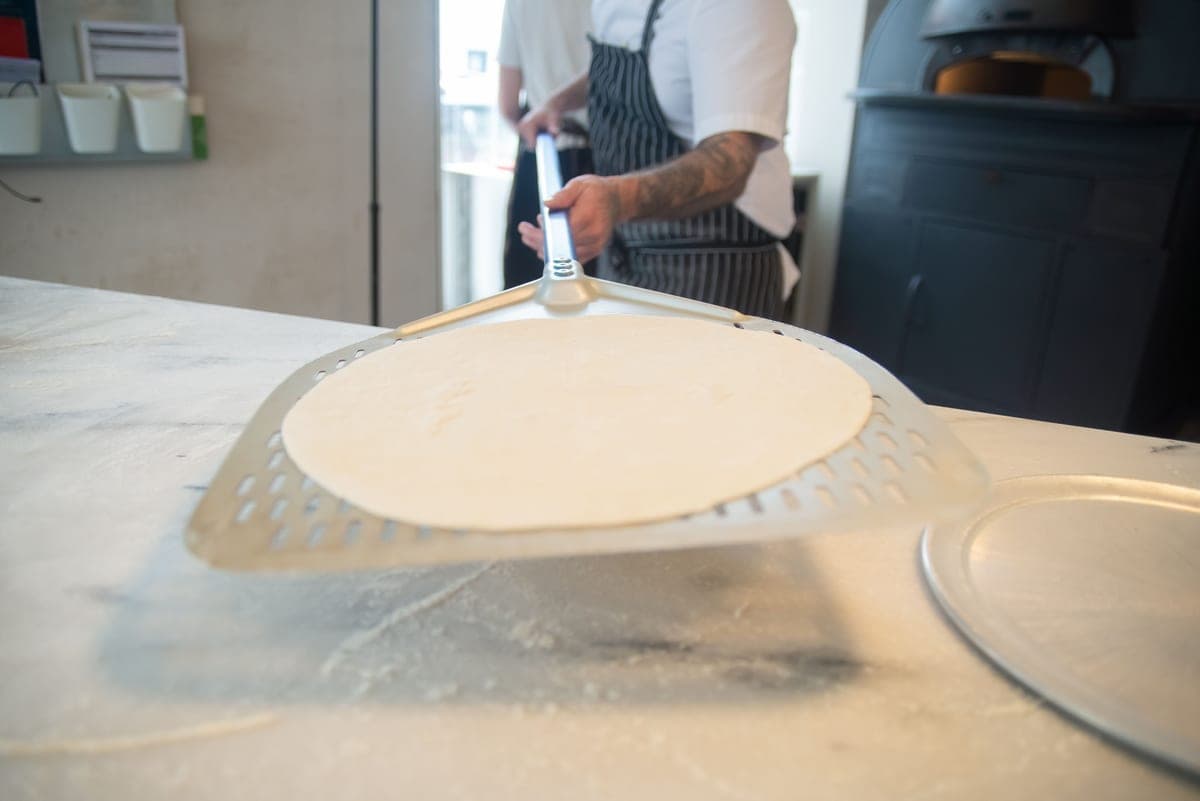
Fixes, in order: build fast, with everything prepared before the dough goes on the peel. Use semolina rather than fine flour, because coarse grains roll like ball bearings where fine flour absorbs water and pastes. Shake the peel before launching — if it does not slide freely, it will not launch, so lift an edge and get more semolina underneath. And use a perforated peel, which sheds excess flour and gives a smoother release surface.
5. Browned on top, raw and doughy in the center
Cause: the base is not getting enough contact time with the stone. The usual culprit is turning technique — lifting the pizza clear of the floor to rotate it, rather than pivoting it in place. Every second in the air is a second the base is not cooking while the top continues to.
Fix: lift only one edge, just enough to break friction, and pivot. The far side stays on the stone. If you are using a full-size launching peel to turn, that is the problem — it is too wide to engage one edge only.
The other cause: too much topping, particularly wet toppings. A heavy, wet pizza needs longer than the base can survive at high heat. Fresh mozzarella in particular should be torn and drained rather than sliced on wet.
The diagnostic order
If several of these are happening at once, work through them in this sequence: stone temperature first (it causes faults 2 and 3 and masks the others), then turning (faults 1 and 5), then the launch (fault 4), then toppings. Fixing the temperature first often makes two other problems disappear on their own.
There is a hardware answer to this as well as a technique one. Rotating pizza ovens turn the stone under the pizza with a motor, which removes the uneven-bake problem entirely — at the cost of a mechanism, and of paying for something a turning peel already does.
How these picks were made
We did not cook on these ovens. Every figure on this page is the maker’s or the listing’s published specification, cited on each write-up so you can check it in one click. The ranking comes from matching those published capabilities to a stated use case — space, pizza size, fuel, and how many pizzas you cook in a row. Where a maker does not publish a number, we say so instead of estimating one.
The full version of that argument, including what we deliberately do not claim, is on our methodology page.