Heat and technique
Are pizza ovens worth it?
For some households, emphatically. For others it is a heavy object that lives under a cover. The difference is predictable before you spend anything, and there is a cheap way to test it.
The short answer
Worth it if you will use it more than about once a month. A pizza oven does one thing a domestic oven physically cannot: it reaches 950 F, roughly 400 F above a kitchen oven's ceiling, and that is what produces a 60-to-90-second bake with a puffed, leopard-spotted rim. It is not worth it if you are buying it for a party, if you have nowhere it can live outdoors, or if you have not yet tried a steel in your existing oven.
The honest version of this question is not "is it good" — it is good — but "will I use it". That is the variable that decides the answer, and most people can predict it about themselves reasonably well if they are asked the right questions.
What a pizza oven actually does that your oven cannot
A domestic oven tops out somewhere around 500 to 550 F. A dedicated pizza oven reaches 950 F. That gap is not a matter of degree, it changes the outcome:
- Bake time drops from 8 to 12 minutes to 60 to 90 seconds. The dough puffs before it dries out, which is what produces an airy rim rather than a dense, crackery one.
- The rim leopard-spots. Those dark blisters need radiant heat at high temperature in a short window. At 550 F you get uniform browning instead, over a long enough period that the crumb has already set.
- Toppings stay fresh. Fresh mozzarella melts without drying out and basil survives. At domestic-oven times, both are cooked out well before the base is done.
That is the whole case, and it is a real one. The pizza is genuinely, obviously different — not a small improvement. Our temperature guide goes into the physics of why.
The honest counter-case
It is an appliance that lives outdoors and weighs between 26 and 95 lb. If it has to be carried out of a garage and set up each time, the number of times you will do that is smaller than you currently think. Weight is the single best predictor of usage frequency in this category, which is why it appears on every page here.
It only makes pizza well. Some models publish a low-temperature end — the Ooni Koda 2 Pro's range starts at 320 F — and those are genuinely usable for roasting and flatbreads. Most publish only a peak, which means they are designed around a single job.
The dough is the hard part, and the oven does not help with it. A 950 F oven cooking mediocre dough produces mediocre pizza in 90 seconds instead of mediocre pizza in 10 minutes. Nearly every disappointed owner we can find a written account of was disappointed by dough. The high-heat dough guide is the part of this hobby that actually requires learning.
There is a running cost. It is small, but it is not nothing — a preheat consumes more gas than the cooking does, and the running-cost arithmetic is worked from the only published BTU and runtime figures in the category.
The cheap way to find out before you spend
Buy a baking steel and put it in the oven you already own. It is the closest thing to a free trial that exists here.
A steel conducts stored heat into the base far faster than the oven's air can, which rescues the one thing a 550 F oven is worst at. You will not get 90 seconds or leopard spotting — no accessory raises your oven's ceiling — but you will find out whether you enjoy stretching dough, building fast, and doing this on a weeknight. Preheat it for a full 45 minutes to an hour, which feels excessive and is not.
If after a month the steel is still coming out, you will use a pizza oven. If it went into a cupboard after the second attempt, you have saved yourself several hundred dollars and a covered object on the patio.
Quick picks
Ranked for fit, not for hype. Every figure below is the maker’s own published number, and “n/p” means they do not publish it — which is itself worth knowing. Tap a row for the full write-up, or go straight to the listing.
| # | Oven | Best for | Max pizza | Weight | Price |
|---|---|---|---|---|---|
| 1 |  VEVOR pizza steelSteel moves heat into dough far faster than stone does, which is why a steel in a 550 F kitchen oven browns a base th... | Browning a base in a domestic oven | 12" | n/p | $84.90 · Check on Amazon |
| 2 |  Gozney Arc Lite26.4 lb and 16.9 in wide, with 5.9 in of internal height. | The lightest real oven here | 12" | 26.4 lb | $399.99 · Check on Amazon |
| 3 |  Ooni Koda 16Still the most sensible first gas oven anyone buys. | The default first oven | 16" | 40.1 lb | $498.00 · Check on Amazon-23% |
| 4 |  Ooni Volt 21600 W on a standard 120 V outlet, and 850 F on a stone floor. | 850 F on a normal kitchen outlet | 12" | 38.8 lb | $698.95 · Check on Amazon |
Max pizza and weight are the makers’ published figures, sourced on each write-up below. Neither is a measurement we took, and no column here is a score — we have not cooked on these ovens and will not pretend otherwise.
Top pick · Browning a base in a domestic oven
VEVOR Pre-Seasoned Carbon Steel Pizza Steel, 3/8 in
VEVOR · Accessory
Steel moves heat into dough far faster than stone does, which is why a steel in a 550 F kitchen oven browns a base that a stone leaves pale.
Published specification
- Size
- 20" x 14" x 3/8"
- Material
- Pre-seasoned solid carbon steel
What it does well
- Steel's conductivity is the reason it out-browns cordierite in a domestic oven — it delivers stored heat into the dough faster
- Pre-seasoned, so it arrives usable
- Effectively unbreakable, unlike a stone
What you give up
- Rusts. It needs drying and oiling like a cast-iron pan
- That same fast heat transfer will scorch a base in an actual pizza oven — steel is a domestic-oven tool, not a 950 F one
- 3/8 in of steel is heavy, and at 20 in long this plate is deeper than some racks — measure before you order, and be careful lifting it in and out hot
Buy it if
A domestic-oven cook chasing a browner base.
Skip it if
Anyone putting it in a real pizza oven. Use the cordierite stone that came with it.
Where these numbers came from
Pick 2 · The lightest real oven here
Gozney Arc Lite Propane Outdoor Pizza Oven
Gozney · Propane
26.4 lb and 16.9 in wide, with 5.9 in of internal height. Gozney thinned the stone to 0.5 in to get there, which is the trade you are actually making.
Published specification
- Max temperature
- 950 F
- External size
- W 16.9" x D 18.9" x H 11.7"
- Internal size
- W 12.8" x D 14.0" x H 5.9"
- Weight
- 26.4 lb (12 kg)
- Stone
- Removable 0.5 in (12 mm) cordierite
- Max pizza
- 12 in
- Control
- Gas control dial; no digital display
What it does well
- The lightest oven in this registry by a clear margin — it is the one that actually goes in a car trunk
- 5.9 in of internal height is more than most 12 in ovens give you
- Keeps the Gozney lateral-flame layout at the entry price
What you give up
- 0.5 in stone stores noticeably less heat than the 0.8 in floors in the Arc and Arc XL, so the recovery pause between pizzas comes back
- 12 in maximum, and a 12.8 in chamber — very little turning room
- No digital gauge, so an infrared thermometer stops being optional
Buy it if
Balconies, campsites, and anyone whose oven has to be carried and stored each time.
Skip it if
Back-to-back cooking for a group.
Where these numbers came from
Pick 3 · The default first oven
Ooni Koda 16 Propane Gas Pizza Oven
Ooni · Propane
Still the most sensible first gas oven anyone buys. 16 inches is the size where a 12-inch pizza stops feeling like a tight squeeze, and at 40 lb one person can carry it.
Published specification
- Max temperature
- 950 F (500 C), reached in about 20 minutes
- Stone
- 16 in cordierite, 0.6 in thick
- External size
- 25" L x 23.2" W x 14.7" H
- Weight
- 40.1 lb unboxed
- Fuel
- Propane, or a separate natural-gas version for a gas line
- Warranty
- 1 year standard, 5 years on registration with Ooni
- Gas input
- Ooni does not publish a BTU input rating for the Koda line
What it does well
- The 16 in stone is the real argument for this model over the 12 in ovens — a 12 in pizza sits inside it with room to turn, which is what actually stops a burnt edge
- One-piece body with folding legs: no assembly, and it is the largest oven here a single person carries comfortably
- There is a natural-gas variant, so a household with a gas line can stop buying cylinders entirely — rare in this category
What you give up
- 0.6 in stone stores less heat than the 0.8 in floors on the newer Koda 2 Pro and the Gozney Arc, so back-to-back bakes need a longer recovery pause
- Single burner across the back: no dual-zone control, so everything cooks at one temperature
- No door and no glass, so the heat you lose between launches is heat you re-earn with the flame
Buy it if
Someone buying their first serious outdoor oven who wants 16 in capacity and does not want to think about fuel beyond turning a dial.
Skip it if
Anyone who wants wood flavor, and anyone cooking two different things at once — that is the Koda 2 Pro or the Karu.
Where these numbers came from
Pick 4 · 850 F on a normal kitchen outlet
Ooni Volt 2 Electric Indoor Pizza Oven
Ooni · Electric
1600 W on a standard 120 V outlet, and 850 F on a stone floor. It is the only oven here that turns a kitchen counter into something close to a pizzeria deck.
Published specification
- Power
- 120 V / 1600 W, standard North America Type B plug
- Temperature
- 70 F to 850 F (450 C)
- Stone
- Cordierite, 0.4 in (10 mm)
- External size
- 21.5" x 17.4" x 10.4"
- Opening height
- 3.6 in
- Weight
- 38.8 lb
- Body
- Powder-coated carbon steel, triple-paned tempered glass door
- Placement
- Indoor use only
What it does well
- 1600 W draws about 13.3 A, which fits inside a standard 15 A North American kitchen circuit — that is the whole reason this oven is practical. See power requirements
- A proof mode that goes down to 70 F means the same appliance proofs the dough it later bakes
- Triple-paned glass and a filtered exhaust are why this can live in a kitchen and a Koda cannot
- 850 F is roughly 300 F hotter than a domestic oven's maximum, which is the entire difference in crust
What you give up
- 0.4 in stone is the thinnest floor in this registry. Consecutive bakes need recovery time and the oven's control system spends its effort managing exactly that
- 850 F, not 950 F: a true 60-second Neapolitan is out of reach and Ooni does not claim it
- 3.6 in of opening height rules out deep pan builds
- Indoor use only, stated by Ooni — this is not an outdoor oven that also works inside
Buy it if
Apartments, winter, and anyone whose real obstacle is that the oven has to live indoors.
Skip it if
Anyone whose target is a 60-second, 950 F Neapolitan.
Where these numbers came from
Four questions that decide it
- Where would it live? If the answer is "it would come out of the garage each time", halve your estimate of how often you will use it. If it can live outside under a cover on a surface that is already there, the answer is usually yes.
- Would you make dough on a Thursday for a Friday? Good pizza wants a cold ferment. If that sounds like a pleasure, buy the oven. If it sounds like homework, you will end up using shop-bought dough, and shop-bought dough at 950 F is not worth an appliance.
- How many people are you cooking for? For one or two, almost any oven here works. For six, stone thickness stops being a detail — a thin floor gives up its heat and pizzas three and four cook badly.
- Is your climate going to cooperate? An outdoor gas oven in a place with four cold months gets used for eight. That is still plenty, but it changes the arithmetic — and it is the strongest argument for an indoor electric oven instead.
The cases where it is genuinely not worth it
You live in an apartment with a balcony. Many leases and local fire codes restrict open-flame appliances and cylinder storage outright, and finding that out after delivery is expensive. Check first — the balcony rules guide is the one page on this site where the answer is often no. An indoor electric oven may be your only legal route.
You want it for one party. A pizza oven cooks one pizza at a time in about 90 seconds, and needs 15 to 20 minutes of preheat first. It is excellent at feeding six people over an hour and poor at feeding twenty at once. For a single event, rent or order in.
You mostly eat frozen pizza. Frozen pizza is formulated for a 400 to 425 F domestic oven and burns before the middle thaws at 950 F. That is not a failure of the oven; it is the wrong tool.
So: worth it?
If you make your own dough, have somewhere the oven can live, and cook for a household rather than a crowd — yes, and the difference is not subtle. If any of those three is a no, fix that one first. A steel in your existing oven costs a fraction as much and answers the question honestly.
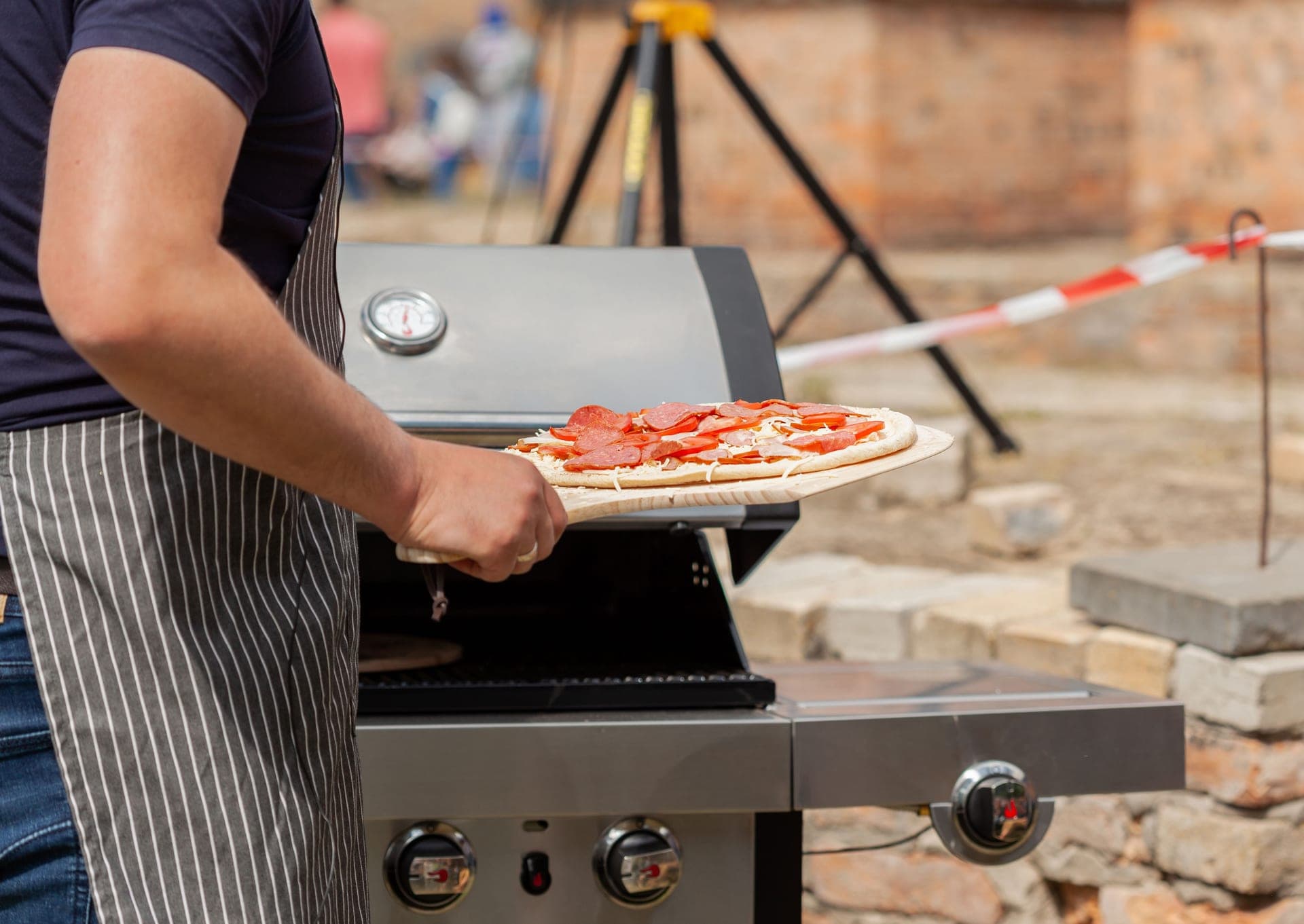
One more cheap test before you spend: if you own a barbecue, you already own the hottest appliance in the house and it is already outside. Pizza oven vs grill sets out what a stone on the grates gets you, what a conversion box adds, and the exact point at which neither is enough.
How these picks were made
We did not cook on these ovens. Every figure on this page is the maker’s or the listing’s published specification, cited on each write-up so you can check it in one click. The ranking comes from matching those published capabilities to a stated use case — space, pizza size, fuel, and how many pizzas you cook in a row. Where a maker does not publish a number, we say so instead of estimating one.
The full version of that argument, including what we deliberately do not claim, is on our methodology page.