Choosing by space
Pizza ovens on a balcony: what to check before you buy
This is the one page on this site where the answer is often no, and where finding that out after delivery is expensive. Three things to check, in order.
The short answer
Check three things before buying: your lease or HOA rules, your local fire code, and the oven's own manual. Open-flame appliances and propane cylinder storage on balconies are commonly restricted, and the restriction usually applies regardless of how small or careful you are. Where gas is not permitted, an indoor electric oven is normally the answer rather than a compromise.
1. Your lease or HOA rules
Start here, because it is the fastest to check and the most likely to settle it. Many residential leases and homeowners' association rules contain explicit clauses about balconies, and the common ones cover open flames, barbecues and grills, and the storage of fuel cylinders.
Read the actual document rather than asking a neighbor. If the wording is ambiguous — "no barbecues" may or may not be intended to cover a pizza oven — ask the building manager in writing and keep the reply. A written answer protects you in a way a conversation does not.
2. Your local fire code
Local fire codes commonly restrict open-flame cooking on balconies of multi-unit residential buildings, and often restrict the storage of propane cylinders above ground level or in certain building types. These provisions exist because a balcony fire in a multi-story building is a shared risk rather than a private one.
The specifics vary by jurisdiction and there is no useful national summary. Your local fire department or municipal code website is the place to look, and a phone call to the fire prevention office is usually quicker than reading the code yourself.
3. The oven's own manual
Separate from any rules, gas pizza ovens are open-flame combustion appliances. They consume oxygen and produce combustion products, and the manuals require genuine outdoor ventilation with open sky above.
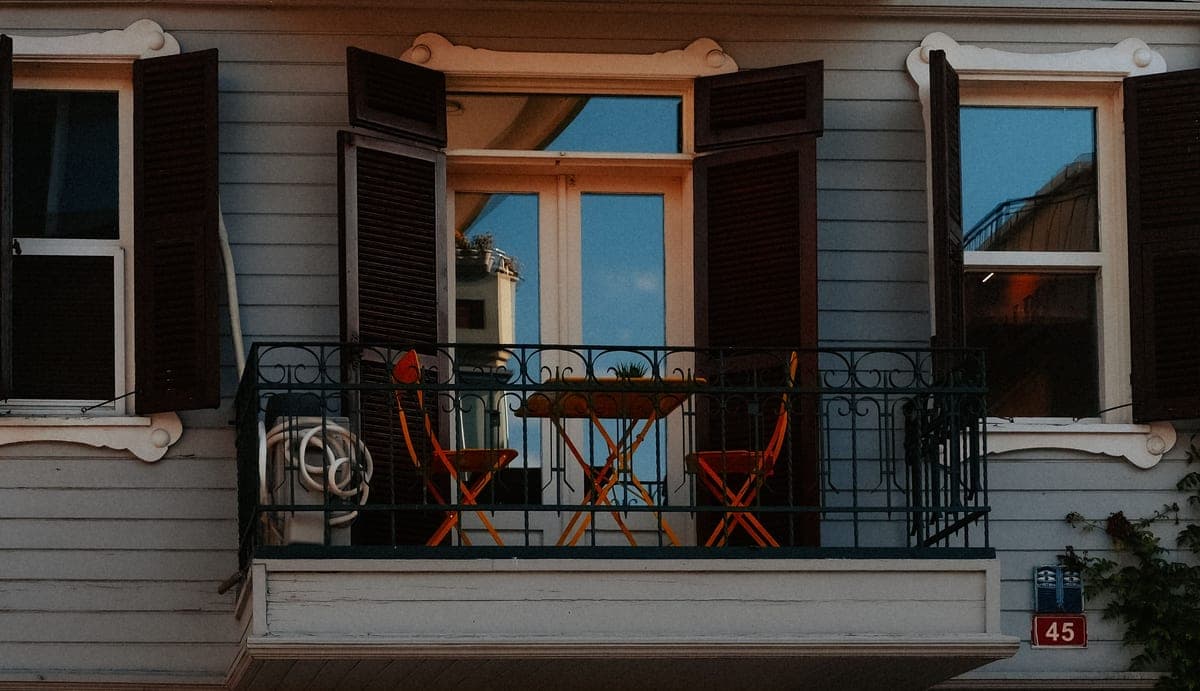
A balcony with a solid ceiling — which is to say, most balconies in a multi-story building, because the floor above is the ceiling below — is not obviously an outdoor space by that standard. It is enclosed on at least the top and often on two or three sides. That is a real ventilation question independent of what any rulebook says.
What to buy instead
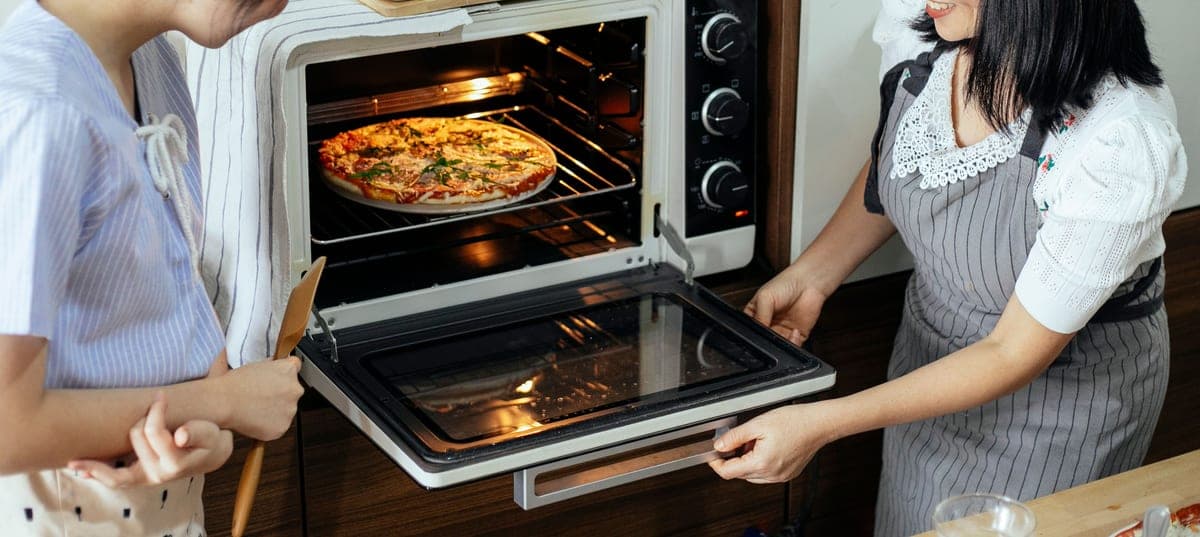
If gas is out, the answer is usually an indoor electric oven, and it is a better answer than it sounds. The Ooni Volt 2 reaches 850 F on a standard 120 V outlet — roughly 300 F above your kitchen oven — with no cylinder, no open flame and managed exhaust. The Breville Pizzaiolo reaches 750 F with element-level control.
That is not a consolation prize. As the indoor versus outdoor guide argues, the oven that gets used forty times a year produces better pizza than the one used eight times, because this is a skill and skills need repetitions.
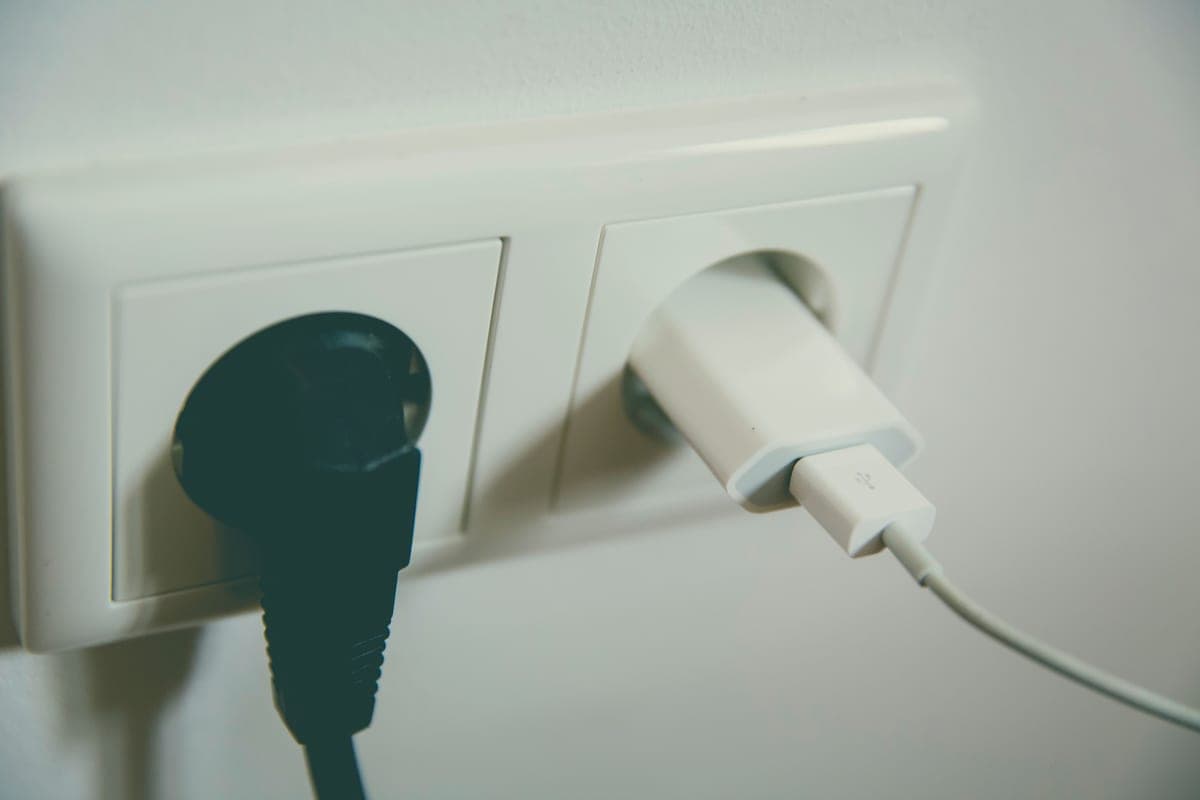
Do check the electrical side, though: a 1,600 W oven draws about 13.3 A and needs a circuit that is not already carrying a kettle. See power requirements.
Quick picks
Ranked for fit, not for hype. Every figure below is the maker’s own published number, and “n/p” means they do not publish it — which is itself worth knowing. Tap a row for the full write-up, or go straight to the listing.
| # | Oven | Best for | Max pizza | Weight | Price |
|---|---|---|---|---|---|
| 1 |  Ooni Volt 21600 W on a standard 120 V outlet, and 850 F on a stone floor. | 850 F on a normal kitchen outlet | 12" | 38.8 lb | $698.95 · Check on Amazon |
| 2 |  Breville Pizzaiolo750 F and a manual mode that lets you choose which heating elements run. | Control over the individual elements | 12" | n/p | $999.95 · Check on Amazon |
Max pizza and weight are the makers’ published figures, sourced on each write-up below. Neither is a measurement we took, and no column here is a score — we have not cooked on these ovens and will not pretend otherwise.
Top pick · 850 F on a normal kitchen outlet
Ooni Volt 2 Electric Indoor Pizza Oven
Ooni · Electric
1600 W on a standard 120 V outlet, and 850 F on a stone floor. It is the only oven here that turns a kitchen counter into something close to a pizzeria deck.
Published specification
- Power
- 120 V / 1600 W, standard North America Type B plug
- Temperature
- 70 F to 850 F (450 C)
- Stone
- Cordierite, 0.4 in (10 mm)
- External size
- 21.5" x 17.4" x 10.4"
- Opening height
- 3.6 in
- Weight
- 38.8 lb
- Body
- Powder-coated carbon steel, triple-paned tempered glass door
- Placement
- Indoor use only
What it does well
- 1600 W draws about 13.3 A, which fits inside a standard 15 A North American kitchen circuit — that is the whole reason this oven is practical. See power requirements
- A proof mode that goes down to 70 F means the same appliance proofs the dough it later bakes
- Triple-paned glass and a filtered exhaust are why this can live in a kitchen and a Koda cannot
- 850 F is roughly 300 F hotter than a domestic oven's maximum, which is the entire difference in crust
What you give up
- 0.4 in stone is the thinnest floor in this registry. Consecutive bakes need recovery time and the oven's control system spends its effort managing exactly that
- 850 F, not 950 F: a true 60-second Neapolitan is out of reach and Ooni does not claim it
- 3.6 in of opening height rules out deep pan builds
- Indoor use only, stated by Ooni — this is not an outdoor oven that also works inside
Buy it if
Apartments, winter, and anyone whose real obstacle is that the oven has to live indoors.
Skip it if
Anyone whose target is a 60-second, 950 F Neapolitan.
Where these numbers came from
Pick 2 · Control over the individual elements
Breville Smart Oven Pizzaiolo (BPZ820BSS)
Breville · Electric
750 F and a manual mode that lets you choose which heating elements run. It is the only indoor oven here that lets you deliberately char the base without cooking the toppings past done.
Published specification
- Max temperature
- 750 F
- Max pizza
- 12 in
- Presets
- Wood Fired, New York, Pan, Thin & Crispy, Frozen
- Manual mode
- Choose Crust Only (charred base) or Even Heat
- Control
- Element IQ element-by-element heat management
- Door
- Double-pane heat-resistant window, insulated chamber
- Included
- Pizza peel and pizza pan
What it does well
- Independent element control is the feature no other indoor oven offers, and it is the direct fix for a base that browns before the top does
- Named presets for New York and pan styles, not just a temperature dial — the styles most home cooks actually make
- A peel and a pan are in the box
- Insulation good enough that the kitchen does not heat up around it
What you give up
- 750 F is 100 F below the Volt 2 and 200 F below every outdoor gas oven here. Neapolitan is genuinely out of range
- Breville does not publish a stone thickness or unit weight in the listing specification
- The wattage is not stated on the listing either, so you cannot check its circuit draw on paper the way you can with the Volt 2
Buy it if
The indoor cook who makes New York and pan pizza and wants deliberate control over browning.
Skip it if
A Neapolitan target, or anyone who needs to know the amperage before buying.
Where these numbers came from
If gas is permitted
Then the small-patio roundup is the page you want, and the constraints become physical rather than regulatory: footprint, weight, a heat-safe surface, and somewhere sensible and ventilated for the cylinder that is not indoors and not a sealed box.
How these picks were made
We did not cook on these ovens. Every figure on this page is the maker’s or the listing’s published specification, cited on each write-up so you can check it in one click. The ranking comes from matching those published capabilities to a stated use case — space, pizza size, fuel, and how many pizzas you cook in a row. Where a maker does not publish a number, we say so instead of estimating one.
The full version of that argument, including what we deliberately do not claim, is on our methodology page.