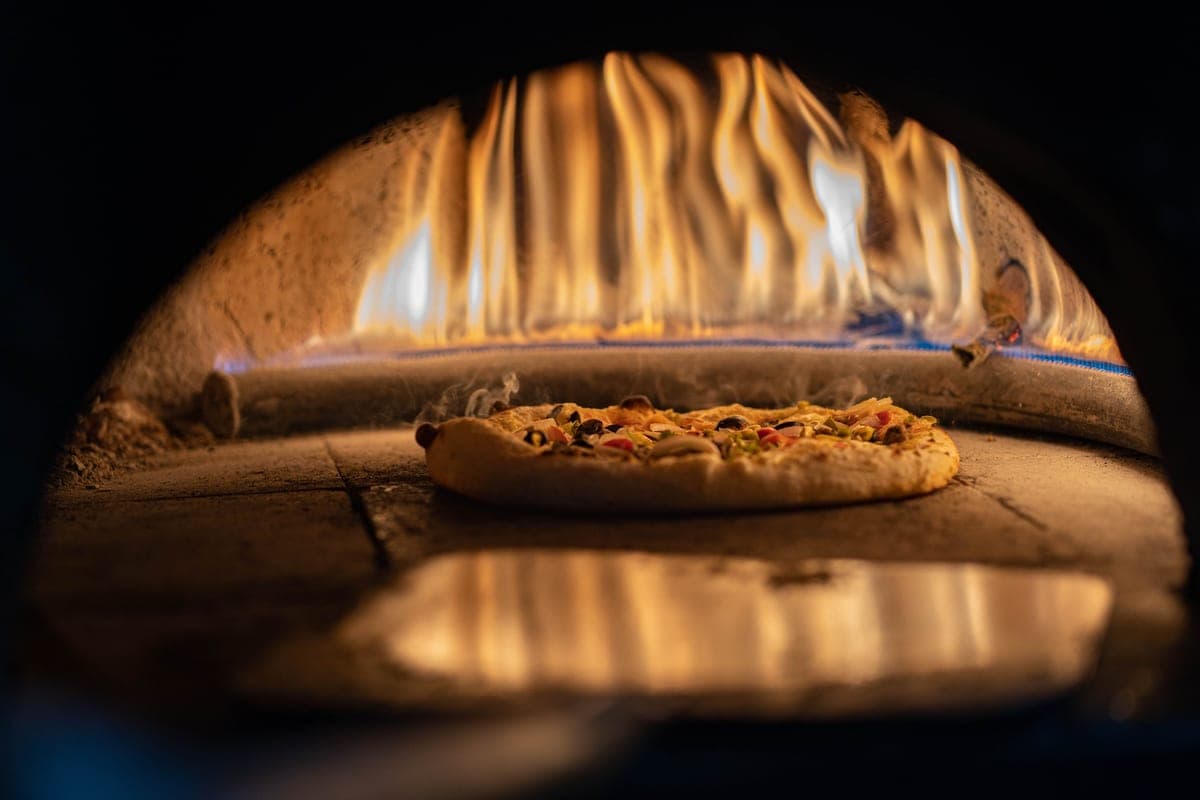
Heat and technique
Dough for a 90-second bake
A recipe written for a domestic oven can genuinely fail at 900 degrees. Three things need changing, and most of the rest is the same dough you already make.
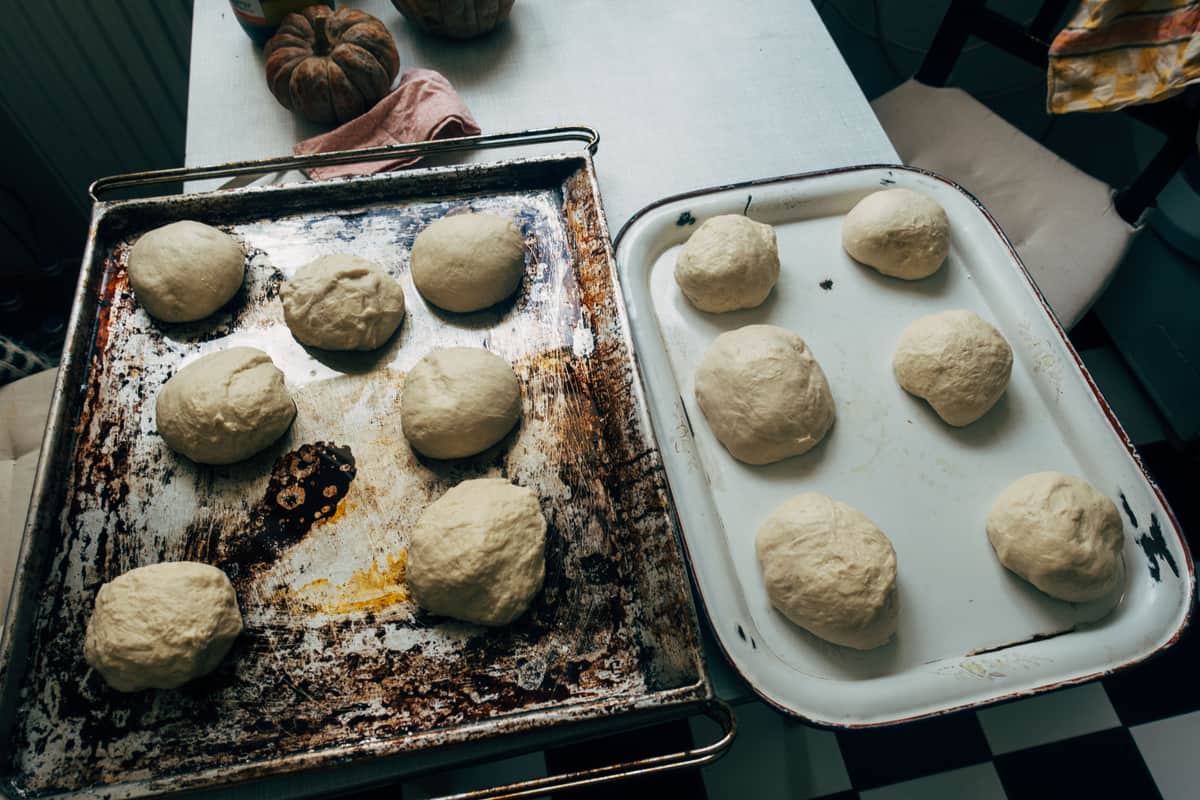
The short answer
Three changes. Remove sugar and reduce or remove oil — both accelerate browning and at 900 F the dough colors before it cooks. Use a stronger flour that can set in 90 seconds. Keep hydration moderate, around 60 to 65 percent, since a wetter dough needs time this bake does not have. Fermentation, salt and technique stay as they are.
Why a normal recipe fails at 900 F
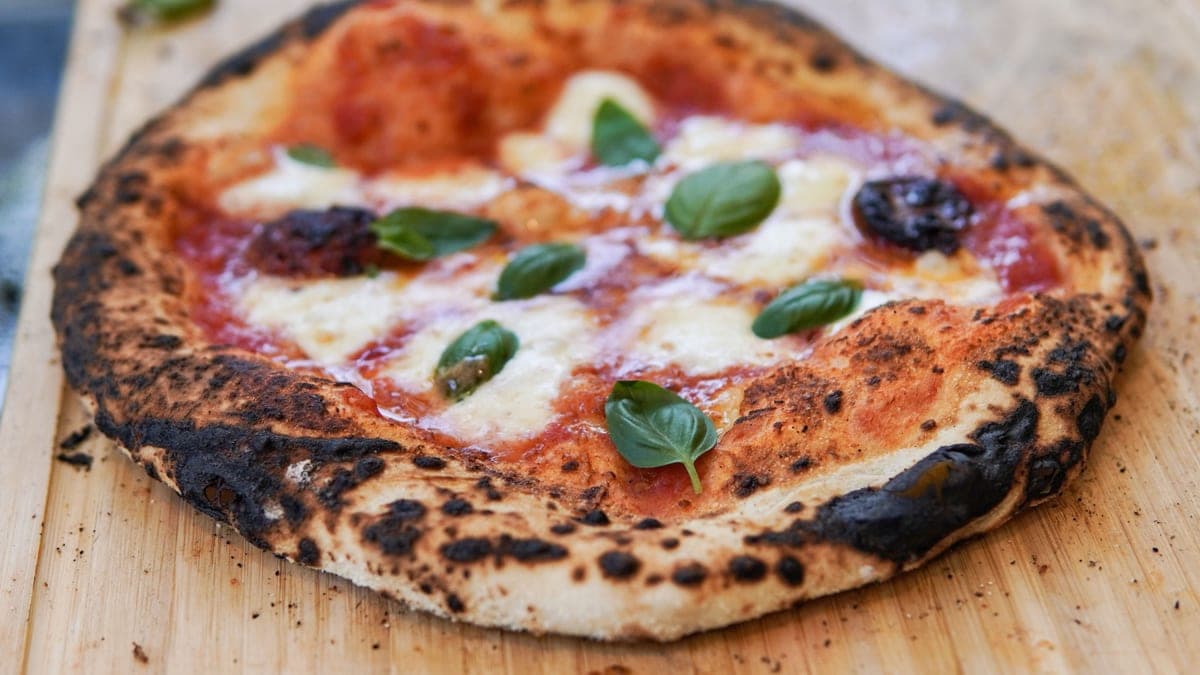
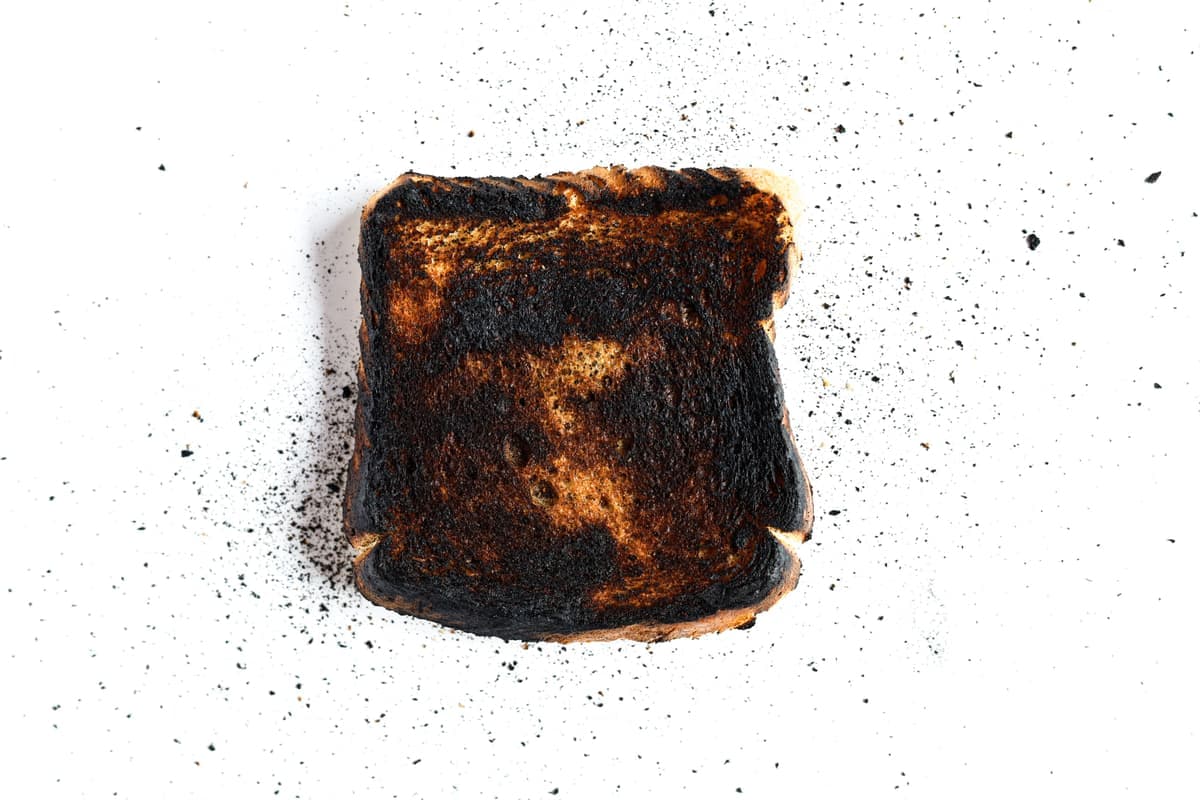
Browning is a chemical process with a rate, and that rate rises steeply with temperature. A dough that browns pleasantly over eight minutes at 500 F will reach the same color in well under a minute at 900 F.
The problem is that the interior is on a different clock. Setting the crumb — gelatinizing starch, evaporating water, developing structure — takes the time it takes. At 900 F, the surface finishes its job while the inside is barely started, and you get a dark, bitter shell around raw dough.
So the changes below are all about slowing the surface down so the interior can catch up.
Change 1: remove the sugar, cut the oil
Sugar browns fast, by design — it is added to domestic-oven recipes precisely because those ovens struggle to color a crust. At 900 F it is an accelerant on a surface that is already browning too quickly.
Oil is more nuanced. It makes dough more pliable and extends shelf life, and it also promotes browning and frying at the surface. At 900 F a well-oiled dough can char in patches before it has set.
This is exactly why traditional Neapolitan dough is flour, water, salt and yeast and nothing else. It is not purism — it is a formulation matched to a 90-second bake, as the style comparison sets out. For a New York bake at 600 F over five minutes, both ingredients are fine and useful.
Change 2: use a stronger flour
In 90 seconds, gluten has almost no time to set gradually. A stronger flour — higher protein, more gluten-forming potential — builds a structure that can hold its shape through a violent, fast bake.
Finely milled Italian "00" flour is the traditional choice for this style, and its fine grind also helps the surface behave predictably at high heat. A strong bread flour works too. A soft all-purpose flour tends to produce a limp, fragile base under this kind of heat.
Change 3: keep hydration moderate
High-hydration dough is fashionable and it is a poor match for a 90-second bake. Water has to leave the dough for the crumb to set, and evaporation takes time. A very wet dough in a very fast oven produces a gummy interior under a cooked exterior.
Around 60 to 65 percent hydration is a sensible working range for high-heat bakes. It is also far easier to handle, which matters more than people admit — a slack, sticky dough is the main reason pizzas stick to the peel, which is fault 4 in the troubleshooting guide.
What not to change
Fermentation. A long, cold ferment develops flavor and improves extensibility, and it helps at every temperature. Nothing about a hot oven argues against it.
Salt. Standard proportions apply. Salt controls yeast activity and does the flavor work; it has no particular interaction with bake temperature.
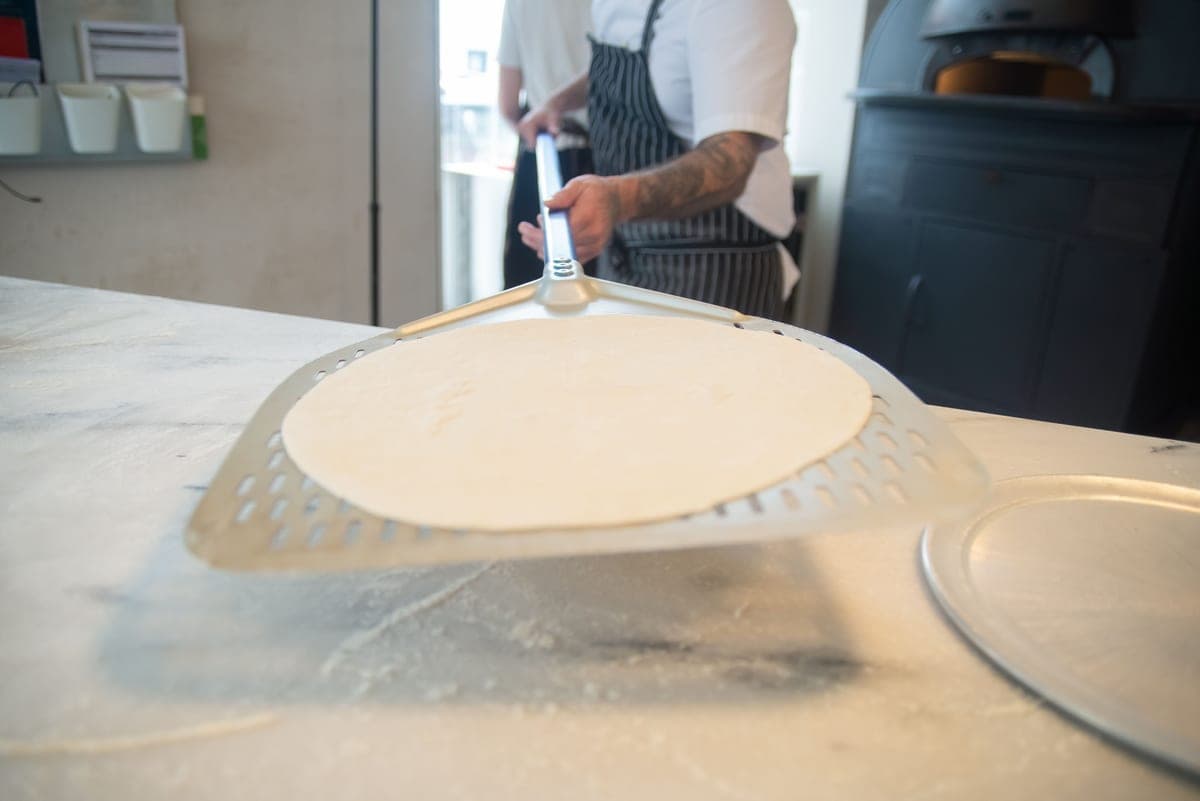
Ball size and shaping. A 250 to 280 g ball stretches to roughly 11 to 12 in, which is the size most people make and the size most ovens here suit. Shaping technique is unchanged.
The handling detail that matters most
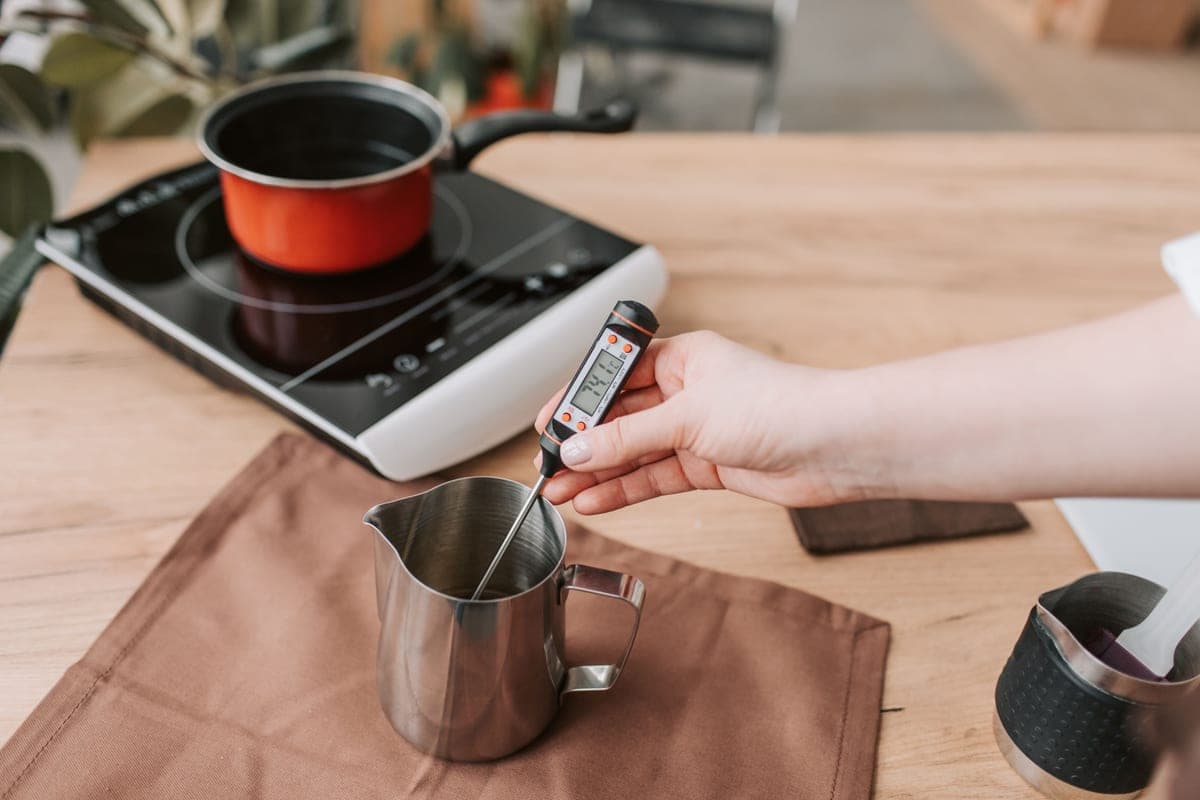
Dough temperature at launch. Cold dough straight from the refrigerator does not stretch — it tears at the center and springs back at the edges. Let it come up to room temperature, typically an hour or two depending on the room, before you shape.
This is the single most common handling error, it looks like a recipe failure, and it is entirely a timing problem.
How these picks were made
We did not cook on these ovens. Every figure on this page is the maker’s or the listing’s published specification, cited on each write-up so you can check it in one click. The ranking comes from matching those published capabilities to a stated use case — space, pizza size, fuel, and how many pizzas you cook in a row. Where a maker does not publish a number, we say so instead of estimating one.
The full version of that argument, including what we deliberately do not claim, is on our methodology page.