Indoor and electric ovens
Ninja Artisan MO201: the first oven here that admits pizza styles are different problems
Five named programs, a range that starts at 90 F, and a published 15 amps — the full rating of a household circuit. It is the most opinionated oven here about what you are actually making, and one of only two that leave a kitchen circuit no headroom at all.
The short answer
Buy the Ninja Artisan if you cook more than one style of pizza and want the oven to hold the settings — it ships separate Neapolitan, Thin Crust, Pan and New York programs, plus Custom, and a range that runs from 90 F to 700 F. Two numbers to weigh first: 700 F is 250 F below an outdoor gas oven, and 1,760 W at a published 15 A is the entire capacity of a standard household circuit.
Ninja arrived in this category through the back door — the Woodfire OO101 was an outdoor grill that also made pizza. The Artisan is the company's first appliance built to make pizza and nothing else, and it is the only oven on this site that treats New York and Neapolitan as two different machines settings rather than two things you might do with one dial.
The specification, as SharkNinja publishes it
| Specification | Published figure |
|---|---|
| Temperature range | 90 to 700 F |
| Power | 1,760 W at 120 V |
| Current | 15 A |
| Stone | 12 x 12 in |
| Dimensions | 22.52 x 15.87 x 12.36 in |
| Weight | 30.83 lb |
| Presets | Neapolitan, Thin Crust, Pan, New York, Custom |
| In the box | 12 in bake tray, 12 in pizza stone, quick start guide, owner's guide |
| Warranty | One year limited |
| Bake time | 3 minutes at 700 F, excluding preheat |
| Stone thickness | Not published |
| Preheat time | Not published |
Every figure below is from SharkNinja's own MO201 product page.
That is a fuller sheet than most of this category manages. SharkNinja publishes watts, volts and amps, which almost nobody does, and it publishes weight and external dimensions to two decimal places. What it does not publish is stone thickness or preheat time — the two figures that predict how the oven behaves on the third pizza rather than the first.
Fifteen amps is the headline, not the 700 F
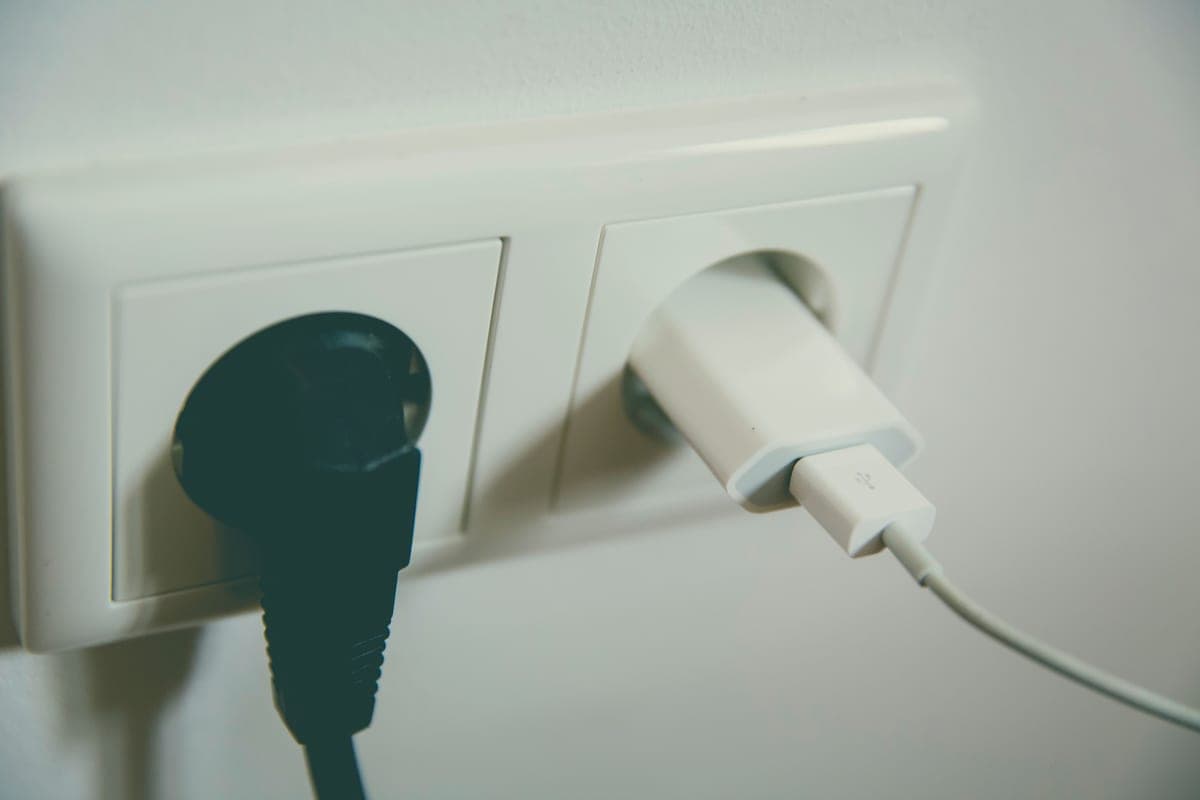
A standard North American kitchen circuit is 15 amps. SharkNinja publishes 15 amps for this oven. Those two numbers being identical is the single most consequential thing on the spec sheet, and it is worth being precise about what it means.
The arithmetic on the published wattage gives 1,760 W divided by 120 V, which is 14.7 A. SharkNinja states 15 A, presumably rounding up to the nominal circuit rating. Either way it is at the top of the field — only the Cuisinart CPZ-120, at a published 1,800 W, asks for more:
| Oven | Published watts | Amps at 120 V | Headroom on a 15 A circuit |
|---|---|---|---|
| Ooni Volt 2 | 1,600 W | 13.3 A | 1.7 A |
| Chefman Indoor 800 | 1,700 W | 14.2 A | 0.8 A |
| Ninja Woodfire OO101 | 1,700 W | 14.2 A, rated 15 A by SharkNinja | 0.8 A on the arithmetic |
| Cuisinart CPZ-120 | 1,800 W | 15.0 A | none |
| Ninja Artisan MO201 | 1,760 W | 14.7 A, published as 15 A | none, effectively |
Published draw for every electric oven covered here. The amps column is the arithmetic on the published wattage at 120 V; where a maker publishes its own current rating instead, that is noted in the row. SharkNinja rates both of its ovens at 15 A.
Five presets is a real feature, not a menu
Every electric oven in this category has a temperature dial. The Artisan is the first here to ship separate programs named after pizza styles, and the reason that is more than marketing is that the styles genuinely want different things.
- Neapolitan wants the hottest floor the oven has and a very short bake. It is the style the 700 F ceiling constrains most.
- New York wants 550 to 650 F for six to eight minutes — comfortably inside this oven's range, and the style it is arguably best at.
- Pan wants a lower, longer bake with heat concentrated underneath, which is why the 12 in bake tray is in the box rather than sold separately.
- Thin crust wants top heat without cooking the base to a cracker, which is what independently controlled elements are for.
- Custom is the manual setting, and it is the one you end up living on once you know your dough.
Which style you should be chasing at 700 F is exactly the question Neapolitan or New York at home works through, and the honest answer for this oven is New York.
The bottom of the range is the underrated number
Every other oven here publishes a floor around 300 F or does not publish one at all. The Artisan publishes 90 F, which is proofing temperature.
That is genuinely useful if you make your own dough. A stable 90 F box is what a proofing drawer costs money to be, and it removes the most common variable in home pizza — dough proofed at whatever temperature the kitchen happened to be. Dough for a 90-second bake explains why that variable matters more than almost anything you do afterwards.
Quick picks
Ranked for fit, not for hype. Every figure below is the maker’s own published number, and “n/p” means they do not publish it — which is itself worth knowing. Tap a row for the full write-up, or go straight to the listing.
| # | Oven | Best for | Max pizza | Weight | Price |
|---|---|---|---|---|---|
| 1 |  Ninja Artisan MO2011,760 W at 120 V drawing a published 15 amps, 90 to 700 F, and a 12 in stone. | An electric oven with five named pizza styles | 12" | 30.83 lb | $299.95 · Check on Amazon |
Max pizza and weight are the makers’ published figures, sourced on each write-up below. Neither is a measurement we took, and no column here is a score — we have not cooked on these ovens and will not pretend otherwise.
Top pick · An electric oven with five named pizza styles
Ninja Artisan 5-in-1 Portable Electric Pizza Oven (MO201)
Ninja · Electric
1,760 W at 120 V drawing a published 15 amps, 90 to 700 F, and a 12 in stone. The presets are the story: Ninja is the only maker here that ships a separate program for New York, Neapolitan, thin crust and pan.
Published specification
- Temperature range
- 90 to 700 F
- Power
- 1,760 W at 120 V
- Current
- 15 A, as published by SharkNinja
- Stone
- 12 x 12 in pizza stone
- Dimensions
- 22.52 x 15.87 x 12.36 in
- Weight
- 30.83 lb
- Presets
- Neapolitan, Thin Crust, Pan, New York, Custom
- In the box
- 12" bake tray, 12" pizza stone, quick start guide, owner’s guide
- Warranty
- One year limited
- Bake time
- 3 minutes at 700 F, excluding preheat
What it does well
- Five named pizza programs, which is the first time any oven on this site has admitted that a New York bake and a Neapolitan bake are different problems
- 90 F at the bottom of the range makes it a proofing box as well as an oven — the only oven here that goes low enough to be useful cold
- SharkNinja publishes watts, volts and amps. Most electric-oven makers publish one of the three
- A 12 x 12 in stone and a 12 in bake tray both in the box, so a pan pizza does not need a separate purchase
What you give up
- A published 15 A is the full rating of a standard household circuit. Only the Cuisinart CPZ-120 draws more, and these two are the only ovens here that leave no usable headroom — it wants a circuit to itself
- 700 F is 250 F below the outdoor gas ovens here, and 150 F below the Ooni Volt 2 — a three-minute bake, not a 90-second one
- Weather resistant rather than weatherproof: Ninja still recommends a cover, and there is not one in the box
- 30.83 lb is heavy for something described as portable, and there is no handle in the published specification
- One-year warranty, against the two years Ooni offers on the Volt 2
Buy it if
Someone who cooks more than one style of pizza and wants the oven to hold the settings.
Skip it if
Anyone chasing Neapolitan char, or anyone who cannot give it a dedicated 15 A circuit.
Where these numbers came from
- SharkNinja — Ninja Artisan 5-in-1 Portable Electric Pizza & Outdoor Oven MO201 product page: 90 to 700 F, 1,760 watts, 120 volts, 15 amps, 22.52 x 15.87 x 12.36 in, 30.83 lbs, 12x12 in pizza stone, five presets, one year limited warranty
- Amazon listing — Ninja Artisan pizza oven, 12 in pizza in 3 min, 700 F, 5-in-1, MO201
Where 700 F actually leaves you
Three minutes at 700 F, per Ninja's own figure, against 60 to 90 seconds at 950 F from an outdoor gas oven. That gap is not a small one and it is not closed by technique.
| Route | Published peak | Bake |
|---|---|---|
| Domestic oven with a steel | 500 to 550 F | 8 to 12 min |
| Ninja Artisan MO201 | 700 F | 3 min, per Ninja |
| Ooni Volt 2 | 850 F | 90 s, per Ooni |
| Outdoor gas ovens | 950 F | 60 to 90 s |
Published peak temperature across the routes this site covers.
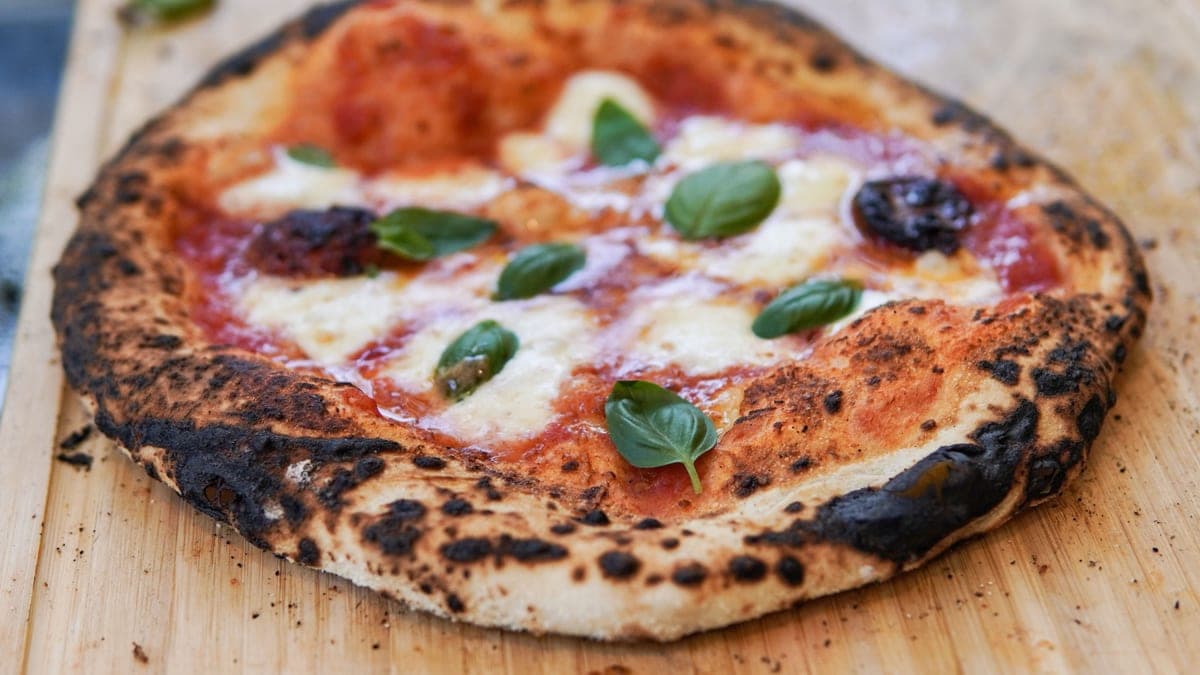
At 700 F you get a properly crisp base, browned cheese and a rim that rises without charring. You do not get leopard spotting, because leopard spotting is what happens to a dough skin above roughly 800 F. If that is the pizza you want, the comparison to read is Ooni Volt 2 against the Breville Pizzaiolo rather than this one.
Outdoors, indoors, or somewhere in between
SharkNinja describes the Artisan as outdoor equipment and calls the housing weather resistant, while recommending a cover. That is a careful phrase and it is worth reading carefully: weather resistant is not weatherproof, and there is no cover in the box.
It is an electric appliance, so unlike a gas oven it does not consume oxygen or produce combustion products, and none of the covered-patio constraints that rule out gas ovens apply to it. The practical position is a countertop oven you can also run on a covered patio, provided there is a 15 A circuit out there, which most patios do not have.
What we cannot tell you
We have not cooked on this oven and no page here claims otherwise. Specifically unresolved: how thick the stone is, how long it takes to recover between pizzas, whether the presets are well calibrated against real dough, and how the weather-resistant housing holds up over a season outdoors. Ninja publishes none of those and we will not estimate them.
Against Ooni, the comparison is the Volt 2 rather than anything in the outdoor range. Volt 2 against the Ninja Artisan is the page for it: 150 F of peak and a far easier circuit on one side, named pizza programs and a lower price on the other.
How these picks were made
We did not cook on these ovens. Every figure on this page is the maker’s or the listing’s published specification, cited on each write-up so you can check it in one click. The ranking comes from matching those published capabilities to a stated use case — space, pizza size, fuel, and how many pizzas you cook in a row. Where a maker does not publish a number, we say so instead of estimating one.
The full version of that argument, including what we deliberately do not claim, is on our methodology page.
Questions people actually ask
+How hot does the Ninja Artisan get?
+Does the Ninja Artisan need a dedicated circuit?
+What is the difference between the Ninja Artisan and the Ninja Woodfire?
+Can the Ninja Artisan be used indoors?
+Is the Ninja Artisan worth it against an Ooni Volt 2?
Sources for this page