Peels, stones and tools
The four accessories that matter, and the rest
The bundles push hardest on the things that change least. Here is the honest separation, in buying order.
The short answer
Four purchases change the pizza: a perforated peel sized to your oven mouth, an infrared thermometer reading past 1,000 F, a turning peel if your oven has a single burner, and a cover if the oven lives outdoors. A stand matters if your oven is over about 40 lb. Everything else is optional.
1. A perforated peel, sized to the oven
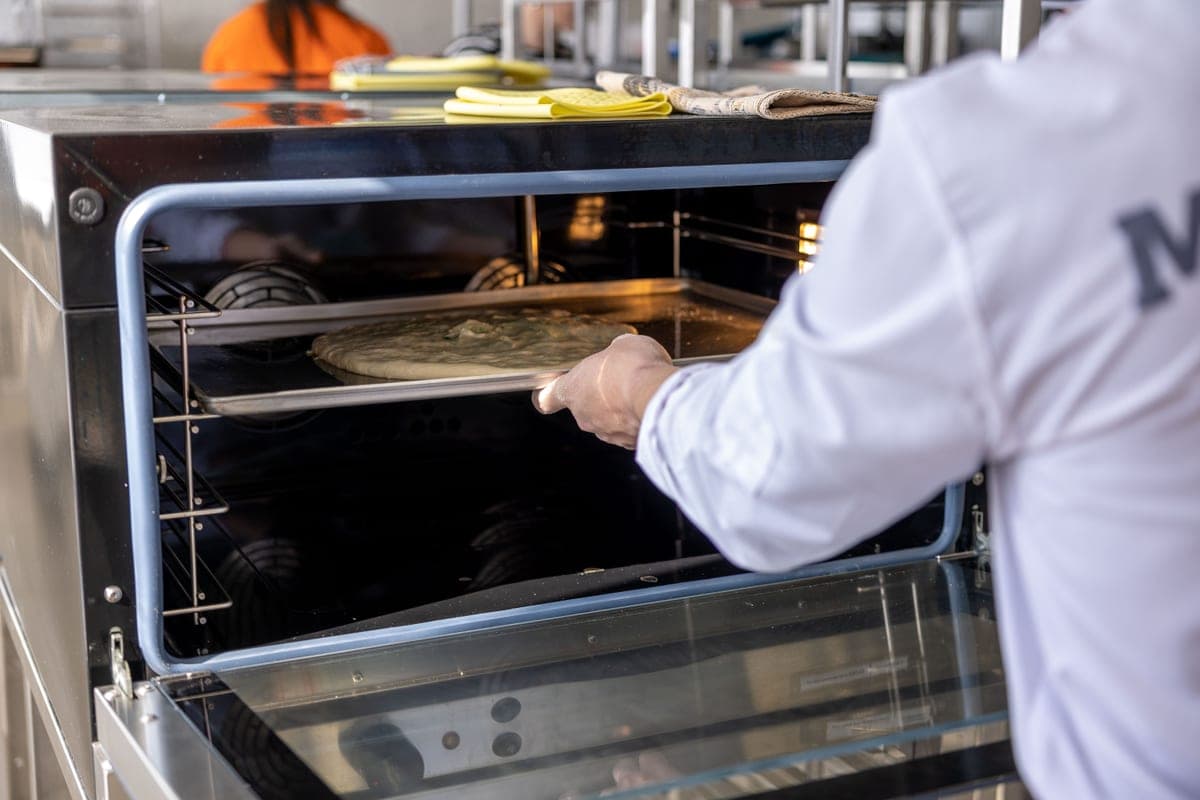
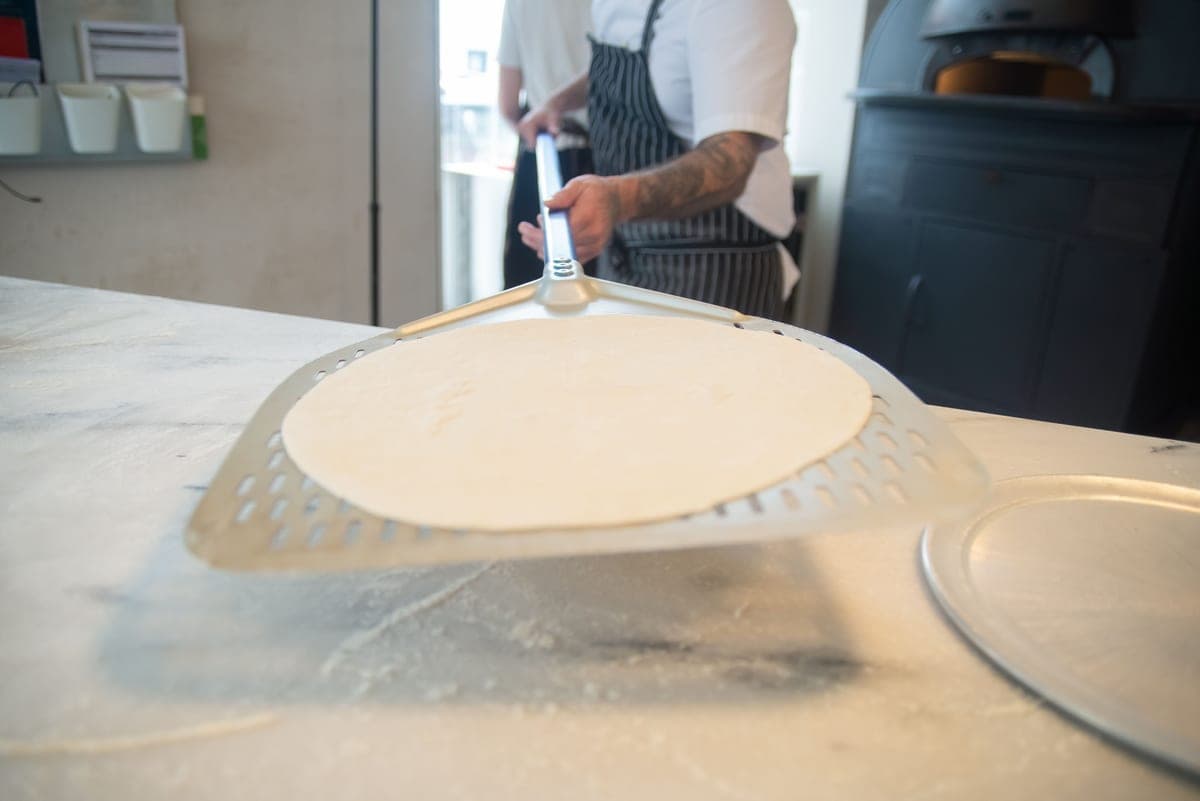
The first purchase, and the one most likely to already be in a bundle. Perforations shed the excess flour that would otherwise burn on your stone and speckle the base of the next pizza.
Size it to the opening, not to the pizza — 12 in peel for a 12 or 13 in oven, 14 in for a 16 in oven. Getting that backwards is the most common accessory mistake in the category. Full sizing table in choosing a peel.
2. An infrared thermometer
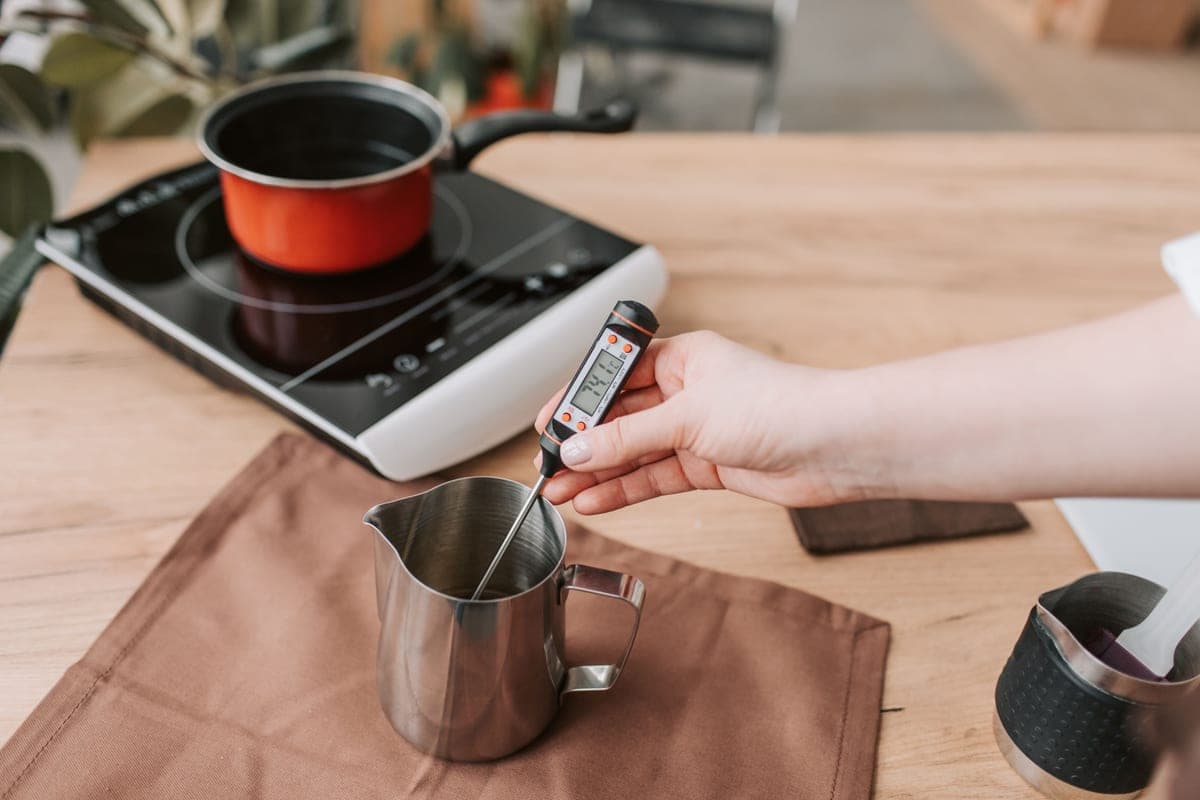
Because your oven's dial reads air near the roof, and your pizza sits on the stone. Those diverge by well over 100 F during preheat, which is why an oven can read "ready" while the floor is 200 F short.
It must read past 1,000 F. The most-bought infrared thermometers top out at 716 or 750 F, because they are made for griddles and HVAC work, and they will display an out-of-range indicator on a pizza stone. This single specification is the whole purchase — see the thermometer roundup.
3. A turning peel, if your oven has one burner
Which is most of them. A single rear or side burner means one edge of the pizza faces the flame for the whole bake, and rotating with a full-size peel means lifting the pizza off the stone and losing the contact that is cooking the base.
A small round head pivots the pizza in place. It is cheap relative to the problem it solves. See the turning technique.
4. A cover, if the oven lives outside
The cheapest thing on this site and the one that most reliably prevents a repair bill. Water standing in a burner assembly over a winter is the standard way an outdoor oven dies, and a cover is a fraction of the cost of a replacement burner.
Fit it only when the oven is fully cold — a cover over warm metal traps moisture against it, which is the failure you were trying to prevent. See covers and protection.
Quick picks
Ranked for fit, not for hype. Every figure below is the maker’s own published number, and “n/p” means they do not publish it — which is itself worth knowing. Tap a row for the full write-up, or go straight to the listing.
| # | Oven | Best for | Max pizza | Weight | Price |
|---|---|---|---|---|---|
| 1 |  Ooni 14" Signature peelHard-anodized perforated aluminum on a long walnut handle. | The one peel to own | 14" | n/p | $90.00 · Check on Amazon |
| 2 |  Etekcity 1080Reads to 1130 F with adjustable emissivity. | Reading a stone that is actually at 900 F | n/p | n/p | $24.99 · Check on Amazon |
| 3 |  CBO 9 in turning peelA 9 in round head on a detachable long handle. | Turning without dragging | n/p | n/p | $24.95 · Check on Amazon |
| 4 | VariousNo photo Oven coverThe cheapest thing on this site and the one that most reliably prevents a repair. | Keeping water out of the burner | n/p | n/p | Check price on Amazon |
Max pizza and weight are the makers’ published figures, sourced on each write-up below. Neither is a measurement we took, and no column here is a score — we have not cooked on these ovens and will not pretend otherwise.
Top pick · The one peel to own
Ooni 14" Signature Perforated Pizza Peel
Ooni · Accessory
Hard-anodized perforated aluminum on a long walnut handle. The perforations shed the flour that otherwise burns on your stone, and that is the whole argument.
Published specification
- Head
- 14" anodized perforated aluminum
- Handle
- Long walnut wood
- Why perforated
- Excess flour falls away and steam escapes before launch
What it does well
- Perforation is the single feature that most reduces the burnt-flour smell and the black speckling on the base of a pizza
- Hard anodizing gives a smoother release surface than bare aluminum, which is the other half of a clean launch
- The handle is long enough to keep a forearm out of a 950 F mouth
What you give up
- A 14 in head does not fit through a 12 in or 13 in oven mouth comfortably — match the peel to the oven, not to the pizza
- Metal peels are poor at holding a raw dough while you top it; a wooden or bamboo peel is better for building on
- This is Ooni's premium peel and it is priced like it — the plain perforated version does the same job for less whenever it is back in stock
Buy it if
Any 14 or 16 in oven, and the peel to buy first.
Skip it if
12 in ovens, and cooks who build the pizza on the peel rather than on the counter.
Where these numbers came from
Pick 2 · Reading a stone that is actually at 900 F
Etekcity Lasergrip 1080 Infrared Thermometer
Etekcity · Accessory
Reads to 1130 F with adjustable emissivity. The range matters: a thermometer that stops at 750 F cannot tell you anything useful about a pizza oven floor.
Published specification
- Range
- -58 F to 1130 F
- Emissivity
- Adjustable, 0.1 to 1.0
- Distance-to-spot
- 12:1
- Not for
- Measuring people
What it does well
- 1130 F clears a 950 F stone with margin, which is the only spec that matters here
- Adjustable emissivity is what lets it read dark cordierite accurately rather than defaulting to 0.95 and being wrong
- 12:1 means a usable reading from about 14 in — outside the oven mouth, not inside it
What you give up
- Infrared reads a surface, never an air temperature. The number is your stone, not your oven
- A 12:1 cone averages a wide patch at distance, so stand close and read the center
- Cheap infrared units drift; treat it as a repeatable relative reading, not a laboratory value
Buy it if
Every oven without a built-in stone-temperature readout, which is most of them.
Skip it if
Ovens with a digital floor probe already fitted, like the Ooni Connect hub models.
Where these numbers came from
Pick 3 · Turning without dragging
Chicago Brick Oven 9-Inch Aluminum Turning Pizza Peel
Chicago Brick Oven · Accessory
A 9 in round head on a detachable long handle. It exists to spin a pizza in place, which is the technique that fixes the one-burnt-edge problem in every small oven.
Published specification
- Head
- 9 in round aluminum
- Handle
- Detachable long handle
- Purpose
- Rotate a pizza in the chamber without lifting it out
What it does well
- In an oven with a single rear or side burner, turning is not optional, and a full-size peel is the wrong tool for it
- The small head slides under one edge and pivots, so the pizza never leaves the stone and the stone never loses contact
- A detachable handle is the difference between a tool you store and a 40 in pole you trip over
- Cheap relative to the problem it solves — see the turning technique
What you give up
- Useless for launching or retrieving — it is a third peel, not a replacement
- 9 in is generous for a 12 in oven; in a tight chamber a 7 or 8 in head is easier to work with
- Aluminum marks over time and will not stay bright, which is cosmetic rather than functional
Buy it if
Anyone with a 12 to 16 in oven and a single burner.
Skip it if
Dual-zone ovens where the heat is already even, and indoor electric ovens.
Where these numbers came from
Pick 4 · Keeping water out of the burner
Weatherproof cover for outdoor pizza ovens
Various · Accessory
The cheapest thing on this site and the one that most reliably prevents a repair. Water sitting in a burner tube over winter is how outdoor ovens die.
Published specification
- Fit
- Model-specific covers exist for most ovens on this site
- Material
- Typically 600D to 900D coated polyester
What it does well
- A burner full of standing water and a stone full of absorbed moisture are the two failure modes of winter storage, and a cover addresses both
- Model-specific covers exist for nearly every oven here, so fit is rarely the problem
- Costs a fraction of a replacement burner assembly
What you give up
- Covers are model-specific — the listings are sold per oven, so this entry links to a search rather than pin one that would be the wrong shape for most readers. The covers roundup pins the right one per oven
- A cover over a still-warm oven traps moisture against the metal — wait until it is cold
- A cover is not a substitute for bringing the stone somewhere dry over a hard winter
Buy it if
Every outdoor oven that lives outdoors.
Skip it if
Ovens stored in a garage between uses.
The ones that depend on your setup
A stand or table, essential if your oven is over about 40 lb and currently on patio furniture, unnecessary if you already have a rated outdoor counter. Carrying the weight, taking the heat and giving you somewhere to build — see tables and stands.
A replacement stone, if yours cracked or if your oven shipped with a thin one. Floor thickness genuinely changes an oven's behavior between pizzas, and it is one of the few upgrades that does. See stones and steels.
A wooden or bamboo peel to build on, if you find dough sticking to your metal peel. Useful, and cheaper to fix by building faster.
A stone brush with a scraper, once burnt semolina starts making the next pizza taste bitter. It is a ten-dollar tool and it ranks below the four above, but it is the one that keeps you from ever reaching for soap and water — see brushes and scrapers.
What to skip
- A baking steel for your pizza oven. Steel's fast conductivity scorches a base at 900 F. It is a kitchen-oven tool.
- Dough-ball boxes, unless you genuinely make twelve at a time. A tray and a damp cloth do the same job.
- Branded pizza cutters. A sharp knife or a cheap wheel cuts identically.
- A thermometer that stops at 750 F. The most common mis-purchase in this whole category.
- Oven-specific carry bags, for an oven you will never carry. Be honest about which one you own.
Before buying any of it, check what is already in the box — several ovens include a peel, a cover or a thermometer, and buying a duplicate is the other way to waste money here. The general rule: gear that changes the heat or the launch is worth money. Gear that changes the presentation is not. Everything above is oven-side; the dough-side equivalent — scale, proofing boxes, scrapers — is on pizza dough accessories.
Two things sit outside this list because they depend on what you own rather than on the oven. If you also have a barbecue, a stone or a conversion box for the grill is a cheaper route to outdoor pizza than a second appliance. And whatever you cook on, a glove with a published duration on its heat rating is worth more than the number printed on the box — most of this category publishes a temperature and no time at all.
The cover is the one item on this page that cannot be bought generically. Covers are cut per oven, and which cover fits which oven sorts out where a maker sells its own and where you are into the third-party market.
How these picks were made
We did not cook on these ovens. Every figure on this page is the maker’s or the listing’s published specification, cited on each write-up so you can check it in one click. The ranking comes from matching those published capabilities to a stated use case — space, pizza size, fuel, and how many pizzas you cook in a row. Where a maker does not publish a number, we say so instead of estimating one.
The full version of that argument, including what we deliberately do not claim, is on our methodology page.