Peels, stones and tools
Pizza dough accessories: the five that actually change the dough
Your oven is a third of the result. The dough is most of the rest, and unlike the oven it is improved by about forty dollars of very unglamorous equipment.
The short answer
Buy a 0.1 g digital scale first — dough is a ratio and a ratio needs weight, and nothing else on this page comes close for the money. Then a lidded proofing box if you cold-ferment, and a bench-plus-bowl scraper set for dividing. A flour dredger is a genuine nicety. A rolling pin is the one thing here you should actively not buy.
This site spends most of its time on ovens, because that is what people shop for. But an oven only does one thing: it applies heat, very fast. What it applies that heat to is decided entirely before the oven is lit, and that part is cheap to improve.
These are also the accessories nobody bundles. The oven bundles that include a peel or a cover include none of this, and the oven accessories list is about launching and heat rather than dough.
How these were ranked
One criterion, applied consistently: how much does the finished pizza change if you own this? That ordering puts a nine-dollar scale above a proofing box that costs four times as much, and it puts two of the most-marketed dough gadgets off the list entirely.
- Changes the dough itself — anything that affects the ratio of flour, water, salt and yeast, or the fermentation those four undergo. This is the only category that alters what the dough is.
- Changes how the dough is handled — dividing, rounding, moving. Handling errors show up as torn balls and uneven rims.
- Changes the launch — how the pizza gets off the peel and onto the stone. Real, but the peel does most of this work.
- Changes nothing measurable — the large remainder, and where most dough-gadget marketing lives.
Why the scale is not a tie
Pizza dough is written as percentages of flour weight. A 65 percent hydration dough is 650 g of water to 1,000 g of flour; salt is 2 to 3 percent; yeast is often well under 1 percent. Those are the numbers every recipe worth following is expressed in, and none of them can be measured in cups.
Volume measurement fails hardest exactly where dough is most sensitive. A cup of flour varies by a large margin depending on whether it was scooped or spooned, and that variance lands directly on your hydration. Meanwhile salt at 2.5 percent of a 1 kg batch is 25 g — measurable — but yeast at 0.3 percent is 3 g, which is where 0.1 g resolution stops being pedantry.
This is also what makes a recipe repeatable. If a batch comes out badly and everything was weighed, you can change one number and learn something. If it was measured in cups, you cannot, because you do not know what you actually made. Dough for high heat is written in percentages for this reason.
Quick picks
Ranked for fit, not for hype. Every figure below is the maker’s own published number, and “n/p” means they do not publish it — which is itself worth knowing. Tap a row for the full write-up, or go straight to the listing.
| # | Oven | Best for | Max pizza | Weight | Price |
|---|---|---|---|---|---|
| 1 |  Etekcity 0.1 g scaleReads in 0.1 g steps up to 1 kg. | The one tool that changes the dough | n/p | n/p | $18.99 · Check on Amazon |
| 2 |  Ooni dough boxSix 250 g dough balls per box, with a lid that stops them skinning over. | Cold fermenting six balls at once | n/p | n/p | $60.00 · Check on Amazon |
| 3 |  Bench + bowl scraper setA rigid steel bench scraper and two flexible bowl scrapers in one set — which is right, because they are two differen... | Dividing dough without tearing it | n/p | n/p | $4.98 · Check on Amazon-16% |
| 4 | 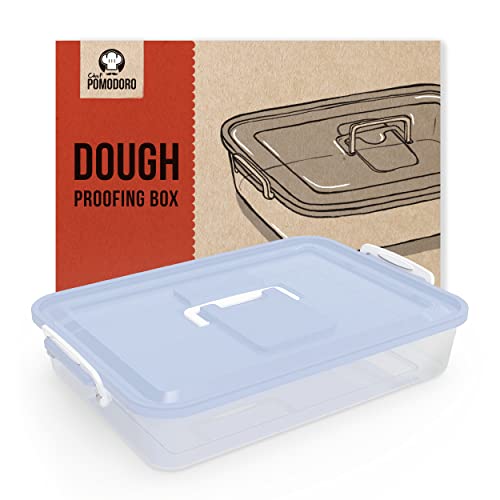 Chef Pomodoro dough box14 by 11 inches against Ooni's 16.7 by 12.7, holding four to six balls. | The smaller refrigerator | n/p | n/p | $22.99 · Check on Amazon-23% |
| 5 |  Winco dredgeA 10 oz stainless shaker. | Dosing semolina without over-flouring | n/p | n/p | $7.25 · Check on Amazon |
Max pizza and weight are the makers’ published figures, sourced on each write-up below. Neither is a measurement we took, and no column here is a score — we have not cooked on these ovens and will not pretend otherwise.
Top pick · The one tool that changes the dough
Etekcity 0.1 g Food Kitchen Scale
Etekcity · Accessory
Reads in 0.1 g steps up to 1 kg. Pizza dough is a ratio, and a ratio needs weight — this is the single purchase that most improves consistency, and it is also the cheapest thing on this page.
Published specification
- Capacity
- 11 lb (5 kg)
- Resolution
- 0.1 g increments to 1 kg, then 1 g to 5 kg
- Units
- Grams and ounces
- Functions
- Tare / zero
- Included
- Detachable stainless bowl
What it does well
- 0.1 g resolution is what makes salt and yeast measurable — both are 2 to 3 percent of flour weight, where a whole gram is a big error
- Tare lets you build the whole dough in one bowl, which is the practical reason a scale replaces every cup measure you own
- Weight is the only way to follow a hydration percentage, and hydration is the lever high-heat dough turns on
What you give up
- Resolution drops to 1 g above 1 kg, so a large bulk flour weigh-in loses the fine steps — weigh flour first, then the small ingredients
- A flat platform is awkward under a big mixing tub; you may end up weighing into a bowl and transferring
- It is a kitchen scale, not a pizza tool — nothing about it is specific to this category
Buy it if
Everyone making dough from scratch. This is the first purchase, before any container.
Skip it if
Anyone buying pre-made dough balls.
Where these numbers came from
Pick 2 · Cold fermenting six balls at once
Ooni Pizza Dough Proofing Box with Lid
Ooni · Accessory
Six 250 g dough balls per box, with a lid that stops them skinning over. If you cold-ferment in the refrigerator — and for high-heat dough you should — this is the container that makes it repeatable.
Published specification
- Capacity
- Up to six 250 g dough balls per box
- Box size
- 16.7" x 12.7" x 3.7" (42.3 x 32.3 x 9.3 cm)
- Material
- BPA-free polypropylene, made in the United Kingdom
- Storage
- Refrigerator and freezer safe; stacks and nests
- Handles
- Easy-grip
What it does well
- A sealed lid is the whole point: an uncovered dough ball forms a dry skin within an hour and that skin tears when you stretch it
- Six 250 g balls is a real batch — 250 g is roughly a 12 in pizza, which is the size most people actually make
- Stacking and nesting matters more than it sounds, because refrigerator shelf space is the real constraint on a long cold ferment
What you give up
- 16.7 in long is a big footprint for a domestic refrigerator shelf — measure before ordering, because this is the most common reason one gets returned
- Polypropylene scratches and clouds over time; it stays functional but stops looking new
- A lidded plastic tub or a tray under a damp cloth does the same job for less if you only make two or three balls at a time
Buy it if
Anyone cold-fermenting a batch of four or more balls, regularly.
Skip it if
Two-ball weeknight batches, or a refrigerator with narrow shelves.
Where these numbers came from
Pick 3 · Dividing dough without tearing it
Ecavria Stainless Bench Scraper with 2 Flexible Bowl Scrapers
Ecavria · Accessory
A rigid steel bench scraper and two flexible bowl scrapers in one set — which is right, because they are two different tools and you need both.
Published specification
- Bench scraper
- Stainless steel, with a measuring scale
- Bowl scrapers
- 2, flexible plastic
- Use
- Dividing, portioning, lifting and cleaning down the bench
What it does well
- A steel edge cuts dough where a knife drags and a hand tears — and a torn division is a ball that will not round properly
- The flexible bowl scraper is the tool that gets wet dough out of a bowl in one piece, which is exactly where a rigid scraper fails
- The measuring scale etched on the blade is a genuinely useful way to eyeball an even division without a ruler
- It is also the fastest way to clean flour and dried dough off a work surface, which is most of what it will actually do
What you give up
- Two tools sold as one product means you are partly paying for the one you use less
- A steel scraper will mark a soft countertop if you lean on it — it wants a board or a hard surface
- Nothing here is pizza-specific; any competent bench scraper does this job
Buy it if
Anyone dividing a bulk dough into balls, which is anyone making more than one pizza.
Skip it if
Buying pre-portioned dough.
Where these numbers came from
Pick 4 · The smaller refrigerator
Chef Pomodoro Pizza Dough Proofing Box with Lid, 14 x 11 in
Chef Pomodoro · Accessory
14 by 11 inches against Ooni's 16.7 by 12.7, holding four to six balls. Nearly three inches shorter is the difference between fitting a domestic refrigerator shelf and not.
Published specification
- Box size
- 14" x 11"
- Capacity
- Fits 4 to 6 dough balls
- Material
- ABS plastic
- Lid
- Transparent
- Handling
- Stackable, with a carry handle
What it does well
- Almost three inches shorter than the Ooni box, which is the specification that decides whether it fits your shelf
- A transparent lid lets you judge the proof without opening the box and warming everything up
- Stackable, so two boxes give you a 12-ball batch without a dedicated refrigerator
What you give up
- ABS rather than polypropylene — fine in a refrigerator, but it is the less forgiving plastic if it ever meets heat
- The published capacity is a range (4 to 6) rather than a figure tied to a ball weight, so it is less precise than Ooni's six-at-250 g
- Smaller footprint means less room between balls, and balls that touch during a long ferment merge and tear
Buy it if
A normal refrigerator, and batches of four to six.
Skip it if
Anyone who wants the largest batch per box.
Where these numbers came from
Pick 5 · Dosing semolina without over-flouring
Winco 10 oz Stainless Steel Dredge
Winco · Accessory
A 10 oz stainless shaker. It exists so you put a thin, even layer of semolina on the peel instead of a handful — and over-flouring is what burns on your stone.
Published specification
- Capacity
- 10 oz
- Material
- Stainless steel
What it does well
- Even dosing is the point: excess flour goes into the oven with the pizza, sits on a 900 F stone and burns — the problem a perforated peel also attacks from the other end
- Shake-dosing puts down a thin even layer, which is the whole difference from grabbing a handful
- Stainless rather than plastic, so it survives being left in a bag of semolina
What you give up
- Coarse semolina can bridge over a fine mesh and stop flowing — check the hole size against the semolina you actually buy
- It is a convenience, not a capability: a small bowl and your fingers dust a peel perfectly well
- 10 oz is small if you are cooking for a crowd and refilling constantly
Buy it if
Anyone who has scraped burnt flour off a stone and would rather not again.
Skip it if
A first purchase — the scale and a scraper both matter more.
Where these numbers came from
Proofing boxes: what you are really buying
Two things, and neither is the box.
A lid. An uncovered dough ball forms a dry skin within about an hour in a refrigerator. That skin does not rehydrate — it tears when you stretch, and it leaves pale patches that never color properly. A lidded container solves it completely, and so does a tray under a damp cloth, which is why this is a convenience rather than a capability.
Shelf space. A long cold ferment means dough occupying a refrigerator for one to three days, and the practical limit on batch size is shelf area rather than ambition. Stackable boxes turn one shelf into two or three batches. This is the actual argument for buying purpose-made boxes over reusing takeaway containers.
Two scrapers, not one
The rigid steel bench scraper and the floppy plastic bowl scraper look like alternatives and are not. They do opposite jobs.
The steel one cuts. Dividing a bulk dough into balls with a knife drags and smears; doing it by hand tears. A torn division will not round into a smooth ball, and a ball that will not round has a weak spot that shows up as a blowout or a flat patch in the rim.
The flexible one lifts. Getting a wet, slack dough out of a mixing bowl in one piece is a job for something that bends around the curve of the bowl. A rigid scraper cannot do it and a spatula fights you. This matters more as hydration goes up.
In practice the steel scraper will also spend most of its life cleaning dried dough and flour off your bench, which is a fair use of it.
What not to buy
A rolling pin. This is the one active mistake in the category. Rolling presses the gas out of a fermented dough, and that gas is what becomes the open, airy cornicione — the puffed rim that distinguishes a pizza from a flatbread. Every hour of fermentation you invested is undone in about fifteen seconds. Stretch by hand instead, from the center outward, leaving the outer inch untouched.
A dough docker. The spiked roller that perforates dough to stop it puffing. That is genuinely useful for cracker-thin and par-baked styles, and it is precisely the wrong tool for the Neapolitan and New York styles this site is about, where the puff is the goal.
An electric dough mixer, unless you are already sure you want one. A 1 kg pizza dough is comfortably mixed by hand, and the long rest-and-fold cycle most high-heat recipes use does the gluten development that a mixer would otherwise do. It is a legitimate purchase at volume and a large one to make on a maybe.
A pizza-branded anything where a generic equivalent exists. The scale, the scrapers and the dredger on this page do nothing pizza-specific; they are simply the right tools, and the branded versions cost more for the same job.
The order to buy them in
If you are starting from nothing: scale first, and use a tray with a damp cloth for proofing until you know you will keep doing this. Scrapers second, as soon as you are dividing more than two balls. A proofing box third, once refrigerator space rather than enthusiasm is the constraint. A dredger last, when burnt semolina on the stone has annoyed you enough times.
That whole sequence costs less than a pizza peel, and it changes the result more than any oven upgrade under a couple of hundred dollars. The oven-side equivalent of this list is the accessories you actually need.
How these picks were made
We did not cook on these ovens. Every figure on this page is the maker’s or the listing’s published specification, cited on each write-up so you can check it in one click. The ranking comes from matching those published capabilities to a stated use case — space, pizza size, fuel, and how many pizzas you cook in a row. Where a maker does not publish a number, we say so instead of estimating one.
The full version of that argument, including what we deliberately do not claim, is on our methodology page.