Peels, stones and tools
The best pizza peels, and how to size one
The most important accessory in this category, and the one people get wrong in the same way every time: they size it to the pizza instead of to the oven.
The short answer
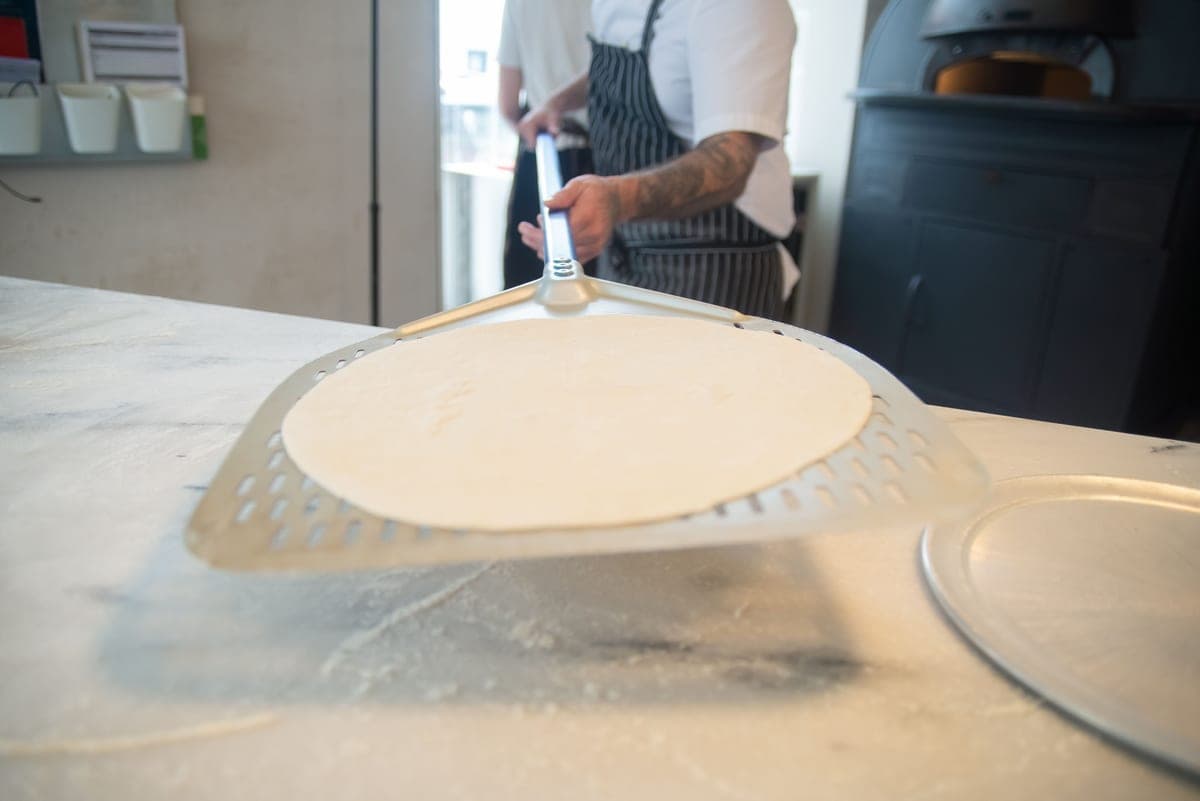
Buy one perforated aluminum peel sized to your oven's mouth — 12 in for a 12 or 13 in oven, 14 in for a 16 in oven. Perforation lets excess flour fall away before the pizza lands, which is what stops burnt semolina smoking on your stone. Add a turning peel if your oven has a single burner; add a solid peel only later, for retrieving.
The sizing rule people get backwards
The instinct is to match the peel to the pizza: 12 in pizza, 12 in peel. That is close to right for the pizza and wrong for the oven, because the peel has to physically enter the chamber with the pizza on it.
A 14 in peel does not pass comfortably through a 12 or 13 in mouth. You end up angling it, catching the sides, and losing the launch. Size the peel to the opening, then make pizzas that fit on it:
| Oven | Opening or chamber | Peel size |
|---|---|---|
| Gozney Arc Lite | 12.8" internal | 12" |
| Solo Stove Pi Prime | 13" opening | 12" |
| Ooni Karu 2 | 13.3" stone | 12" |
| Gozney Roccbox | 12" max pizza | 12" |
| Gozney Arc | 14.8" internal | 12" or 14" |
| Ooni Koda 16 | 16" stone | 14" |
| Gozney Arc XL | 16.8" internal | 14" |
| Ooni Karu 2 Pro | 17" cooking area | 14" |
Peel sizing by oven, using the published chamber and opening figures from the ovens on this site.
Why perforated beats solid for launching
A pizza is built on a bed of flour or semolina, which acts as tiny ball bearings so the dough slides rather than sticks. Most of that flour does its job on the peel and then goes into the oven with the pizza, where it sits on a 900 F stone and burns.
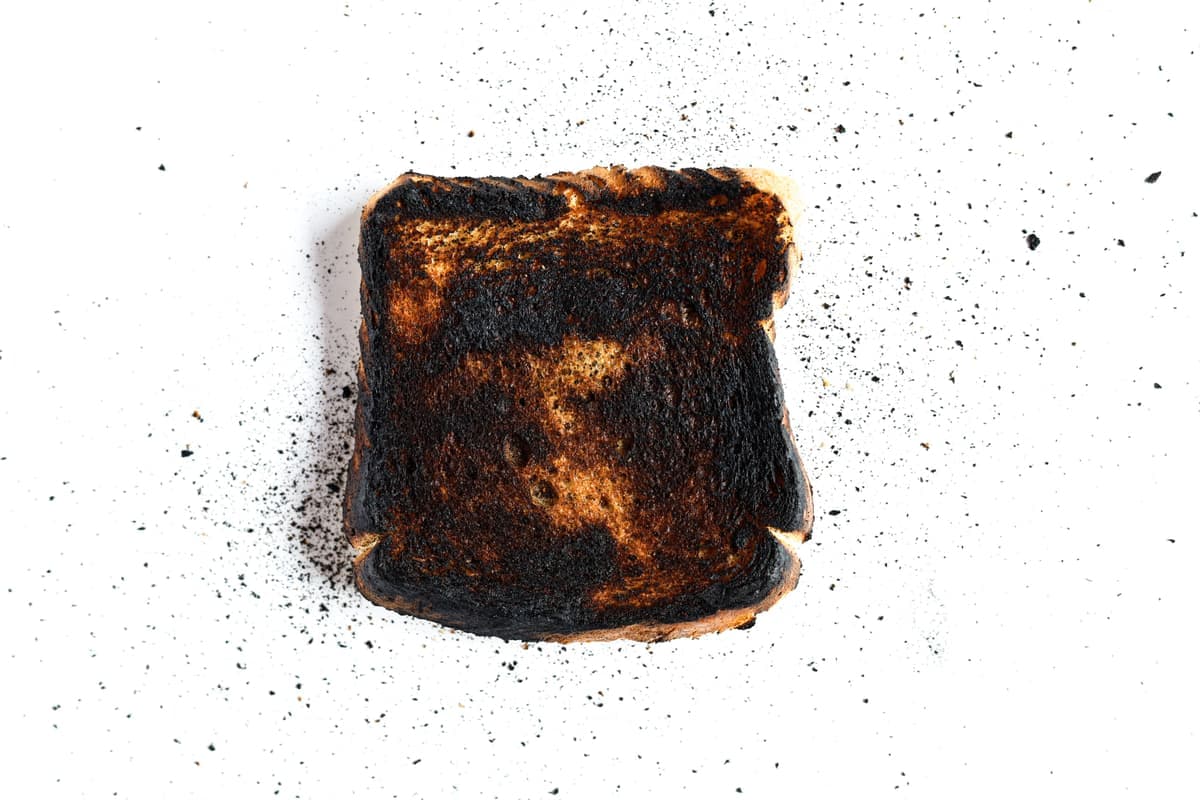
Burnt flour smokes, smells acrid, and leaves black speckles on the base of the next pizza you cook. Perforations let the excess fall off before launch — the pizza keeps what it needs and the stone stays clean. That is the entire argument, and it is why a perforated peel is the one to buy first. The other half of the fix is dosing less semolina in the first place, which is what a flour dredger is for.
Hard anodizing helps too: a smoother surface releases more cleanly than bare aluminum, which is why the anodized peels are worth their small premium.
The turning peel is a different tool
Small round head, long handle, one job. In an oven with a single rear or side burner, one edge of the pizza faces the flame for the whole bake unless you rotate it, and rotating with a full-size peel means lifting the pizza off the stone — losing exactly the floor contact that is cooking the base.
A turning peel slides under one edge and pivots. The pizza never leaves the floor. That is the technique described in turning peel technique, and in a 12 to 16 in single-burner oven it is not optional.
Quick picks
Ranked for fit, not for hype. Every figure below is the maker’s own published number, and “n/p” means they do not publish it — which is itself worth knowing. Tap a row for the full write-up, or go straight to the listing.
| # | Oven | Best for | Max pizza | Weight | Price |
|---|---|---|---|---|---|
| 1 |  Ooni 14" Signature peelHard-anodized perforated aluminum on a long walnut handle. | The one peel to own | 14" | n/p | $90.00 · Check on Amazon |
| 2 |  Ooni 12" Signature peelThe same perforated aluminum head, sized so it actually passes through a 12 or 13 in oven mouth without scraping the... | 12 in ovens | 12" | n/p | $80.00 · Check on Amazon |
| 3 |  CBO 9 in turning peelA 9 in round head on a detachable long handle. | Turning without dragging | n/p | n/p | $24.95 · Check on Amazon |
| 4 |  Ooni 14" solid peelThe unperforated version. | Retrieving, and anything that is not a round pizza | 14" | n/p | $64.98 · Check on Amazon |
Max pizza and weight are the makers’ published figures, sourced on each write-up below. Neither is a measurement we took, and no column here is a score — we have not cooked on these ovens and will not pretend otherwise.
Top pick · The one peel to own
Ooni 14" Signature Perforated Pizza Peel
Ooni · Accessory
Hard-anodized perforated aluminum on a long walnut handle. The perforations shed the flour that otherwise burns on your stone, and that is the whole argument.
Published specification
- Head
- 14" anodized perforated aluminum
- Handle
- Long walnut wood
- Why perforated
- Excess flour falls away and steam escapes before launch
What it does well
- Perforation is the single feature that most reduces the burnt-flour smell and the black speckling on the base of a pizza
- Hard anodizing gives a smoother release surface than bare aluminum, which is the other half of a clean launch
- The handle is long enough to keep a forearm out of a 950 F mouth
What you give up
- A 14 in head does not fit through a 12 in or 13 in oven mouth comfortably — match the peel to the oven, not to the pizza
- Metal peels are poor at holding a raw dough while you top it; a wooden or bamboo peel is better for building on
- This is Ooni's premium peel and it is priced like it — the plain perforated version does the same job for less whenever it is back in stock
Buy it if
Any 14 or 16 in oven, and the peel to buy first.
Skip it if
12 in ovens, and cooks who build the pizza on the peel rather than on the counter.
Where these numbers came from
Pick 2 · 12 in ovens
Ooni 12" Signature Perforated Pizza Peel
Ooni · Accessory
The same perforated aluminum head, sized so it actually passes through a 12 or 13 in oven mouth without scraping the sides.
Published specification
- Head
- 12" anodized perforated aluminum
- Handle
- Long walnut wood
- Fits
- Koda 12, Karu 2, Arc Lite, Roccbox, Pi Prime
What it does well
- Sized to the oven rather than to the pizza, which is the correct way to choose a peel
- Same perforation and anodizing as the 14 in Signature
- Lighter, so it is easier to hold steady at the moment of launch
What you give up
- A 12 in pizza on a 12 in peel leaves no margin for a slightly oversized stretch
- Too small for any 16 in oven
- Still a launching peel, not a building surface
Buy it if
Every 12 in oven on this site.
Skip it if
16 in ovens.
Where these numbers came from
Pick 3 · Turning without dragging
Chicago Brick Oven 9-Inch Aluminum Turning Pizza Peel
Chicago Brick Oven · Accessory
A 9 in round head on a detachable long handle. It exists to spin a pizza in place, which is the technique that fixes the one-burnt-edge problem in every small oven.
Published specification
- Head
- 9 in round aluminum
- Handle
- Detachable long handle
- Purpose
- Rotate a pizza in the chamber without lifting it out
What it does well
- In an oven with a single rear or side burner, turning is not optional, and a full-size peel is the wrong tool for it
- The small head slides under one edge and pivots, so the pizza never leaves the stone and the stone never loses contact
- A detachable handle is the difference between a tool you store and a 40 in pole you trip over
- Cheap relative to the problem it solves — see the turning technique
What you give up
- Useless for launching or retrieving — it is a third peel, not a replacement
- 9 in is generous for a 12 in oven; in a tight chamber a 7 or 8 in head is easier to work with
- Aluminum marks over time and will not stay bright, which is cosmetic rather than functional
Buy it if
Anyone with a 12 to 16 in oven and a single burner.
Skip it if
Dual-zone ovens where the heat is already even, and indoor electric ovens.
Where these numbers came from
Pick 4 · Retrieving, and anything that is not a round pizza
Ooni 14" Metal Pizza Peel
Ooni · Accessory
The unperforated version. Worse at launching, better at everything else — retrieving a finished pizza, moving bread, and carrying anything that would fall through holes.
Published specification
- Head
- 14" solid aluminum, rectangular
- Handle
- Long handle for reach into a hot chamber
What it does well
- A solid surface is what you want under a finished pizza, roasted vegetables or a loaf
- The rectangular head slides under a pizza more reliably than a round one
- Cheaper than the perforated peel and a sensible second peel
What you give up
- Holds flour against the dough, so it is the worse choice for launching
- One peel is enough for most people, and if you own one it should be the perforated one
Buy it if
A second peel, once you have a perforated one for launching.
Skip it if
A first and only peel.
Where these numbers came from
Build on wood, launch on metal
One refinement worth knowing. Metal peels are excellent for launching and poor for building on, because raw dough sticks to metal readily and welds itself down within a couple of minutes. Wooden and bamboo peels are the reverse: dough releases from them far more forgivingly, but they are thicker and clumsier to launch with.
Cooks who make a lot of pizza often use a wooden peel to build and top, then transfer to a metal one to launch. If you are buying one peel, buy the perforated metal one and build fast — the sticking problem is mostly a time problem.
What not to buy
A peel with a short handle. You are reaching into a 950 F chamber. A short handle puts your forearm where the flame is, and it is the most common regret in this category.
A flimsy turning peel. A thin disc that flexes under a loaded pizza folds it. If the head bends when you press on it, it will bend with a pizza on it.
A third peel, immediately. One perforated launcher plus a turning peel covers everything for most people. The solid peel is a useful later addition for retrieving and for bread, not a first purchase.
If the launch is the part going wrong rather than the peel, there is a cheaper fix worth knowing about. A pizza screen removes the launch entirely — you build on it and slide it in — and pizza screens and pans sets out what that costs you in base browning and which ones survive a 950 F chamber.
How these picks were made
We did not cook on these ovens. Every figure on this page is the maker’s or the listing’s published specification, cited on each write-up so you can check it in one click. The ranking comes from matching those published capabilities to a stated use case — space, pizza size, fuel, and how many pizzas you cook in a row. Where a maker does not publish a number, we say so instead of estimating one.
The full version of that argument, including what we deliberately do not claim, is on our methodology page.