Heat and technique
Maintenance and winter storage
Outdoor pizza ovens rarely die of use. They die of water — and the routine that prevents it takes about ten minutes at the end of the season.
The short answer
Between sessions: brush the stone, never wash it. End of season: run the oven hot to burn off residue, let it cool completely, take the stone somewhere dry indoors, disconnect and store the cylinder outdoors upright, cap the hose end against insects, dry everything, and only then cover it. Water in a burner assembly is the standard way these ovens fail.
Between sessions
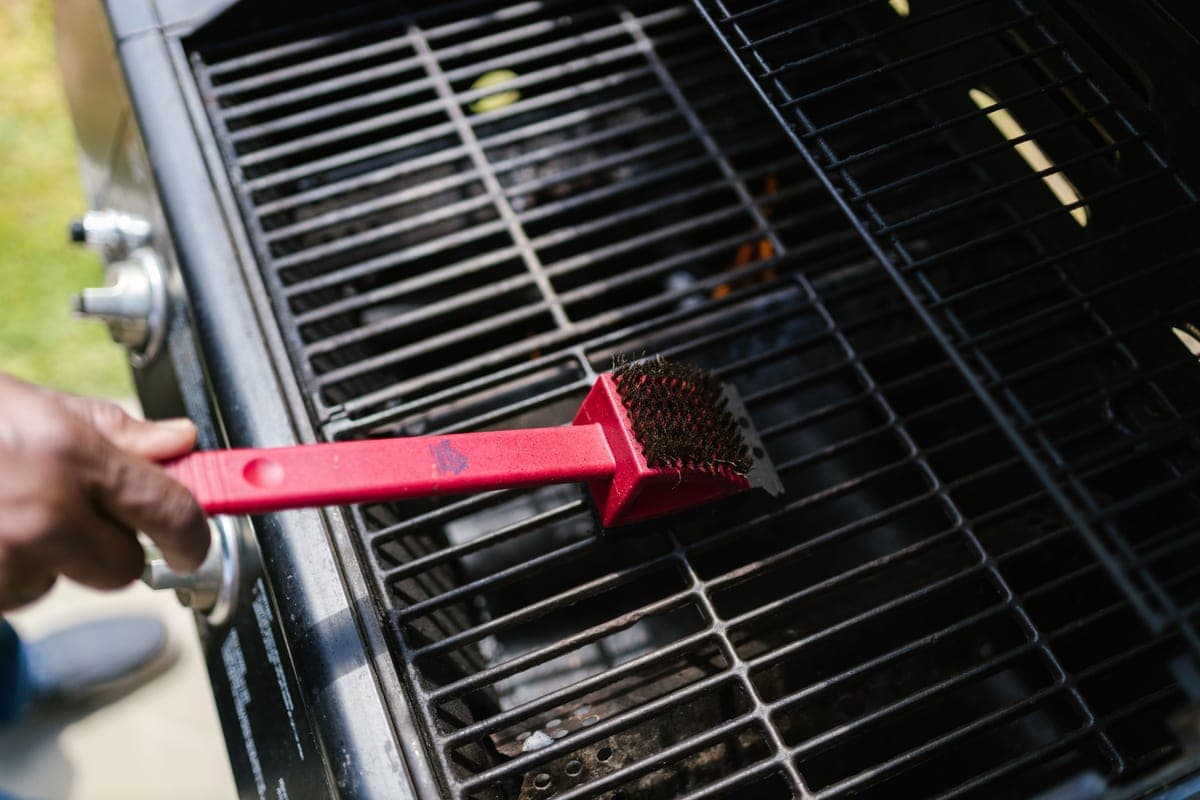
Brush the stone while it is still warm. Loose flour and semolina from launches will smoke and taste bitter under the next pizza. A stiff brush is all this needs, and which brush mostly comes down to whether its handle reaches the back of your stone.
Let it burn off. Most residue clears itself if you run the oven hot for ten minutes at the end of a session. Several ovens — the Ooni Koda 2 Pro and Koda 2 Max among them — have a dedicated pyrolytic self-cleaning cycle for exactly this.
Brown and blotchy is fine. A seasoned stone looks used. Do not try to restore it to its original color; you cannot, and attempting it with chemicals ruins the stone.
Empty the ash, if you burn wood, once it is completely cold — into a metal container, never a plastic bin or a compost heap. Embers survive far longer than they look like they should.
The end-of-season shutdown
Ten minutes, once a year, and it prevents the most common spring disappointment.
- Run the oven hot for ten to fifteen minutes to burn off residue from the last session, then shut it down and let it cool completely.
- Remove the stone and store it indoors somewhere dry. This is the highest-value step. A stone left in an outdoor oven absorbs ambient humidity all winter; if that moisture freezes, or if the stone is later taken straight to 900 F, it cracks.
- Disconnect the cylinder. Store it upright, outdoors, in a ventilated place — never indoors, never in a sealed shed or box.
- Cap or bag the hose end and the gas inlet. Insects nest in gas hoses and burner tubes over a winter, and a blocked port is a genuinely common cause of an oven that will not light properly in spring.
- Dry everything thoroughly. Wipe the chamber and the exterior. Any residual moisture is what you are about to seal in.
- Then cover it, or better, move the whole oven into a garage or shed. See covers and protection.
Why water is the enemy specifically
The burner. A gas burner is a drilled steel tube with small ports. Water enters, sits, and corrodes it from the inside. The symptom appears months later as an uneven flame or ports that will not light, and the fix is a replacement part.
The stone. Porous by design — that is how it dries the base of a pizza. It absorbs ambient water just as readily, and a saturated stone that freezes, or that is taken rapidly to 900 F, cracks.
The body. Powder-coated carbon steel is fine until the coating chips; then rust spreads under the coating from that point. The Solo Stove Pi Prime's 304 stainless construction is genuinely more forgiving here.
Quick picks
Ranked for fit, not for hype. Every figure below is the maker’s own published number, and “n/p” means they do not publish it — which is itself worth knowing. Tap a row for the full write-up, or go straight to the listing.
| # | Oven | Best for | Max pizza | Weight | Price |
|---|---|---|---|---|---|
| 1 | VariousNo photo Oven coverThe cheapest thing on this site and the one that most reliably prevents a repair. | Keeping water out of the burner | n/p | n/p | Check price on Amazon |
| 2 | 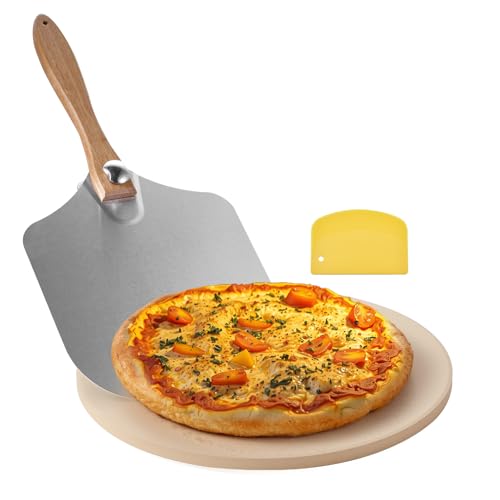 VEVOR 15 in stone0.67 in of cordierite rated to 1450 F. | A thicker replacement floor | 14" | n/p | $38.90 · Check on Amazon |
Max pizza and weight are the makers’ published figures, sourced on each write-up below. Neither is a measurement we took, and no column here is a score — we have not cooked on these ovens and will not pretend otherwise.
Top pick · Keeping water out of the burner
Weatherproof cover for outdoor pizza ovens
Various · Accessory
The cheapest thing on this site and the one that most reliably prevents a repair. Water sitting in a burner tube over winter is how outdoor ovens die.
Published specification
- Fit
- Model-specific covers exist for most ovens on this site
- Material
- Typically 600D to 900D coated polyester
What it does well
- A burner full of standing water and a stone full of absorbed moisture are the two failure modes of winter storage, and a cover addresses both
- Model-specific covers exist for nearly every oven here, so fit is rarely the problem
- Costs a fraction of a replacement burner assembly
What you give up
- Covers are model-specific — the listings are sold per oven, so this entry links to a search rather than pin one that would be the wrong shape for most readers. The covers roundup pins the right one per oven
- A cover over a still-warm oven traps moisture against the metal — wait until it is cold
- A cover is not a substitute for bringing the stone somewhere dry over a hard winter
Buy it if
Every outdoor oven that lives outdoors.
Skip it if
Ovens stored in a garage between uses.
Pick 2 · A thicker replacement floor
VEVOR 15 in Round Cordierite Baking Stone
VEVOR · Accessory
0.67 in of cordierite rated to 1450 F. Thicker than the 0.4 to 0.6 in floors in several ovens on this site, which is the specification that most affects recovery between pizzas.
Published specification
- Size
- 15 in round
- Thickness
- 0.67 in
- Heat rating
- 1450 F
- Included
- Metal peel and scraper
What it does well
- 0.67 in stores meaningfully more heat than a 0.4 in floor, and stored floor heat is what cooks the base
- 1450 F rating is well clear of any oven here
- Cheap enough to be the sacrificial floor you crack instead of the one that came with the oven
What you give up
- Round, so it wastes rack space in a domestic oven where rectangular would not
- A thicker stone takes longer to preheat — you trade recovery time for warm-up time
- Check your oven's own floor recess before assuming a 15 in round drops in
Buy it if
Replacing a cracked stone, or thickening a thin factory floor.
Skip it if
A domestic oven, where a rectangular stone or a steel uses the space better.
Where these numbers came from
The cover mistake
Putting a cover on a warm oven. The cover traps evaporating moisture against the metal with nowhere to go, producing a humid enclosure sitting on steel for hours — worse than leaving it uncovered.
Wait until the oven is completely cold to the touch, which after a long session can take a couple of hours. Same rule after rain: dry it first, then cover it.
Waking it up in spring
- Inspect the hose for cracks, perishing or nesting debris. A hose that has spent a winter outdoors is worth replacing if there is any doubt.
- Leak-check with soapy water when you reconnect the cylinder. Ninety seconds, every time, no exceptions — see the first burn guide.
- Check the burner ports for obstruction before lighting.
- Put the stone in cold and let it heat with the oven. Never place a room-temperature stone onto a hot floor.
- Run a burn-off cycle before the first pizza of the year.
A cover does the work between cooks rather than over winter, and it only does it if it is the right shape for your oven. The best pizza oven covers, by oven matches each oven here to its maker's own cover, and flags the two on this site whose first-party cover was out of stock when we checked.
How these picks were made
We did not cook on these ovens. Every figure on this page is the maker’s or the listing’s published specification, cited on each write-up so you can check it in one click. The ranking comes from matching those published capabilities to a stated use case — space, pizza size, fuel, and how many pizzas you cook in a row. Where a maker does not publish a number, we say so instead of estimating one.
The full version of that argument, including what we deliberately do not claim, is on our methodology page.