Gas pizza ovens
Natural gas vs propane: which ovens, and what changes
If you have an outdoor gas point this is the first decision, not the last one — because it eliminates entire brands before you have looked at a single specification.
The short answer
You buy a natural-gas oven, or a conversion kit the maker publishes — you never improvise one. Ooni sells factory natural-gas versions of the Koda 16, Koda 2 Pro and Koda 2 Max, HALO publishes a natural-gas conversion kit for the Versa 16 as model HZ-3001-A. Gozney offers none — the Arc family is propane only and Gozney states the Roccbox cannot be converted. Natural gas never runs out mid-cook; the trade is that the oven is tethered permanently.
The conversion myth
This is the most common misunderstanding in the category, and getting it wrong is expensive.
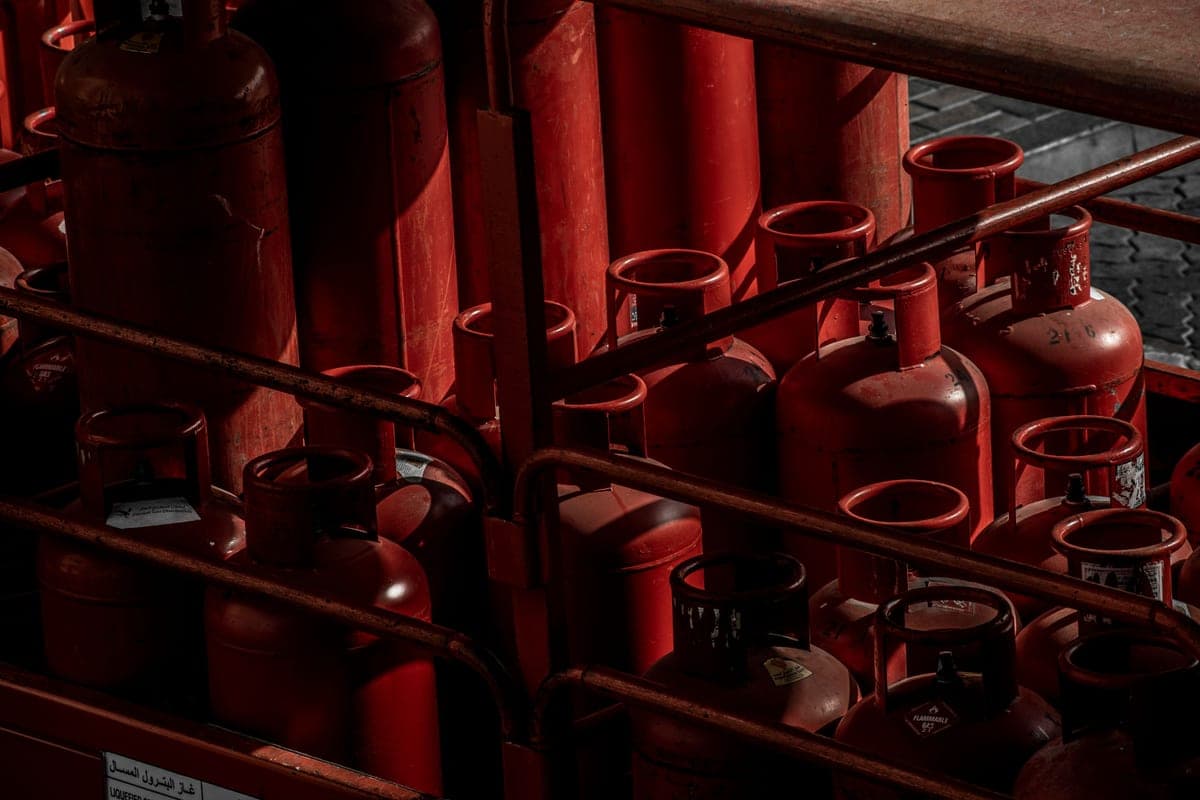
Natural gas and propane burn at different pressures and need different orifice sizing, so an appliance is built and certified for one or the other. Where a maker offers both, it sells them as separate products — not as a switch you flip or a kit you buy. Ooni's natural-gas Koda 16 is a different SKU from the propane Koda 16.
Which ovens actually offer it
| Oven | Natural gas? | How |
|---|---|---|
| Ooni Koda 16 | Yes | Separate factory natural-gas product |
| Ooni Koda 2 Pro | Yes | Separate factory natural-gas product |
| Ooni Koda 2 Max | Yes | Separate factory natural-gas product |
| HALO Versa 16 | Yes | Maker-published conversion kit, model HZ-3001-A |
| Ooni Koda 2 / Koda 12 | No | Propane only |
| Gozney Arc, Arc XL, Arc Lite | No | Propane only, no variant offered |
| Gozney Roccbox | No | Gozney states it cannot be converted |
| Solo Stove Pi Prime, Pi | No | Propane only |
Natural-gas availability across the ovens on this site, from each maker's published product information. This is a purchase-time decision, not a later upgrade.
Read that table as a brand filter. If a gas line is the reason you are buying, Gozney is out before you compare a single other specification — which is the sort of thing worth knowing on day one rather than day thirty. The wider brand picture is in Ooni vs Gozney.
What natural gas actually changes
It never runs out. This is the whole argument, and it is a bigger quality-of-life change than it sounds. Every propane owner discovers an empty cylinder mid-cook exactly once, and it is always with the dough already stretched. A gas line removes that failure mode permanently, along with the tank runtime arithmetic and the standing advice to own two cylinders.
It removes the cylinder from the patio. No 20 lb steel bottle to site safely, no upright ventilated storage, no worrying about a hose crossing a walkway. On a small patio that reclaimed space is genuinely useful — see clearances and surfaces.
It is usually cheaper per unit of energy. Piped natural gas is generally the lower-cost fuel per BTU, though the size of the gap depends entirely on local rates. We are not going to quote a figure, because utility prices vary by more than a factor of three across regions and a national average would be worse than no number — work it out from your own bill, using the method in what a pizza oven costs to run.
What it costs you
The oven stops moving. A hose-tethered oven does not go to a campsite, does not follow the shade around the yard, and does not come into the garage for winter. That last one matters more than people expect — water in a burner assembly is the standard way outdoor ovens die, and winter storage is harder when the appliance is plumbed in.
Installation is a trade job. Connecting an appliance to a household gas supply is work for a qualified gas fitter, and depending on where you live it may need a permit or an inspection. Budget for it as part of the purchase rather than discovering it afterwards.
You are choosing from a smaller shelf. Four of the ovens on this site can use natural gas. Everything else is propane, and some of those are excellent — the Gozney Arc's 0.8 in stone and 6.8 in chamber height have no natural-gas equivalent at all.
Quick picks
Ranked for fit, not for hype. Every figure below is the maker’s own published number, and “n/p” means they do not publish it — which is itself worth knowing. Tap a row for the full write-up, or go straight to the listing.
| # | Oven | Best for | Max pizza | Weight | Price |
|---|---|---|---|---|---|
| 1 |  Ooni Koda 16Still the most sensible first gas oven anyone buys. | The default first oven | 16" | 40.1 lb | $498.00 · Check on Amazon-23% |
| 2 |  Ooni Koda 2 ProThe Koda 2 Max's dual burners and 0.8 in stone in a body 29 lb lighter and 4 in narrower. | Dual-zone without the Max footprint | 18" | 66 lb | $798.95 · Check on Amazon |
| 3 |  Ooni Koda 2 MaxTwo independently controlled burners under a 24 x 21 in stone. | Cooking for a crowd | 20" | 95 lb | $1,298.94 · Check on Amazon |
| 4 |  HALO Versa 16The only oven on this site whose stone turns itself, and the only gas oven here whose maker publishes a BTU rating. | Not having to turn the pizza | 16" | 43.54 lb | $449.00 · Check on Amazon-10% |
Max pizza and weight are the makers’ published figures, sourced on each write-up below. Neither is a measurement we took, and no column here is a score — we have not cooked on these ovens and will not pretend otherwise.
Top pick · The default first oven
Ooni Koda 16 Propane Gas Pizza Oven
Ooni · Propane
Still the most sensible first gas oven anyone buys. 16 inches is the size where a 12-inch pizza stops feeling like a tight squeeze, and at 40 lb one person can carry it.
Published specification
- Max temperature
- 950 F (500 C), reached in about 20 minutes
- Stone
- 16 in cordierite, 0.6 in thick
- External size
- 25" L x 23.2" W x 14.7" H
- Weight
- 40.1 lb unboxed
- Fuel
- Propane, or a separate natural-gas version for a gas line
- Warranty
- 1 year standard, 5 years on registration with Ooni
- Gas input
- Ooni does not publish a BTU input rating for the Koda line
What it does well
- The 16 in stone is the real argument for this model over the 12 in ovens — a 12 in pizza sits inside it with room to turn, which is what actually stops a burnt edge
- One-piece body with folding legs: no assembly, and it is the largest oven here a single person carries comfortably
- There is a natural-gas variant, so a household with a gas line can stop buying cylinders entirely — rare in this category
What you give up
- 0.6 in stone stores less heat than the 0.8 in floors on the newer Koda 2 Pro and the Gozney Arc, so back-to-back bakes need a longer recovery pause
- Single burner across the back: no dual-zone control, so everything cooks at one temperature
- No door and no glass, so the heat you lose between launches is heat you re-earn with the flame
Buy it if
Someone buying their first serious outdoor oven who wants 16 in capacity and does not want to think about fuel beyond turning a dial.
Skip it if
Anyone who wants wood flavor, and anyone cooking two different things at once — that is the Koda 2 Pro or the Karu.
Where these numbers came from
Pick 2 · Dual-zone without the Max footprint
Ooni Koda 2 Pro Gas Pizza Oven
Ooni · Propane
The Koda 2 Max's dual burners and 0.8 in stone in a body 29 lb lighter and 4 in narrower. For most households this is the better version of that idea.
Published specification
- Max temperature
- 950 F (510 C); range starts at 320 F
- Stone
- 21" front x 18" rear cordierite, 0.8 in thick
- Max pizza
- 18 in
- External size
- 26.85" x 25.67" x 15.47"
- Weight
- 66 lb (30 kg)
- Burners
- Dual lateral burners with independent controls
- Fuel
- Propane tank or natural-gas line
- Cleaning
- Pyrolytic self-cleaning cycle
What it does well
- Independent dual-zone control at 66 lb rather than 95 lb — the same headline feature as the Max in a body a determined adult can still reposition
- The temperature range starts at 320 F, which is the difference between a pizza oven and an outdoor oven you also roast in
- 0.8 in stone is the thickness that stops the recovery-time problem between back-to-back pizzas
What you give up
- 18 in maximum means a true 20 in New York round is still out of reach — that is Max territory only
- Ooni does not publish a BTU input figure, so there is no way to compare its burner to a Gozney or a Solo Stove on paper
- The Ooni Connect hub is bundled with the Max but not with every Koda 2 Pro configuration — check the listing you are actually buying
Buy it if
The buyer who read the Koda 2 Max specification, wanted the dual zones, and then read the 95 lb line.
Skip it if
A balcony, or a table that is not rated for a 66 lb appliance plus its heat.
Where these numbers came from
Pick 3 · Cooking for a crowd
Ooni Koda 2 Max Propane Gas Pizza Oven
Ooni · Propane
Two independently controlled burners under a 24 x 21 in stone. It is the only oven here that genuinely cooks two different things at two different temperatures, and at 95 lb it is the only one that stops being portable.
Published specification
- Max temperature
- 950 F (500 C)
- Stone
- 24 x 21 in cordierite, 0.8 in thick
- Capacity
- One 20 in pizza, two 12 in, or three 10 in at once
- External size
- 31" L x 28" W x 17" H
- Weight
- 95 lb unboxed
- Burners
- Two, independently controlled — genuine dual-zone
- Included
- Ooni Connect digital temperature hub and one food probe
What it does well
- Dual independent zones are the feature nothing else at this size has: a 60-second Neapolitan on one side while a pan pizza bakes long and low on the other
- 0.8 in stone across 24 x 21 in stores enough heat that consecutive bakes stop degrading, which is the actual limit on every smaller oven
- A 20 in pizza means New York style is finally on the menu without cutting the dough down
What you give up
- 95 lb. This is furniture. Decide where it lives before it arrives, and read the surfaces and clearances guide first
- The footprint is 31 x 28 in — larger than many patio tables can carry safely, and larger than every small-space recommendation on this site
- You pay for two burners whether or not you ever run two zones; a single-zone cook does not need this oven
Buy it if
Households who feed six or more people at a time, or anyone who wants one appliance that does 60-second Neapolitan and long-bake pan on the same evening.
Skip it if
Balconies, small patios, and anyone who will need to move the oven between uses.
Where these numbers came from
Pick 4 · Not having to turn the pizza
HALO Versa 16 Propane Gas Outdoor Pizza Oven
HALO · Propane
The only oven on this site whose stone turns itself, and the only gas oven here whose maker publishes a BTU rating. Both facts are unusual enough to be the reason to buy it.
Published specification
- Max temperature
- 950 F ambient, 750 F stone, in about 12 minutes
- Stone
- 16 in cordierite, motor-driven, rotates 360 degrees. Thickness not published
- Gas input
- 21,100 BTU total. HALO's own FAQ splits this as 11,600 BTU rear and 9,500 BTU infrared
- External size
- 22.44" W x 24.59" D x 14.84" H
- Weight
- 43.54 lb unboxed, 55.12 lb shipping
- Fuel
- Propane, 1 lb canisters or 20 lb tanks. Natural-gas conversion kit HZ-3001-A sold separately
- Stone motor
- 2 D-cell batteries (not included) or the supplied AC adapter
- Warranty
- Five years against defects; electrical components and paint 1 year
What it does well
- The stone rotates under its own motor, which removes the most common cause of a half-burnt home pizza without requiring you to learn the turning technique
- HALO publishes a BTU input rating. Ooni, Gozney and Bertello publish none for any oven, which makes this the only 16 in gas oven here whose burner can be compared on paper at all
- A second, lower infrared burner is aimed at the stone specifically, which is how the oven recovers heat between bakes without relying on a thick floor
- Natural-gas conversion is a published product with a model number rather than a workaround, which is rare outside Ooni
What you give up
- The stone thickness is not published, and that is the specification that normally predicts recovery between bakes. You are trusting the lower burner to do the job mass does elsewhere
- The rotation motor is a moving part in a 950 F appliance, and it needs either batteries or an outlet within reach of the patio. No other oven here has an electrical requirement
- HALO's own FAQ and its retail listings disagree about which burner is 11,600 BTU and which is 9,500. The 21,100 total is consistent; the split is not
- At 43.54 lb it is heavier than an Ooni Koda 16 and has no folding legs, so it is a lift rather than a carry
Buy it if
Someone who wants a 16 in oven and does not want to stand over it turning a pizza every 20 seconds. Particularly a first buyer, or anyone cooking while also hosting.
Skip it if
Anyone chasing the thickest possible stone for back-to-back bakes, or anyone who wants an oven with no electrics in it at all.
Where these numbers came from
How to decide
Already have an outdoor gas point, and the oven has a permanent home? Buy the natural-gas variant. The convenience compounds every single session and the drawbacks are things you were not going to do anyway.
No gas point? Do not install one for a pizza oven alone. Propane is a perfectly good fuel, a cylinder covers 25 to 35 evenings, and the money is better spent on a thicker stone or a bigger chamber.
Might move the oven, ever? Stay on propane. The tether is permanent and it is the one decision here you cannot reverse without buying a second oven.
How these picks were made
We did not cook on these ovens. Every figure on this page is the maker’s or the listing’s published specification, cited on each write-up so you can check it in one click. The ranking comes from matching those published capabilities to a stated use case — space, pizza size, fuel, and how many pizzas you cook in a row. Where a maker does not publish a number, we say so instead of estimating one.
The full version of that argument, including what we deliberately do not claim, is on our methodology page.
Questions people actually ask
+Can you convert a propane pizza oven to natural gas?
+Which pizza ovens run on natural gas?
+Is natural gas cheaper than propane for a pizza oven?
+Does a natural gas pizza oven get as hot as propane?
+Do I need a plumber to install a natural gas pizza oven?
Sources for this page