Choosing by space
Built-in or portable: the decision that comes before the oven
Settle this first and the oven choice gets much simpler, because it removes or introduces the single heaviest constraint in the category.
The short answer
Decide the setup before the oven. If the oven has a permanent, rated home, weight stops mattering and you should buy the best-insulated, thickest-stone oven in budget — the Gozney Arc XL or an Ooni Koda 2 Pro. If it moves, weight and format dominate everything and the field narrows to three or four ovens.
Why this decision comes first
Weight is the most consequential specification in this category, and it only matters in one of the two setups. Once you have a permanent site, 95 lb is not a disadvantage — it is thermal mass, insulation and stone, which is to say it is most of what makes an oven good.
Get the order wrong and you optimize for a constraint you do not have. A lot of buyers pick a light oven for a patio it never leaves, and pay for that in stone thickness for years.
The case for a permanent site
Buy on heat retention instead of mass. The thickest stone and the densest insulation in your budget, since neither costs you anything once the oven is not being lifted.
Setup friction drops to zero, which is the strongest predictor of how often the oven gets used. An oven that is already outside, already on its surface, with the cylinder already connected, gets lit on a weeknight. One that requires fifteen minutes of setup does not.
A natural-gas line becomes possible. Ooni's natural-gas variants of the Koda 16, Koda 2 Pro and Koda 2 Max remove propane cylinders from your life permanently. That is only available to a fixed installation, and for a frequently used oven it is a genuine quality-of-life change.
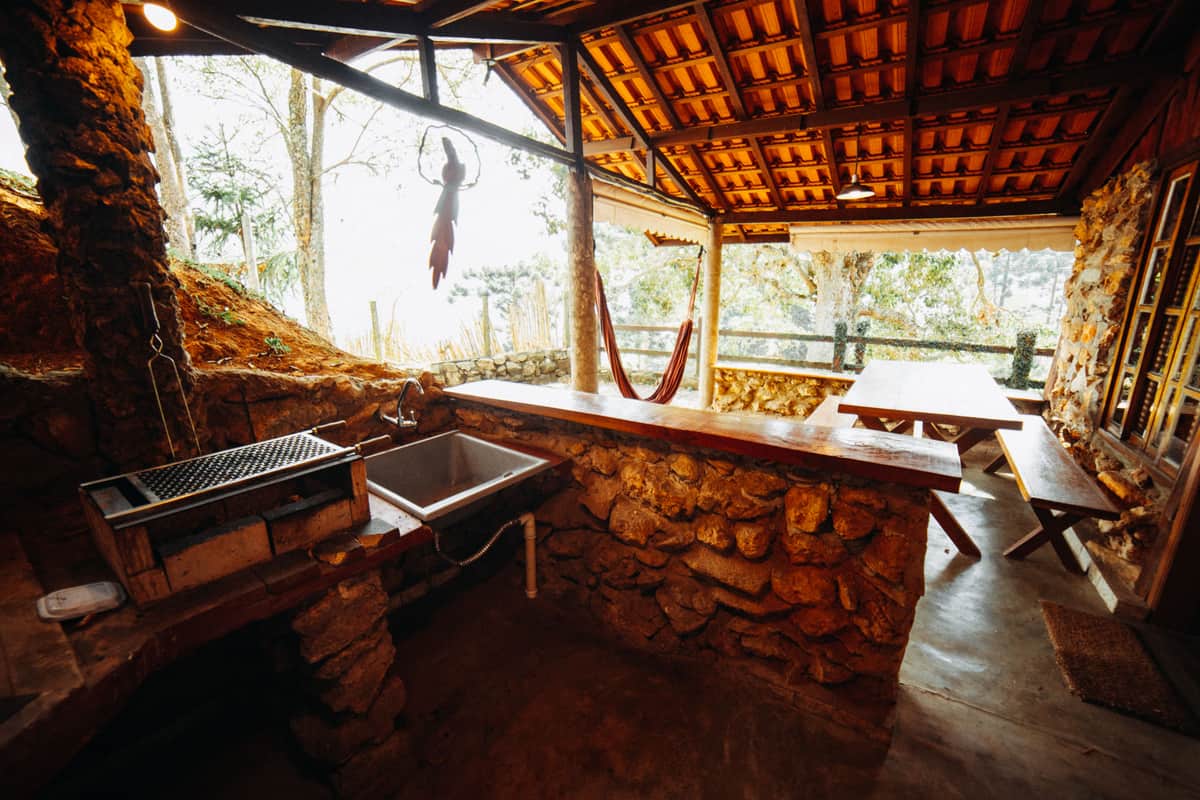
You can build the workspace properly — surface at the right height, landing space beside the mouth, storage for peels and fuel underneath. Once that is the plan, the outdoor kitchen picks re-rank the ovens for a setting where weight has stopped mattering.
The case for portable
The oven comes indoors in winter, which removes the entire winter-storage failure mode — water in a burner assembly is how outdoor ovens die.
You can move it to the shade, out of the wind, or away from the guests. Wind in particular affects a pizza oven's ability to hold temperature more than most owners expect.
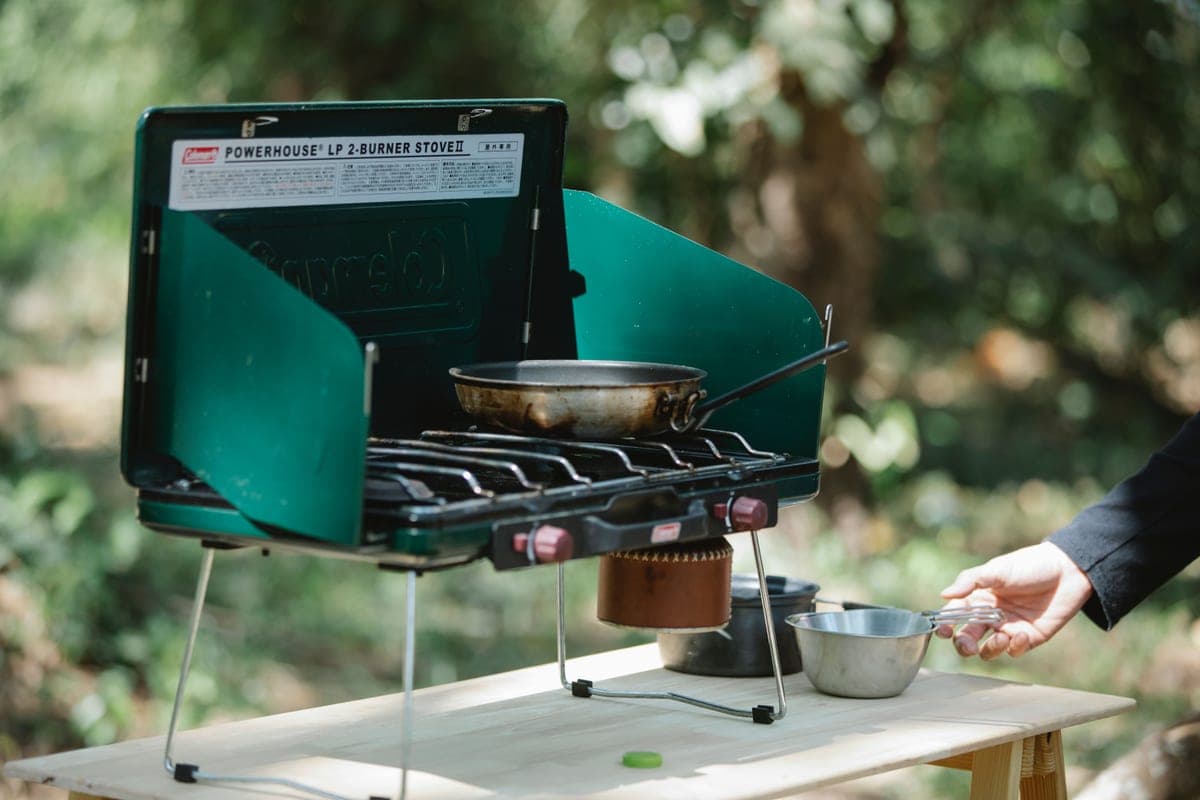
It travels — to a campsite, to a friend's garden, to a new house. The portable roundup covers what makes an oven genuinely transportable rather than merely small.
And you are not committing the space. A built-in oven claims its footprint permanently, which is a real cost on a small patio.
The middle answer most people should take
A dedicated stand or cart. The oven has a proper home with the right surface and working space, so setup friction is near zero and you can buy on heat retention rather than mass — but the whole assembly still rolls into a garage in November.
That gets most of the benefit of a built-in without the commitment, and it is why a stand is on the essential accessories list for anything over about 40 lb.
Quick picks
Ranked for fit, not for hype. Every figure below is the maker’s own published number, and “n/p” means they do not publish it — which is itself worth knowing. Tap a row for the full write-up, or go straight to the listing.
| # | Oven | Best for | Max pizza | Weight | Price |
|---|---|---|---|---|---|
| 1 | 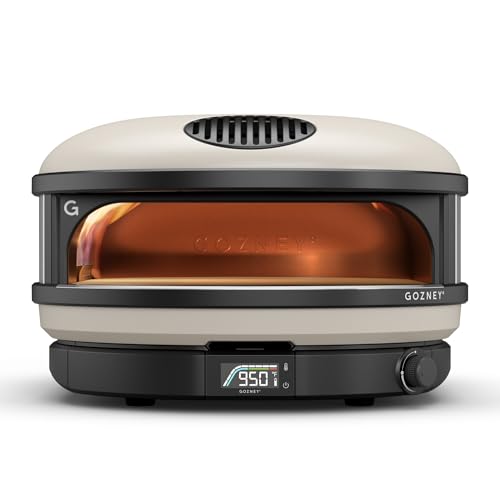 Gozney Arc XLA lateral rolling flame and two-layer insulation around a 0.8 in stone. | Heat that survives a fourth pizza | 16" | 58.5 lb | $998.99 · Check on Amazon |
| 2 |  Gozney RoccboxThe original portable stone-floor oven, and still the only 12 in oven with retractable legs, a carry strap, an insula... | The one that travels and still holds heat | 12" | 44 lb | $399.00 · Check on Amazon-20% |
| 3 |  EUTRKei oven tableA 45 x 29 in steel cart with a topping station and an extendable side. | Getting the oven off the patio furniture | n/p | n/p | $129.99 · Check on Amazon-7% |
Max pizza and weight are the makers’ published figures, sourced on each write-up below. Neither is a measurement we took, and no column here is a score — we have not cooked on these ovens and will not pretend otherwise.
Top pick · Heat that survives a fourth pizza
Gozney Arc XL Propane Outdoor Pizza Oven
Gozney · Propane
A lateral rolling flame and two-layer insulation around a 0.8 in stone. The Arc XL is the 16 in oven built around heat retention rather than around portability, and it shows on the fourth bake.
Published specification
- Max temperature
- 950 F (500 C)
- External size
- W 20.9" x D 24.8" x H 13.5"
- Internal size
- W 16.8" x D 20.3" x H 6.8"
- Weight
- 58.5 lb bare, 73 lb boxed
- Stone
- Removable 0.8 in (20 mm) cordierite
- Flame
- Lateral rolling gas flame, digital temperature gauge
- Warranty
- 1 year standard, 5 years on registration within 60 days
What it does well
- The lateral flame runs along the side rather than across the back, which is why the Arc needs fewer turns than a rear-burner oven of the same size
- Dense two-layer insulation plus a 0.8 in floor is the combination that holds temperature through consecutive launches
- 6.8 in of internal height is unusually generous — it is the reason thick-rim and pan styles work here
- No assembly, and the digital gauge means you are not guessing at stone temperature
What you give up
- Gozney does not publish a gas input rating either, so burner comparisons against Solo Stove's stated 15,000 BTU are impossible on paper
- 58.5 lb with no folding legs — it moves, but not casually
- Propane only; there is no natural-gas variant of the Arc
Buy it if
Anyone who cooks more than two pizzas in a sitting and is tired of waiting for the stone to come back.
Skip it if
Buyers who want wood flavor, or who need to pack the oven into a car.
Where these numbers came from
Pick 2 · The one that travels and still holds heat
Gozney Roccbox Outdoor Pizza Oven
Gozney · Multi-fuel
The original portable stone-floor oven, and still the only 12 in oven with retractable legs, a carry strap, an insulated skin and a detachable burner you can swap for wood.
Published specification
- Max temperature
- 950 F (500 C), 20 to 30 minutes on gas
- Max pizza
- 12 in, about 60 seconds
- Weight
- 20 kg (about 44 lb)
- Fuel
- Propane or butane as standard; wood burner sold separately
- Floor
- Double-layer stone floor with dense insulation
- Included
- Detachable gas burner and a professional pizza peel
- Warranty
- 1 year standard, 5 years on registration within 60 days
What it does well
- Retractable legs plus a carry strap: it is the only oven in this registry designed from the outset to be picked up and taken somewhere
- The detachable burner is the cleanest gas-to-wood swap in the category — no second oven, no permanent commitment either way
- A peel is in the box, which quietly removes the most common forgotten purchase
- Cannot run on natural gas — Gozney is explicit about this, which is more than several rivals manage
What you give up
- 44 lb is heavy for a 12 in oven; the portability is about form, not mass
- Gozney does not publish external dimensions or stone thickness on the Roccbox page, so two comparable numbers are missing
- The wood burner is an extra purchase, so the multi-fuel headline costs more than the sticker
Buy it if
Someone who wants one oven for the patio and the campsite, and who might want wood later without buying twice.
Skip it if
Anyone who needs pizzas larger than 12 in.
Where these numbers came from
Pick 3 · Getting the oven off the patio furniture
EUTRKei 45 x 29 in Pizza Oven Table and Grill Cart
EUTRKei · Accessory
A 45 x 29 in steel cart with a topping station and an extendable side. Its actual job is to stop a 60 lb oven from living on a table that was never rated for it.
Published specification
- Top
- 45" x 29"
- Extras
- Topping station and extendable side desk
- Fits
- Marketed for Ooni, Gozney, Solo Stove and Blackstone footprints
What it does well
- A dedicated stand is the correct answer to the surfaces and clearances problem — most patio tables are not rated for a 60 lb appliance running at 950 F
- The topping station solves the real workflow problem: you need somewhere to build the pizza within arm's reach of the mouth
- Wheels mean the oven and its cylinder move together
What you give up
- Generic carts do not always match a specific oven's footprint — measure before ordering
- The manufacturer does not publish a weight rating in the listing, which is the one number a stand should state
- Takes up more patio than the oven does
Buy it if
Any oven over about 40 lb, and every setup where the cylinder currently sits on the ground.
Skip it if
A Gozney Arc Lite on a balcony, where the whole point was that it packs away.
Where these numbers came from
If you do build it in
Get the clearances right the first time — they are expensive to change once tiles are down. Plan the working surface generously, since counter space is the thing people most regret skimping on. Put the cylinder or the gas connection somewhere you can actually reach. And leave the oven removable if you can: stones crack, burners fail, and an oven built in so tightly it cannot come out is a repair problem waiting to happen.
How these picks were made
We did not cook on these ovens. Every figure on this page is the maker’s or the listing’s published specification, cited on each write-up so you can check it in one click. The ranking comes from matching those published capabilities to a stated use case — space, pizza size, fuel, and how many pizzas you cook in a row. Where a maker does not publish a number, we say so instead of estimating one.
The full version of that argument, including what we deliberately do not claim, is on our methodology page.