Wood-fired and multi-fuel
Bertello Grande: the only oven here that burns gas and wood at once
Everyone else makes you choose a fuel per session. Bertello's answer is to run both — gas for temperature control, wood for the char — with burners above and below the stone.
The short answer
The Grande was the oven to consider if you wanted wood flavor without giving up temperature control. Running gas and wood simultaneously is a genuinely different design and it resolved the trade every other multi-fuel oven asks you to accept. The costs were 900 F rather than the 950 F rivals publish, and Bertello published neither weight nor stone thickness.
Every other oven on this site treats fuel as a mode. You are in wood mode or you are in gas mode, and switching means changing hardware. Bertello treats it as two systems that run together, and that is a materially different idea.
Why simultaneous is not a gimmick
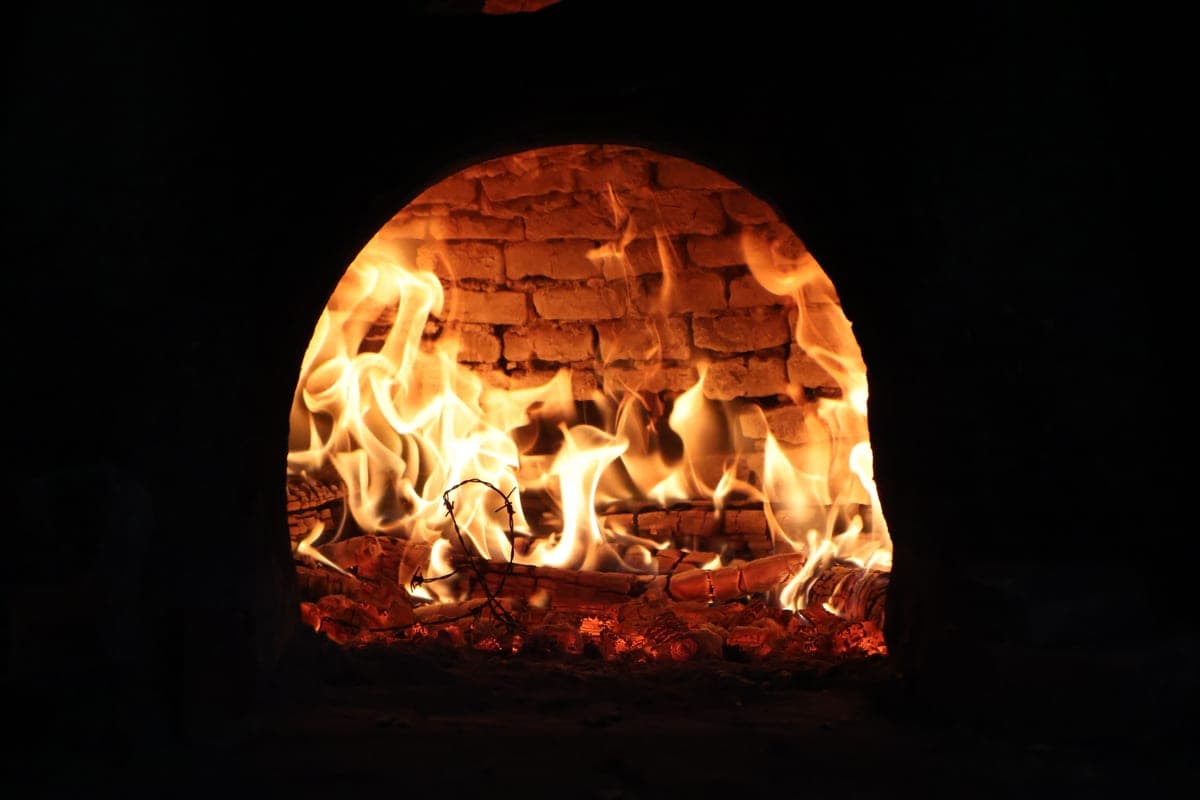
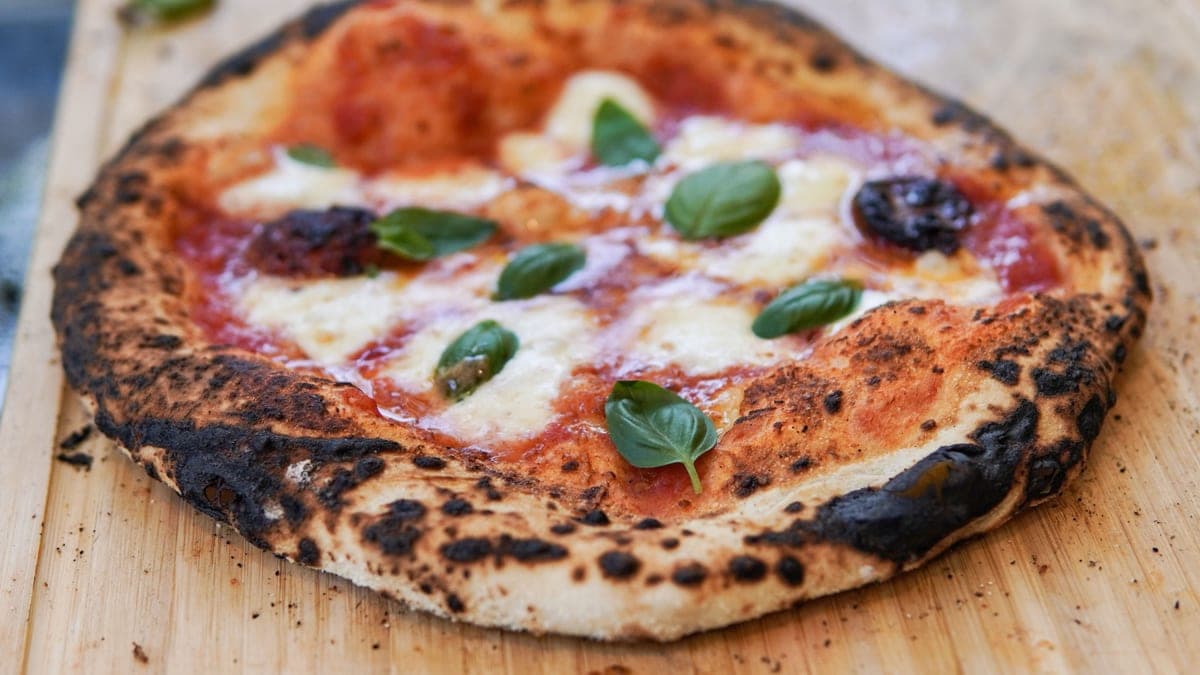
The core tension in wood-fired cooking is that the fire does two jobs badly at once. It has to hold the chamber at temperature — a steady, boring job that a gas burner does perfectly — and it has to produce the live rolling flame that chars a rim, which is the only thing gas cannot replicate.
Splitting those jobs between two systems is the obvious solution and almost nobody does it. Gas holds the floor and the chamber where you want them; a small wood fire supplies the flame and the character. You are no longer feeding a fire to maintain temperature, which is the part of wood cooking that competes for attention with stretching dough.
Burners above and below the stone
Bertello calls this the FlameThrower dual burner system: one burner under the stone and one above it. Under-stone heating is unusual in this category, and it directly attacks the problem that dominates the rest of this site — a floor that gives up its stored heat into consecutive pizzas and slows down.
An oven that can actively reheat its floor from underneath does not depend on stone mass the way a top-fired oven does. Given that Bertello does not publish a stone thickness, that is a fortunate piece of engineering: the mechanism that would normally make thickness critical has been partly removed.
The 16 by 16 inch square stone
Square, not round, and 16 in on each side. For round pizzas that is simply a large surface. For the styles that are not round — Sicilian, Detroit-style, focaccia, sheet-pan bakes — a square floor uses space a round one wastes, and this is the only oven on this site with that geometry.
What to weigh against it
900 F, not 950 F. Bertello publishes 900 F, reached in as little as 10 minutes on gas, against the 950 F almost everything else here claims. Fifty degrees is not much in absolute terms, and at the Neapolitan end of the range it is the part that does the most work. It is a real, if modest, difference.
No published weight and no published stone thickness. Two of the numbers that this site's comparison tables are built on, absent. That is a genuine mark against an otherwise interesting product, and it is why the Grande sits below the Karu 2 Pro and the Roccbox in the roundup rather than above them.
Two systems to maintain. Two burners means two things to clean and two things that can fail, and the wood side still produces ash. If you are weighing it against Ooni's 16 in wood oven, that is Bertello Grande vs Karu 2 Pro.
What to buy instead
Quick picks
Ranked for fit, not for hype. Every figure below is the maker’s own published number, and “n/p” means they do not publish it — which is itself worth knowing. Tap a row for the full write-up, or go straight to the listing.
| # | Oven | Best for | Max pizza | Weight | Price |
|---|---|---|---|---|---|
| 1 |  Ooni Karu 2 ProThe biggest multi-fuel oven Ooni makes: wood or charcoal out of the box, gas with a separate burner, a fully glazed d... | Wood flavor at 16 inches | 16" | 62.6 lb | $849.00 · Check on Amazon |
| 2 |  HALO Versa 16The only oven on this site whose stone turns itself, and the only gas oven here whose maker publishes a BTU rating. | Not having to turn the pizza | 16" | 43.54 lb | $449.00 · Check on Amazon-10% |
Max pizza and weight are the makers’ published figures, sourced on each write-up below. Neither is a measurement we took, and no column here is a score — we have not cooked on these ovens and will not pretend otherwise.
Top pick · Wood flavor at 16 inches
Ooni Karu 2 Pro Multi-Fuel Outdoor Pizza Oven
Ooni · Multi-fuel
The biggest multi-fuel oven Ooni makes: wood or charcoal out of the box, gas with a separate burner, a fully glazed door so you can watch, and a digital hub with a food probe.
Published specification
- Max temperature
- 950 F (500 C) in about 15 minutes
- Cooking area
- 17 in wide, 5.7 in internal height
- Stone
- 0.6 in cordierite
- External size
- 32.4" L x 19.8" W x 32.4" H
- Weight
- 62.6 lb unboxed, 86.6 lb boxed
- Fuel
- Wood or lump charcoal as standard; gas burner sold separately
- Included
- Glass door, tray door, fuel tray and grate, digital hub with probe
What it does well
- A full glass door on a wood oven is rare and it changes how the oven is used — you manage the fire by watching it rather than by opening it
- 17 in of cooking width is the largest wood-capable surface here, and it takes a 16 in pizza
- Wood, charcoal, or gas from one body: the fuel decision stops being permanent
- The food probe makes it a genuine roasting oven, not only a pizza oven
What you give up
- The gas burner is a separate purchase, so 'multi-fuel' costs more than the listed price
- 0.6 in stone under a 17 in surface — thinner than the Gozney Arc's floor, so recovery between pizzas is slower than the size suggests
- 62.6 lb and 32 in tall on legs: this is a fixed installation in practice
- Wood means ash, a chimney to clean, and a fire to feed while you cook
Buy it if
Someone who actually wants the wood-fired part, cooks 16 in pizzas, and is willing to tend a fire.
Skip it if
Anyone whose real requirement is dinner in 20 minutes on a Tuesday. That is a gas oven.
Where these numbers came from
Pick 2 · Not having to turn the pizza
HALO Versa 16 Propane Gas Outdoor Pizza Oven
HALO · Propane
The only oven on this site whose stone turns itself, and the only gas oven here whose maker publishes a BTU rating. Both facts are unusual enough to be the reason to buy it.
Published specification
- Max temperature
- 950 F ambient, 750 F stone, in about 12 minutes
- Stone
- 16 in cordierite, motor-driven, rotates 360 degrees. Thickness not published
- Gas input
- 21,100 BTU total. HALO's own FAQ splits this as 11,600 BTU rear and 9,500 BTU infrared
- External size
- 22.44" W x 24.59" D x 14.84" H
- Weight
- 43.54 lb unboxed, 55.12 lb shipping
- Fuel
- Propane, 1 lb canisters or 20 lb tanks. Natural-gas conversion kit HZ-3001-A sold separately
- Stone motor
- 2 D-cell batteries (not included) or the supplied AC adapter
- Warranty
- Five years against defects; electrical components and paint 1 year
What it does well
- The stone rotates under its own motor, which removes the most common cause of a half-burnt home pizza without requiring you to learn the turning technique
- HALO publishes a BTU input rating. Ooni, Gozney and Bertello publish none for any oven, which makes this the only 16 in gas oven here whose burner can be compared on paper at all
- A second, lower infrared burner is aimed at the stone specifically, which is how the oven recovers heat between bakes without relying on a thick floor
- Natural-gas conversion is a published product with a model number rather than a workaround, which is rare outside Ooni
What you give up
- The stone thickness is not published, and that is the specification that normally predicts recovery between bakes. You are trusting the lower burner to do the job mass does elsewhere
- The rotation motor is a moving part in a 950 F appliance, and it needs either batteries or an outlet within reach of the patio. No other oven here has an electrical requirement
- HALO's own FAQ and its retail listings disagree about which burner is 11,600 BTU and which is 9,500. The 21,100 total is consistent; the split is not
- At 43.54 lb it is heavier than an Ooni Koda 16 and has no folding legs, so it is a lift rather than a carry
Buy it if
Someone who wants a 16 in oven and does not want to stand over it turning a pizza every 20 seconds. Particularly a first buyer, or anyone cooking while also hosting.
Skip it if
Anyone chasing the thickest possible stone for back-to-back bakes, or anyone who wants an oven with no electrics in it at all.
Where these numbers came from
How these picks were made
We did not cook on these ovens. Every figure on this page is the maker’s or the listing’s published specification, cited on each write-up so you can check it in one click. The ranking comes from matching those published capabilities to a stated use case — space, pizza size, fuel, and how many pizzas you cook in a row. Where a maker does not publish a number, we say so instead of estimating one.
The full version of that argument, including what we deliberately do not claim, is on our methodology page.