Gas pizza ovens
Ooni Koda 16: the oven everything else is measured against
Six years on, the Koda 16 is still the default recommendation in this category — and the specification that makes it good is not the one Ooni leads with.
The short answer
Buy it for the 16 in chamber at 40.1 lb — the largest cooking surface here that one person still carries comfortably — and for the natural-gas variant if you have a line. Skip it if you cook four pizzas in a row, because the 0.6 in stone is thinner than the Gozney Arc XL's 0.8 in floor and it shows on the third bake.
Ooni sells the Koda 16 on 950 F and a 60-second pizza. Both are true and neither is the reason to buy it, because every gas oven on this site publishes 950 F. The actual argument is geometry: a 16 in stone in a body 25 in long, weighing 40.1 lb, with folding legs and no assembly.
Why 16 inches is the number that matters
Almost everyone who buys a home pizza oven ends up making 11 to 12 in pizzas, because that is what a 250 g dough ball stretches to comfortably and what fits on a domestic plate. Put that pizza in a 12 in chamber and it fills the floor edge to edge. There is no gap to slide a turning peel into, which means you cannot rotate it, which means the edge nearest the burner takes the whole bake's radiant heat while the far edge takes none.
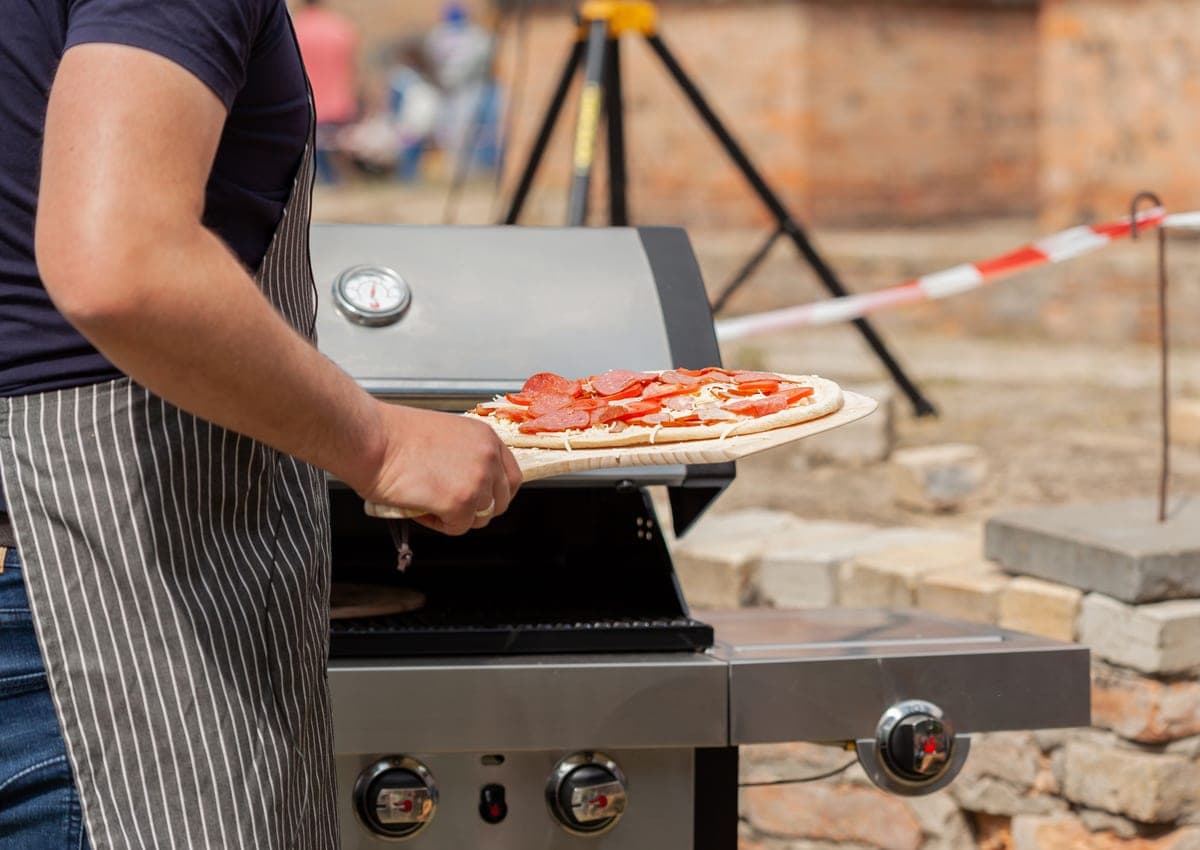
Put the same pizza in a 16 in chamber and you have two inches of clear stone all the way around. That is enough to get a turning peel under the rim and pivot it, which is the single technique that most improves results in a single-burner oven. This is the whole case for the Koda 16 and Ooni does not make it in these words.
The 0.6 inch floor
The Koda 16's cordierite stone is 0.6 in thick. Ooni's newer Koda 2 Pro and Koda 2 Max use 0.8 in, and Gozney's Arc and Arc XL use 0.8 in. That is a real difference in stored heat, and stored heat in the floor is what cooks the base. Note that the 14 in Koda 2 uses the same 0.6 in floor as this oven, which is why that comparison comes down to chamber size rather than stone.
In practice: the first pizza off a properly preheated Koda 16 is excellent. The second is fine. By the third the floor has given up enough heat that the base browns noticeably slower, and the honest fix is a two-or-three-minute pause with the burner up rather than pressing on. If you cook for two, you will never notice. If you cook for eight, this is the oven's real limitation and it is why the Arc XL exists.
The natural-gas variant is underrated
Ooni sells a separate natural-gas Koda 16 with its own regulator, and among 16 in ovens that option is close to unique — Gozney's Arc family is propane only. If your patio has a gas point, the natural-gas variant removes the single most irritating part of owning one of these, which is discovering the cylinder is empty at the moment the dough is stretched.
The trade is permanence. A hose-tethered oven does not go to a campsite and does not move around the yard. If that matters, stay on propane and read the runtime arithmetic instead.
What Ooni does not publish
A BTU input rating. There is no published figure for the Koda line, which means you cannot compare its burner to the Solo Stove Pi Prime's stated 15,000 BTU, and you cannot compute a tank runtime for it. Anyone who gives you a BTU number for a Koda 16 has got it from somewhere other than Ooni.
Quick picks
Ranked for fit, not for hype. Every figure below is the maker’s own published number, and “n/p” means they do not publish it — which is itself worth knowing. Tap a row for the full write-up, or go straight to the listing.
| # | Oven | Best for | Max pizza | Weight | Price |
|---|---|---|---|---|---|
| 1 |  Ooni Koda 16Still the most sensible first gas oven anyone buys. | The default first oven | 16" | 40.1 lb | $498.00 · Check on Amazon-23% |
Max pizza and weight are the makers’ published figures, sourced on each write-up below. Neither is a measurement we took, and no column here is a score — we have not cooked on these ovens and will not pretend otherwise.
Top pick · The default first oven
Ooni Koda 16 Propane Gas Pizza Oven
Ooni · Propane
Still the most sensible first gas oven anyone buys. 16 inches is the size where a 12-inch pizza stops feeling like a tight squeeze, and at 40 lb one person can carry it.
Published specification
- Max temperature
- 950 F (500 C), reached in about 20 minutes
- Stone
- 16 in cordierite, 0.6 in thick
- External size
- 25" L x 23.2" W x 14.7" H
- Weight
- 40.1 lb unboxed
- Fuel
- Propane, or a separate natural-gas version for a gas line
- Warranty
- 1 year standard, 5 years on registration with Ooni
- Gas input
- Ooni does not publish a BTU input rating for the Koda line
What it does well
- The 16 in stone is the real argument for this model over the 12 in ovens — a 12 in pizza sits inside it with room to turn, which is what actually stops a burnt edge
- One-piece body with folding legs: no assembly, and it is the largest oven here a single person carries comfortably
- There is a natural-gas variant, so a household with a gas line can stop buying cylinders entirely — rare in this category
What you give up
- 0.6 in stone stores less heat than the 0.8 in floors on the newer Koda 2 Pro and the Gozney Arc, so back-to-back bakes need a longer recovery pause
- Single burner across the back: no dual-zone control, so everything cooks at one temperature
- No door and no glass, so the heat you lose between launches is heat you re-earn with the flame
Buy it if
Someone buying their first serious outdoor oven who wants 16 in capacity and does not want to think about fuel beyond turning a dial.
Skip it if
Anyone who wants wood flavor, and anyone cooking two different things at once — that is the Koda 2 Pro or the Karu.
Where these numbers came from
Who should buy something else
If you want wood flavor, the Karu 2 Pro is the same size with a fire in it. If the patio is small, the Arc Lite is 26.4 lb against this oven's 40.1. If you feed a crowd, the Koda 2 Max runs two zones. And if you cook back-to-back, the Arc XL comparison is the page to read next.
How these picks were made
We did not cook on these ovens. Every figure on this page is the maker’s or the listing’s published specification, cited on each write-up so you can check it in one click. The ranking comes from matching those published capabilities to a stated use case — space, pizza size, fuel, and how many pizzas you cook in a row. Where a maker does not publish a number, we say so instead of estimating one.
The full version of that argument, including what we deliberately do not claim, is on our methodology page.
Questions people actually ask
+Is the Ooni Koda 16 still worth buying?
+What size pizza can the Koda 16 actually cook?
+Does the Koda 16 need assembly?
+How long does the Koda 16 take to heat up?
Sources for this page