Gas pizza ovens
Gozney Arc XL: built for the fourth pizza, not the first
Every 16 in oven cooks a good first pizza. The Arc XL is engineered around what happens after that, and its specification sheet says so in three places.
The short answer
Buy the Arc XL if you cook more than two pizzas in a sitting. The 0.8 in stone, the dense two-layer insulation and the lateral rolling flame are all aimed at the same problem — holding floor temperature through consecutive launches — and together they are the clearest engineering difference in this category. At 58.5 lb it is not the one to buy if the oven has to move.
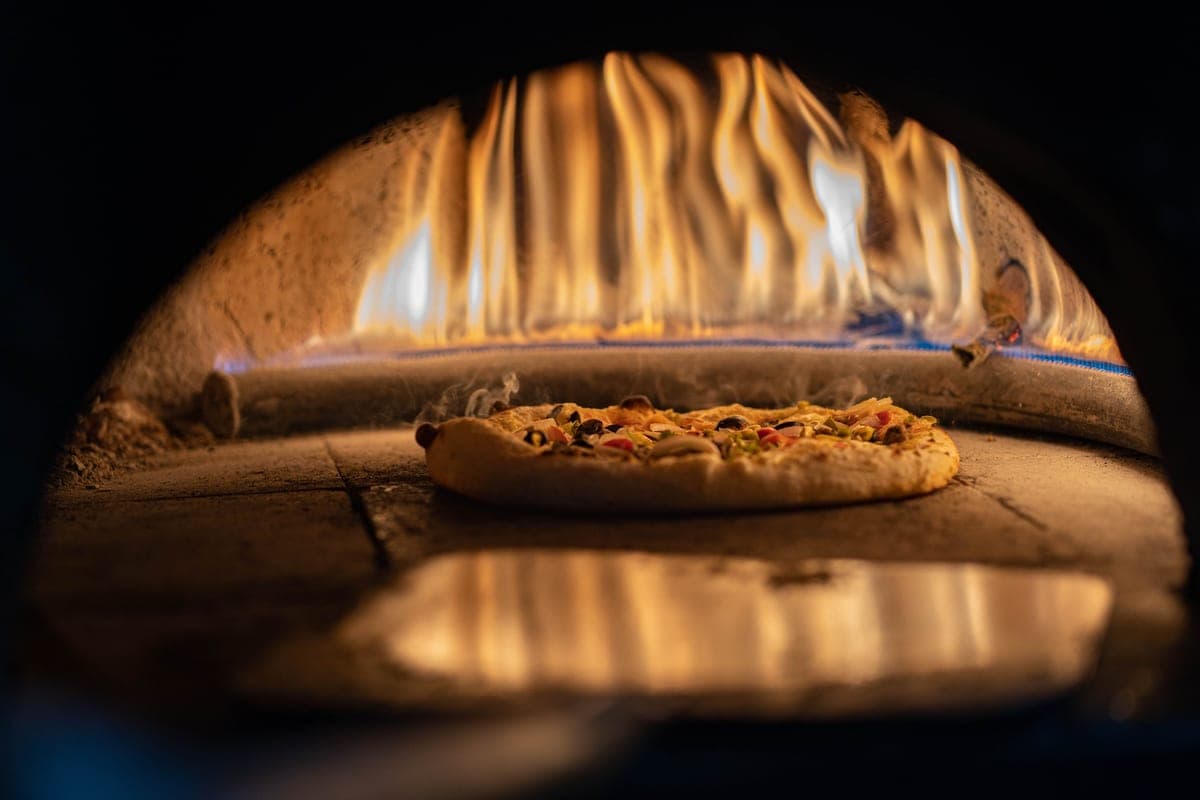
There is a moment every home pizza cook recognizes. The first pizza is perfect. The second is good. By the fourth, the base is coming out pale and slightly chewy while the top looks fine, and nobody quite knows why. It is not the flame — the flame is doing what it always did. It is the floor, which has spent its stored heat into the first three pizzas and has not been given time to recover.
The Arc XL's whole specification is a response to that moment.
Three specs, one purpose
A 0.8 in removable cordierite floor. Twice the thickness of the Ooni Volt 2's stone and a third more than the Koda 16's. More mass, more stored energy, longer before the base slows down.
Dense two-layer insulation. This is the part you cannot see and Gozney sells hardest. Insulation does not raise the peak temperature — everything here hits 950 F — it reduces how fast the chamber loses heat when you open the mouth to launch. Every launch is a heat leak, and on a busy evening you open the mouth a lot.
A lateral rolling flame. Rather than a burner across the back, the Arc runs its flame along one side and up over the ceiling. The practical effect is that the heat gradient across the stone is gentler than in a rear-burner oven, which means fewer turns per pizza — and each turn you skip is a second the pizza stays flat on the floor.
The height nobody talks about
The Arc XL's internal chamber is 6.8 in tall. That is generous for this category and it is the specification that makes the oven usable for things other than a thin Neapolitan — a thick-rimmed pizza, a pan bake, a tray of vegetables, a small roast. A 5.5 in chamber does none of those comfortably.
It also makes launching more forgiving. More vertical clearance means less chance of catching the rim of the pizza on the roof of the oven on the way in, which is a real and demoralizing failure mode.
What you pay for it
58.5 lb bare, with no folding legs, in a body 20.9 by 24.8 in. This is not an oven you carry to a friend's house, and it is genuinely too heavy for most patio furniture — read clearances and surfaces before you decide where it lives.
It is also propane only. There is no natural-gas Arc, which matters if you have a gas point and were hoping to use it. And like every other maker here except Solo Stove, Gozney publishes no BTU input rating, so the burner cannot be compared on paper.
Quick picks
Ranked for fit, not for hype. Every figure below is the maker’s own published number, and “n/p” means they do not publish it — which is itself worth knowing. Tap a row for the full write-up, or go straight to the listing.
| # | Oven | Best for | Max pizza | Weight | Price |
|---|---|---|---|---|---|
| 1 | 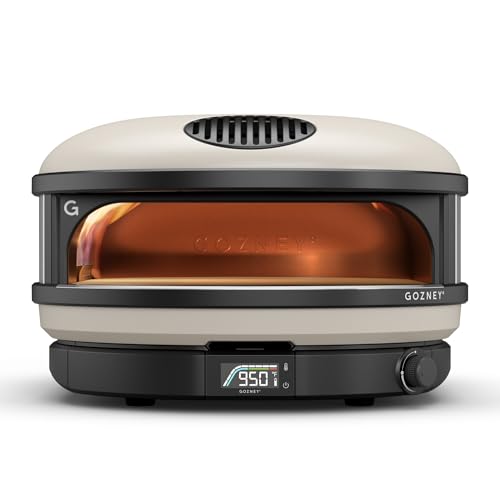 Gozney Arc XLA lateral rolling flame and two-layer insulation around a 0.8 in stone. | Heat that survives a fourth pizza | 16" | 58.5 lb | $998.99 · Check on Amazon |
Max pizza and weight are the makers’ published figures, sourced on each write-up below. Neither is a measurement we took, and no column here is a score — we have not cooked on these ovens and will not pretend otherwise.
Top pick · Heat that survives a fourth pizza
Gozney Arc XL Propane Outdoor Pizza Oven
Gozney · Propane
A lateral rolling flame and two-layer insulation around a 0.8 in stone. The Arc XL is the 16 in oven built around heat retention rather than around portability, and it shows on the fourth bake.
Published specification
- Max temperature
- 950 F (500 C)
- External size
- W 20.9" x D 24.8" x H 13.5"
- Internal size
- W 16.8" x D 20.3" x H 6.8"
- Weight
- 58.5 lb bare, 73 lb boxed
- Stone
- Removable 0.8 in (20 mm) cordierite
- Flame
- Lateral rolling gas flame, digital temperature gauge
- Warranty
- 1 year standard, 5 years on registration within 60 days
What it does well
- The lateral flame runs along the side rather than across the back, which is why the Arc needs fewer turns than a rear-burner oven of the same size
- Dense two-layer insulation plus a 0.8 in floor is the combination that holds temperature through consecutive launches
- 6.8 in of internal height is unusually generous — it is the reason thick-rim and pan styles work here
- No assembly, and the digital gauge means you are not guessing at stone temperature
What you give up
- Gozney does not publish a gas input rating either, so burner comparisons against Solo Stove's stated 15,000 BTU are impossible on paper
- 58.5 lb with no folding legs — it moves, but not casually
- Propane only; there is no natural-gas variant of the Arc
Buy it if
Anyone who cooks more than two pizzas in a sitting and is tired of waiting for the stone to come back.
Skip it if
Buyers who want wood flavor, or who need to pack the oven into a car.
Where these numbers came from
Arc XL, Arc, or Arc Lite?
The Arc keeps the 0.8 in stone and the insulation in a 47.5 lb, 14 in body — you lose capacity, not heat behavior. It has its own review, and we compare them directly. The Arc Lite drops to a 0.5 in stone and 26.4 lb, which is a genuinely different oven aimed at a genuinely different buyer: portability first. If heat retention was the reason you were reading this page, the Lite is not the one.
The flagship comparison people ask for is against Ooni's largest gas oven. Gozney Arc XL against the Ooni Koda 2 Max sets out the published figures: matched on temperature and stone thickness, and separated by a 20 in chamber, two independently controlled burners and 36.5 lb.
How these picks were made
We did not cook on these ovens. Every figure on this page is the maker’s or the listing’s published specification, cited on each write-up so you can check it in one click. The ranking comes from matching those published capabilities to a stated use case — space, pizza size, fuel, and how many pizzas you cook in a row. Where a maker does not publish a number, we say so instead of estimating one.
The full version of that argument, including what we deliberately do not claim, is on our methodology page.
Questions people actually ask
+Is the Gozney Arc XL worth the money over an Ooni Koda 16?
+Can the Gozney Arc XL run on natural gas?
+Does the Arc XL need assembly?
+How heavy is the Gozney Arc XL?
Sources for this page